Life sciences compliance is how pharmaceutical, biotech, medical device and diagnostics companies meet the regulations that govern their products in every market they sell in. It matters because each country sets its own rules, timelines and labeling requirements, and one gap can block a launch or trigger a recall. It affects regulatory affairs, quality, labeling, clinical and supply chain teams across the whole product lifecycle.
What is Life Sciences Compliance?
Life sciences compliance is the practice of meeting every regulatory, quality and safety requirement that applies to medicines, biologics, medical devices and diagnostics, from research through manufacturing to post-market monitoring, in every country where a product is sold. It is often called GxP compliance, after the "good practice" rules it covers.
Those rules span the full lifecycle:
- GLP (Good Laboratory Practice) for non-clinical safety studies.
- GCP (Good Clinical Practice) for clinical trials.
- GMP (Good Manufacturing Practice) for production and release.
- GDP (Good Distribution Practice) for storage and transport.
- GVP (Good Pharmacovigilance Practice) for safety monitoring after launch.
Life sciences compliance is wider than pharmaceutical compliance, which focuses on drugs. It also covers devices, diagnostics, combination products and the contract organizations that serve them.
Why is Global Life Sciences Compliance So Complex?
A product that is legal in one market is not automatically legal in the next. Five factors multiply the work.
- Different regulators, different rules. The FDA, EMA, Japan's PMDA and China's NMPA each set their own submission formats, review standards and inspection practices.
- Different timelines. A rule may apply in the EU years before a similar rule reaches the US or Asia, or the reverse.
- Different languages and labels. The EU alone has 24 official languages. Each market expects labels, cartons, and leaflets in its own language and format, all matching the approved content.
- Constant change. Major frameworks are being rewritten at the same time, so requirements shift during product launches.
- Extended supply chains. Contract manufacturers, packaging suppliers and distributors in many countries all need to meet the same standards.
The result is a regulatory compliance workload that grows with every new market, product, and language.
Who Are the Key Global Regulators and Harmonization Bodies?
Most global companies deal with the same core group of regulators, supported by several harmonization bodies that reduce duplication.
Harmonization helps, but it never removes local requirements. Labeling, language, registration, and post-market reporting remain market-specific.
What is Changing in Life Sciences Compliance in 2026?
Several of the world's biggest frameworks are moving at once. These are the changes global teams are tracking now.
What this means: global teams need a system that tracks regulatory change, assesses impact by market and updates documents and labels before deadlines. Mapping each change to the processes it touches is the job of a regulatory risk assessment.
Drugs vs. Medical Devices vs. Diagnostics: How Does Compliance Differ?
The three main product types share GxP principles but follow different rulebooks.
Combination products, such as prefilled syringes or drug-coated stents, must meet both drug and device requirements.
How do Regulated Companies Manage Complexity Across Global Markets?
The companies that scale best follow seven practices.
- Build one global quality system. Design a single quality management system that meets the strictest requirement on each point, then add local procedures only where a market truly differs. Our guide to compliance management explains how to structure this.
- Run regulatory intelligence. Track regulator websites, official journals and guidance in every market. Assess each change for impact and assign an owner and deadline.
- Use reliance and harmonized pathways. MDSAP audits, mutual recognition agreements, ICH guidelines and reliance routes such as the MHRA's International Recognition Procedure cut duplicate work.
- Keep one source of truth. Store core product data, approved claims and master documents centrally, so every market version traces back to the same approved content.
- Control documents and versions. Version-controlled SOPs, specifications and artwork with full audit trails make it easy to prove which version applied where and when. See document control in regulated industries.
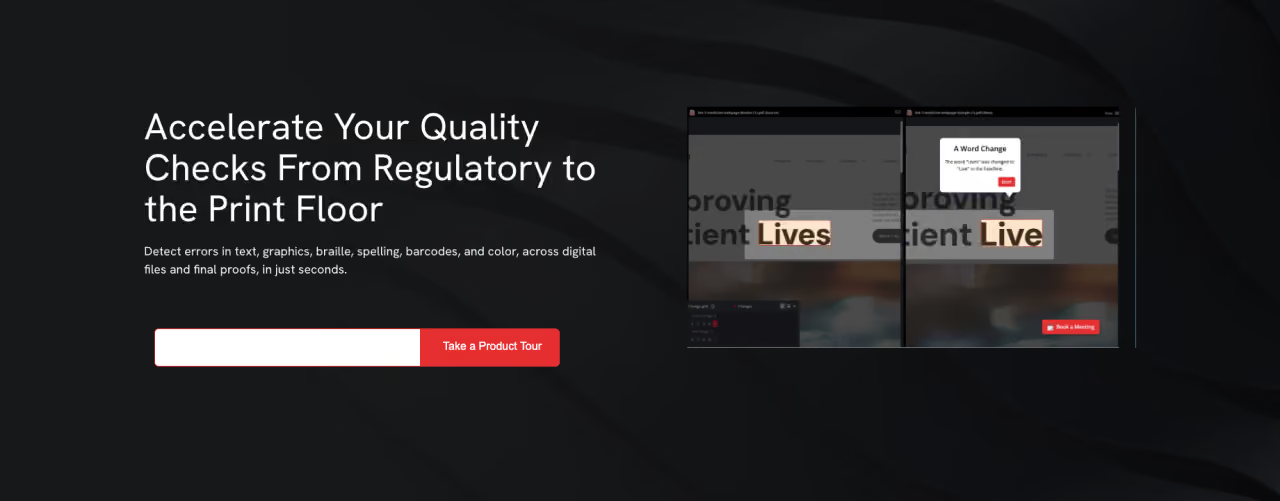
- Verify every localized label. Compare each translated label, carton and leaflet against the approved master and local requirements before print. Automated proofreading catches errors manual review misses.
- Align partners. Bring contract manufacturers, packaging suppliers and distributors into the same quality agreements, audits and change controls.
Global Labeling: Centralized or Market-by-Market?
Labeling is where global complexity becomes most visible. Every market change means new artwork, new text and new checks.
Most leading companies use a hybrid model: a central labeling team owns the master content and process, while local affiliates confirm market-specific requirements.
Conclusion: Global Reach Needs One Compliance Backbone
Life sciences companies cannot avoid global complexity, but they can control it. One quality system, one source of truth, active regulatory intelligence and verified labeling let teams expand into new markets without multiplying risk.
To see how life sciences compliance connects with risk assessment, audits and monitoring, read our complete guide to regulatory compliance management.
Life Sciences Compliance FAQs