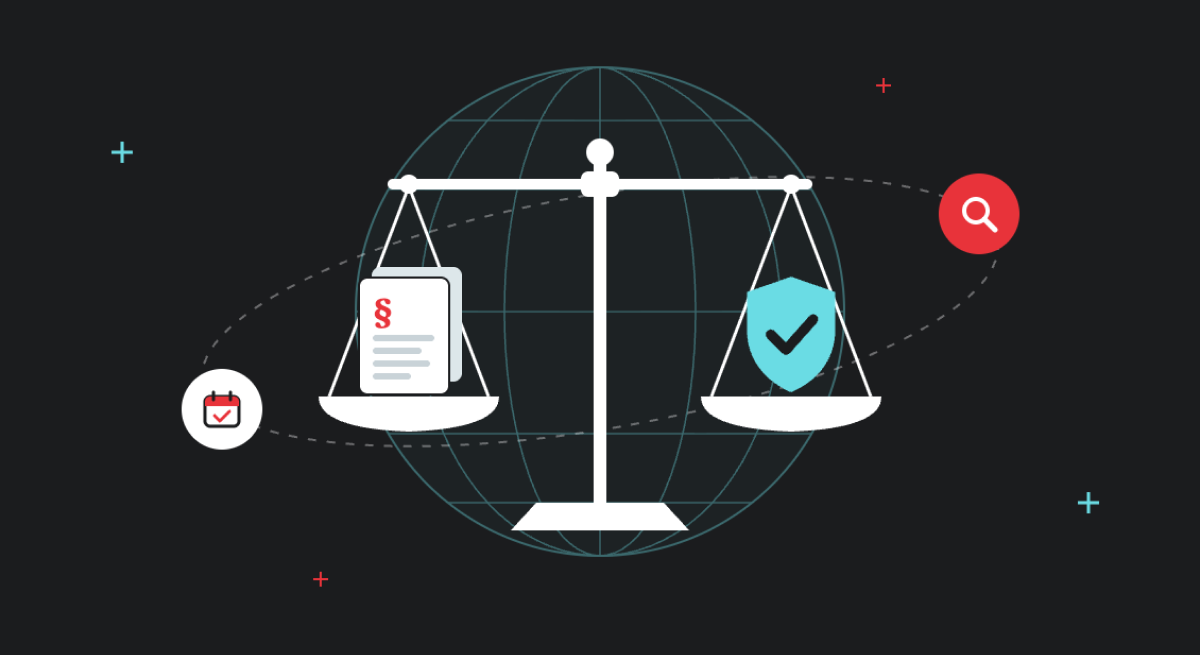


Regulatory compliance is how an organization follows the laws, regulations and standards that apply to it, and proves it with documented evidence. It matters because non-compliance brings fines, recalls, blocked market access and lost trust. It affects every regulated business, especially pharmaceutical, medical device, life sciences and financial companies, and any firm that handles personal data.
What is Regulatory Compliance?
Regulatory compliance is the process of making sure an organization follows the laws, regulations, standards and government guidelines that apply to its industry, products and locations, and being able to prove it. It covers data protection, financial reporting, product safety, labeling, workplace health and environmental rules.
The proof matters as much as the practice. Regulators and inspectors expect documented evidence: policies, training records, controls, audit trails and corrective actions.
Compliance is also harder in 2026 than it was three years ago. Rules change faster, deadlines shift mid-project, and enforcement now reaches AI systems, supply chains and cyber resilience.
Why Does Regulatory Compliance Matter More in 2026?
Non-compliance costs far more than compliance. A Ponemon Institute and Globalscape study found that non-compliance costs 2.71 times more than maintaining compliance, once disruption, lost productivity, fines and settlements are counted. It remains one of the most cited benchmarks on the cost of compliance.
Fines are only the visible part. The larger costs usually come from:
- Business disruption: halted production, frozen launches or suspended licences.
- Remediation: emergency consultants, legal fees and rebuilt processes.
- Market access: warning letters, import alerts or failed inspections that block sales.
- Reputation: lost customer and investor trust.
- Personal liability: rules such as DORA and NIS2 hold senior management accountable.
Reactive vs. Proactive Compliance
Fewer findings, faster closure
Three trends make 2026 different:
- Moving deadlines. The EU has reshaped major laws mid-implementation through "omnibus" packages.
- Broader scope. Regulation now covers AI systems, ICT providers and cyber resilience.
- Evidence over intent. Inspectors expect live, traceable records, not binders prepared the week before.
Which Regulations Shape Regulatory Compliance in 2026?
The rules that apply depend on your industry and markets. These six are reshaping compliance programs across sectors this year.
Takeaway: a delay is not a pause. Regulators expect preparation to continue, and parts of each law often stay on the original timeline.
What Are the Core Parts of a Regulatory Compliance Program?
An effective compliance program has seven connected parts. Miss one and the others weaken.
- Regulatory inventory. A living register of every law, regulation and standard that applies, mapped to the processes it touches.
- Governance and ownership. Named owners for each obligation and board-level oversight. Learn how teams set this up in our guide to compliance management.
- Risk assessment. A structured review of where you are most exposed, ranked by likelihood and impact. See how to run a compliance risk assessment.
- Policies, procedures and controls. Written rules that turn legal requirements into daily tasks, backed by controls that prevent or detect failures.
- Document control and records. Version-controlled SOPs, approvals and audit trails. Read more on document control in regulated industries.
- Training and culture. Role-based training with records, and a culture where people raise issues early.
- Monitoring, auditing and corrective action. Ongoing checks, internal audits and CAPA that fixes root causes. Explore continuous compliance monitoring.
Together, these parts turn regulatory compliance from a one-off project into an ongoing capability.
How Do You Stay Compliant? 8 Steps
Staying compliant is a cycle, not a finish line. These eight steps give most organizations a working compliance framework.
- Identify every applicable regulation. List the markets you sell in, your products and the data you handle. Include standards customers require, such as ISO 27001 or ISO 13485.
- Map obligations to processes. Break each regulation into specific compliance requirements, each with a process, system and owner.
- Run a gap assessment. Compare current practice with each requirement. Fix the highest-risk gaps first.
- Write and control policies and SOPs. Turn requirements into clear procedures under version control and approval workflows.
- Build and test controls. Add preventive controls (approvals, access limits, validation) and detective controls (reviews, alerts). Test that they work.
- Train people by role. Tie training to job roles and record completion and effectiveness.
- Monitor and audit. Use dashboards and compliance automation between internal audits so problems surface in days, not at the next inspection.
- Track regulatory change. Assess each new or amended rule for impact and update controls before the effective date.
Pro tip: treat every finding as data. Trends in deviations, CAPAs and audit findings show where your next compliance risk is forming.
What Are the Biggest Regulatory Compliance Challenges?
How is Regulatory Compliance Different from Compliance Management and Risk Management?
These terms overlap but mean different things.
Regulatory compliance is the goal. Compliance management is the system that delivers it. Compliance risk management decides where to focus first.
Conclusion: Compliance is a Capability, not a Checkbox
Regulatory compliance in 2026 means knowing which rules apply, building controls that meet them and proving it at any moment. Teams that do this well run it continuously: mapped obligations, owned controls, controlled documents and live monitoring.
To see how these pieces fit into one operating model, read our complete guide to regulatory compliance management.
Regulatory compliance FAQs