

In an industry where precision, safety, and compliance are essential, packaging in pharma has traditionally been a complex, tightly controlled process.
Every label, insert, and package design must align with regulatory requirements, ensure patient safety, and protect brand integrity. But as the pharmaceutical landscape grows more global and digital, companies are turning to AI packaging technologies to gain a competitive edge.
Today, AI in pharma packaging is not just about automating manual tasks, it’s about rethinking the entire packaging lifecycle. It’s about updating even our automated processes with newer technologies. From design and proofreading to quality assurance and supply chain visibility, artificial intelligence is redefining what’s possible.
1. Smarter Quality Control Through Automation
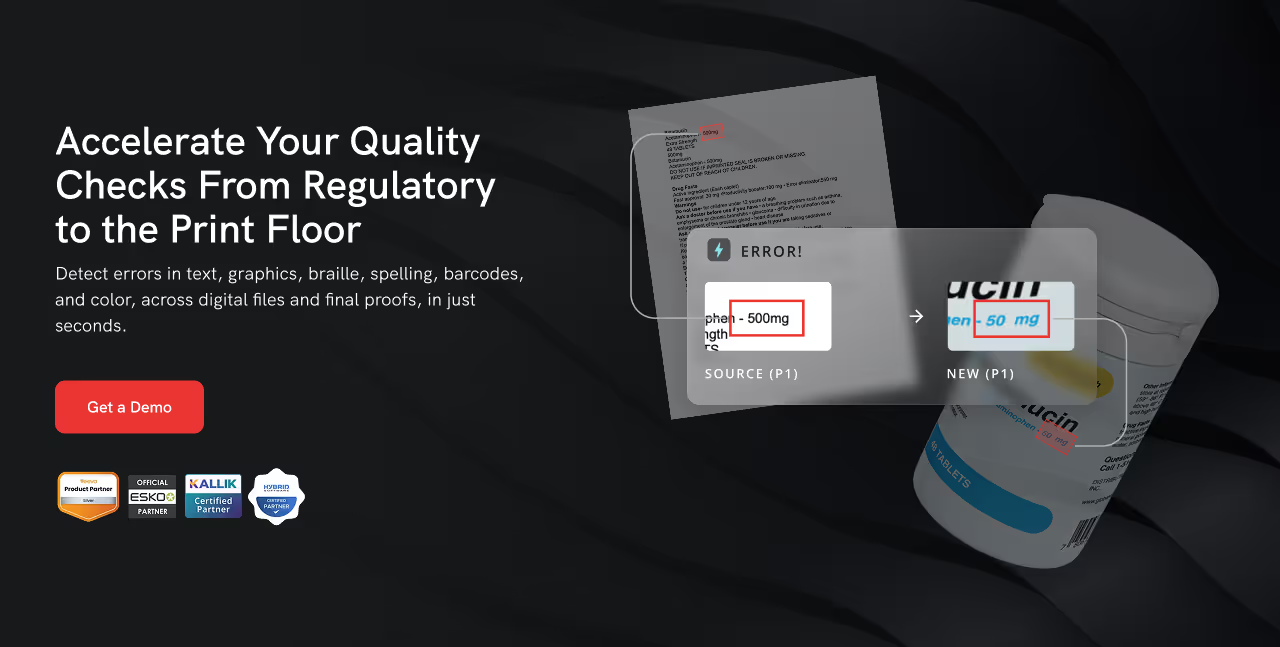
One of the most impactful uses of AI packaging systems lies in automated quality inspection. Traditional manual proofing and visual checks are slow, error-prone, and hard to scale. AI-powered vision systems can instantly detect print defects, label mismatches, and missing text, at speeds that human inspectors could never achieve.
Through advanced machine learning and AI technology, these systems can differentiate between minor acceptable variations and critical errors that could lead to recalls. This ensures every package meets both internal and regulatory standards, dramatically reducing risk.
2. Predictive Analytics for Packaging Operations
In pharma, unplanned downtime or production bottlenecks can be costly. AI algorithms can now analyze machine data in real time to predict when equipment might fail or when print quality may start to degrade.
This predictive approach allows teams to intervene before a problem occurs, ensuring continuous production and consistent quality across lines.
As a result, AI in pharma packaging is evolving from reactive to proactive operations, driving efficiency and sustainability simultaneously.
3. Automating Compliance and Label Verification
Few industries are as heavily regulated as pharmaceuticals. With frequent labeling updates, multilingual packaging, and regional variations, ensuring compliance can be a monumental task.
AI packaging platforms integrated with regulatory content systems, like Veeva or similar, can automatically verify that each packaging component matches the approved master data.
This closes the gap between regulatory teams and production floors, allowing packaging content to move seamlessly from approval to print without manual proofreading or human bottlenecks.
4. Personalization and Smart Packaging
Beyond operational gains, AI is also fueling innovation in packaging in pharma through personalization. Smart packaging equipped with sensors or QR codes can gather patient data and adjust information delivery accordingly. Combined with
machine learning, this enables tailored communication, helping patients access real-time usage instructions, safety updates, or refill reminders directly from their packaging.
In the future, we can expect AI to play a central role in linking packaging with patient experience, adherence, and even clinical outcomes.
5. The Future: A Fully Connected Packaging Ecosystem
Imagine a world where every packaging line, printer, and inspection system is connected through a cloud-based platform powered by AI. Quality trends would be visible in real time, deviations flagged automatically, and insights shared across global sites. This is not a distant vision, it’s the next evolution of AI in pharma packaging.
By turning packaging data into actionable intelligence, pharmaceutical companies can ensure accuracy, compliance, and speed, without compromising safety or brand trust.
Conclusion
AI packaging technologies are transforming how pharmaceutical companies design, verify, and produce packaging. What was once a manual, reactive process is becoming a connected, intelligent ecosystem, driven by automation, analytics, and continuous learning.
The winners in this new era will be those who see AI not as a tool but as a strategic partner, enhancing every step of packaging in pharma, from concept to shelf.