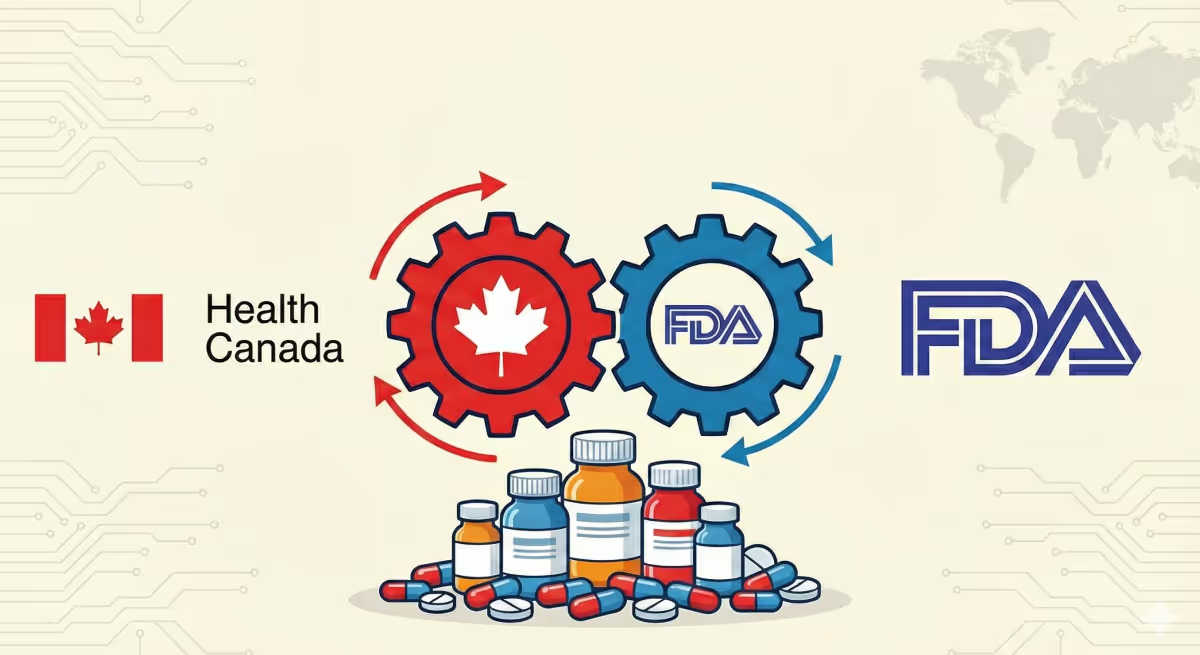


Regulatory silos are crumbling, and for the pharmaceutical industry, that is excellent news. In a significant move toward harmonization, the U.S. Food and Drug Administration (FDA) and Health Canada have launched a new initiative that could reshape how generic drugs reach patients across North America.
The two agencies recently announced the Request for Information Sharing (RIS) pilot program. This mechanism allows them to exchange regulatory information to support and streamline the review of generic drug submissions. While it may sound like procedural nuance, this shift represents a profound evolution in cross-border regulatory strategy.
Breaking Down the RIS Initiative
For decades, pharmaceutical companies seeking market entry in both the U.S. and Canada have navigated two distinct, albeit similar, regulatory mountains. While the scientific principles of safety and efficacy remain consistent, the administrative and procedural hurdles often require duplicative effort.
The new Request for Information Sharing (RIS) changes this dynamic. It is a voluntary program designed to facilitate the exchange of assessment reports and other regulatory information between the FDA and Health Canada during the review of generic drug applications.
The goal is not to merge the agencies but to create a bridge. By sharing scientific assessments, reviewers can gain insights from their counterparts across the border. This reduces the need to "reinvent the wheel" when analyzing data that has already been scrutinized by a trusted partner agency.
Why Regulatory Alignment Matters Now
This collaboration arrives at a critical juncture for the life sciences sector. Healthcare systems are under immense pressure to provide affordable treatments, and the generic drug market is the backbone of cost-effective care.
1. Accelerating Review Timelines
Time is the most valuable currency in drug development. Every month a generic application sits in review is a month patients wait for affordable alternatives.
By sharing data, the FDA and Health Canada can potentially reduce the workload on individual reviewers. If Health Canada has already performed a deep dive into a specific bioequivalence study, sharing that analysis with the FDA (or vice versa) allows for a more focused and efficient review process. This doesn't mean automatic approval, but it does mean a smarter, faster path to decision-making.
2. Reducing Friction for Sponsors
For global pharmaceutical companies, navigating divergent regulatory expectations is a major source of friction. Sponsors often face slightly different questions or data requests from different agencies for the exact same product.
The RIS initiative promotes a convergence of expectations. When regulators talk to each other, they tend to align on what constitutes sufficient evidence. For sponsors entering both markets simultaneously, this could lead to more predictable outcomes and clearer guidance on submission requirements.
3. Strengthening the North American Ecosystem
We are moving toward a more integrated North American market for pharmaceuticals. Supply chain vulnerabilities exposed in recent years have highlighted the need for regional resilience.
Harmonized regulatory pathways encourage manufacturers to view the U.S. and Canada not as two isolated markets, but as a cohesive region. This encourages broader market entry, ensuring that patients in both countries have access to safe, effective, and high-quality generic medicines.
The Strategic Upside for Sponsors
Participation in the RIS pilot is voluntary, which begs the question: Why should a sponsor opt in?
The primary incentive is strategic efficiency. Sponsors who facilitate this information exchange position themselves as transparent partners in the regulatory process. It signals confidence in the data provided.
Furthermore, early adopters of this pilot may help shape the future of regulatory convergence. By participating, companies provide the data points agencies need to refine these processes, potentially leading to even more streamlined pathways, like simultaneous joint reviews, in the future.
The Future of Cross-Border Regulation
The FDA and Health Canada RIS initiative is likely just the beginning. As data sharing infrastructure improves and trust deepens between international agencies, we can expect to see similar models applied to other areas, such as post-market surveillance or complex biologics.
We are moving away from an era of regulatory isolationism toward one of strategic collaboration. For professionals in regulatory affairs and market access, this requires a shift in mindset. Strategies should no longer be purely country-specific but should consider how leveraging one agency's review can support success in another.
This collaboration is a win for efficiency, a win for industry, and most importantly, a win for patients waiting for access to essential medicines.