We have all been there. The design is done, the file is prepped, and the deadline is looming. But everything comes to a grinding halt because the file is sitting in a queue, waiting for a manual inspection.
This is the classic prepress bottleneck. It is the point where speed sacrifices accuracy, or accuracy murders speed. For years, prepress teams have accepted this trade-off as a necessary evil of quality control in print and packaging. But teams shouldn't have to choose between fast and flawless.
The solution isn't to hire more proofreaders or work longer hours. The solution is to change where and how you inspect. By embedding quality checks directly into your existing systems through automation and API integration, you can dismantle these bottlenecks permanently.
Here is how shifting to an embedded quality model transforms your operation from a series of stops and starts into a continuous, efficient flow.
The High Cost of the Stop-and-Check Model in Prepress Workflow
In a traditional prepress workflow, quality control is often treated as a separate destination. You finish a task, export a file, open a different software (or print a physical proof), and inspect it. If you find an error, you go back, fix it, and repeat the entire loop.
This "stop-and-check" method is the primary source of operational friction. Every time a file leaves the workflow for inspection, you lose momentum.
- Data Silos: Information doesn't flow freely between your design tools and your checking tools.
- Manual Fatigue: Human eyes get tired. The more manual checks you perform, the higher the risk of an error slipping through.
- Turnaround Delays: Prepress quality suffers when teams rush through checks to make up for lost time.
Bottlenecks aren't just annoying; they are expensive. They lead to press downtime, rushed shipping fees, and, in the worst cases, reprints.
Why Automation Is Essential for Workflow Efficiency
To keep up with modern SKU proliferation and tighter deadlines, we need to stop treating quality as an afterthought and start treating it as an integrated part of the process. This is where automation steps in.
Prepress quality automation replaces the manual "stare-and-compare" method with digital precision. Instead of a human spending 20 minutes reviewing a disclaimer against a spreadsheet, an automated system does it in seconds, with zero risk of fatigue.
When you automate, you aren't just speeding up the check; you are standardizing it. Automated QA ensures that every file, regardless of who worked on it or what time of day it was processed, undergoes the exact same rigorous inspection standards.
The Power of API Integration: QC Without the Detour
So, how do you get this automation without disrupting your team's routine? The answer lies in the API (Application Programming Interface).
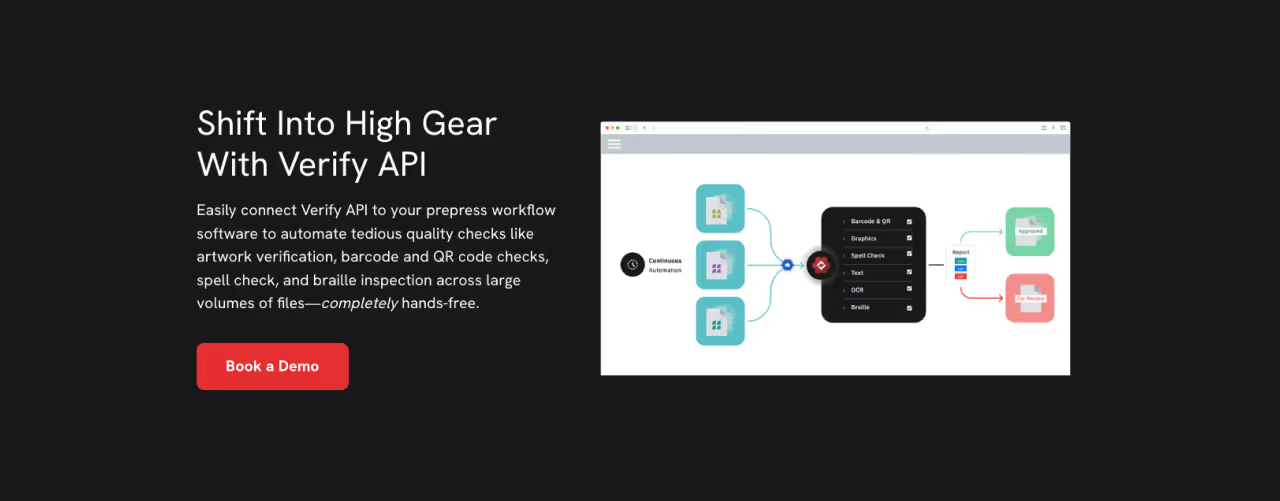
Think of an API as a universal translator that lets different software speak to each other. In the context of prepress quality, an API allows you to take powerful proofreading technology, like GlobalVision’s Verify API, and plug it directly into the platforms you already use, such as Esko or a generic MIS.
How API Integration Eliminates Bottlenecks
- Invisible Inspections: With an API, quality checks happen in the background. As a file moves from design to prepress, the system can automatically run a spell check, verify barcodes, or compare graphics against the approved master.
- Single-Platform Workflow: Your team doesn't need to learn new software or switch between windows. They stay in their native environment while the automation runs behind the scenes.
- Instant Feedback: If the API detects an error, it flags it immediately within the workflow. The operator sees the issue, fixes it, and keeps moving. No emails, no printed proofs, no waiting.
This is a plug-and-play solution that turns your workflow into a self-correcting ecosystem. It removes the "detour" of quality control, making the inspection process intrinsic to the production process.
Real-World Impact of Automated QA: Speed, Safety, and Sanity
Embedding automated QA into your workflow does more than just save time, it fundamentally changes the culture of your prepress department.
1. Drastically Reduced Turnaround Times
When you remove manual pauses, your throughput skyrockets. We have seen departments cut their approval cycles in half simply by letting automation handle the routine verification of text, graphics, and barcodes.
2. Enhanced Prepress Quality
Humans are incredible at creative tasks but terrible at repetitive ones. Computers are the opposite. By offloading the repetitive checking tasks to an API-driven system, you ensure 100% accuracy on things like Braille height, barcode grade, and spelling. This lowers the risk of recalls and protects your brand reputation.
3. Lower Operational Costs
Errors found at the press stage are exponentially more expensive than errors found in prepress. By catching issues automatically and early, you reduce material waste and avoid the staggering costs of rework.
Implementing Automated QA in Your Prepress Workflow
You might be thinking, "This sounds great, but integration sounds complicated."
The beauty of modern API technology is that it is designed for ease of use. You don't need to rebuild your infrastructure from scratch. Whether you are using a complex prepress suite or a custom-built workflow tool, quality control in print and packaging can be integrated with surprising speed.
Start by auditing your current bottlenecks. Where does work pile up? Is it at the initial artwork receipt? Is it during final file prep? Once you identify the choke points, you can deploy prepress quality automation specifically to target those areas.
Say Goodbye to Prepress Bottlenecks
The days of the "prepress bottleneck" are numbered. We no longer have to accept that high quality requires slow processes. By leveraging automation and embedding quality checks directly into your workflow via API, you can achieve the holy grail of print production: speed, savings, and safety, all at once.
It is time to stop pausing your workflow to check for quality and start building quality directly into the flow.
Ready to streamline your operations? Explore how GlobalVision’s Verify API can transform your prepress workflow today.
Frequently Asked Questions