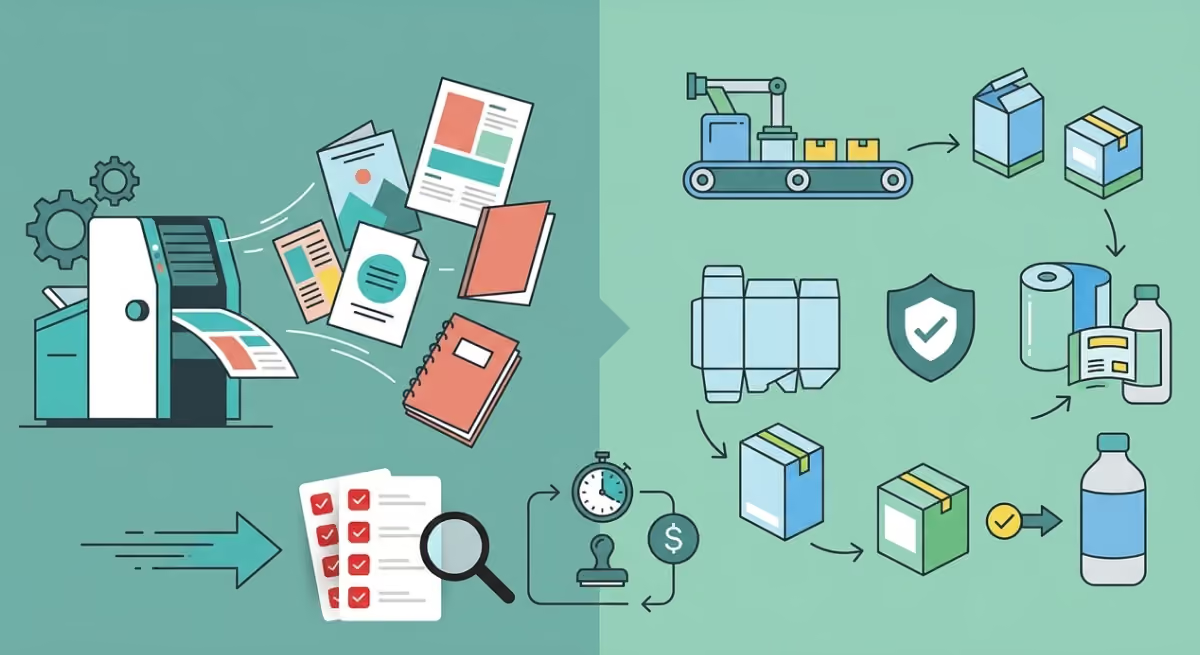


Let's settle a debate that trips up more production teams than it should: commercial printing and packaging printing are not the same job wearing different hats.
They run on different rules, different timelines, and a wildly different tolerance for error. Pick the wrong lane, and you'll feel it, in reprints, missed launches, or worse, a compliance miss that lands on someone's desk in legal.
So which one actually fits your team? That depends on what you're printing, who's checking it, and how much a mistake costs you. Let's break it down, scenario by scenario, so you can make the call with confidence.
First, What Are We Actually Comparing?
Before we crown a winner, let's get clear on the contenders. They look similar from across the room. Up close, they couldn't be more different.
Commercial Printing, Defined
Commercial printing covers the broad world of printed marketing and business materials. Think brochures, catalogs, flyers, business cards, posters, magazines, and direct mail. The goal is visual impact and brand consistency, making something that looks sharp and reads clean.
The stakes here are real, but they're mostly about aesthetics and brand polish. A typo on a flyer is embarrassing. It's rarely a recall.
Packaging Printing, Defined
Packaging printing produces the labels, cartons, pouches, and flexible films that wrap actual products. This is where the rubber meets the road for CPG, food, beverage, beauty, and pharma teams. The print isn't just decoration, it carries ingredient lists, allergen warnings, dosage details, barcodes, and regulatory text.
Here, accuracy isn't a nice-to-have. A wrong number or a missing warning can trigger fines, recalls, and genuine safety risks. The print is the compliance document.
The Key Differences, Side by Side
Here's where the two diverge in ways that change how your team works day to day.
Workflow and Scale
Commercial printing tends to be project-based. You design a catalog, print the run, and move on. Packaging printing never really stops. New flavors, seasonal SKUs, recipe tweaks, and regional variants mean labels change constantly, often across dozens of markets at once.
That difference reshapes everything. A team handling packaging isn't managing a handful of projects. They're managing a living, growing library of SKUs that demand version control and repeatable quality checks.
Compliance and Risk
This is the big one. Commercial work answers mostly to your brand guidelines. Packaging answers to the FDA, EMA, FSA, and a dozen other regulators, each with its own rules for content, language, and format.
Miss a brand color on a brochure? You'll survive. Miss an allergen declaration on a food pouch? That's a recall waiting to happen. The error tolerance gap between these two worlds is enormous, and it's exactly why packaging teams can't rely on a quick eyeball before press.
Color Accuracy and Materials
Commercial printing usually lives on predictable paper stock, where color behaves the way you expect. Packaging printing has to nail exact brand colors across foils, films, and textured substrates that all react to ink differently. A brand red that looks perfect on a label can shift dramatically on a glossy pouch.
That makes color verification a far heavier lift in packaging. One more reason the two jobs demand different tools and different attention.
When Each One Is the Right Fit
Neither option is "better" in a vacuum. The right choice depends entirely on what your team produces. Here's how to think about it.
Choose Commercial Printing When…
- Your output is marketing collateral, brochures, ads, catalogs, signage.
- Runs are project-based rather than recurring.
- Compliance requirements are light or brand-driven, not regulatory.
- Speed and visual polish matter more than line-by-line content verification.
Real-world scenario: Your marketing team needs 5,000 event brochures by Friday. The priority is a clean design and on-brand color. Commercial printing is your lane, fast, flexible, and focused on impact.
Choose Packaging Printing When…
- You print labels, cartons, or flexible packaging for physical products.
- You manage high SKU counts that update frequently.
- Compliance is critical and errors carry real consequences.
- You ship across multiple markets and languages.
Real-world scenario: You're launching a snack line across eight countries, each with its own allergen and nutrition rules.
Every label needs verification against an approved master before it prints. This is packaging printing, and the margin for error is zero.
How to Decide for Your Team
Still on the fence? Run your work through these three questions.
- What's the cost of a mistake? If an error means a reprint, you're in commercial territory. If it means a recall, fine, or safety risk, you're firmly in packaging, and you need controls to match.
- How often does your content change? Occasional projects lean commercial. Constant, multi-market updates lean packaging, where version control and repeatable checks become essential.
- Who are you answering to? A brand team? Commercial. A roster of global regulators? Packaging, no question.
Most CPG operations land squarely in the packaging camp, and the moment you do, the conversation shifts. It stops being about "which type of printing" and starts being about how you protect accuracy at scale.
That's the trap teams fall into: they treat packaging like commercial work, eyeballing files before press and hoping for the best. At high volume, across markets, with compliance on the line, hope isn't a strategy. Automated quality control is.
The Hidden Factor: Quality Control
Here's the truth that ties it all together. Commercial printing can often get by on a careful manual review. Packaging printing can't, not when you're juggling hundreds of SKUs, multiple languages, and zero room for error.
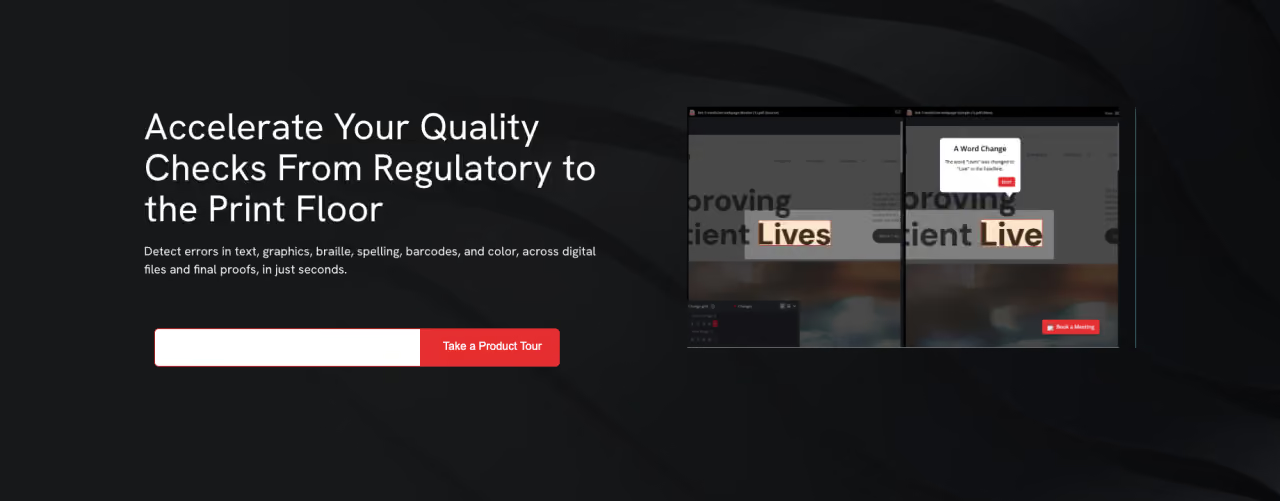
Automated proofreading flips the equation. Instead of relying on tired eyes to catch a transposed digit or a missing warning, you verify every file against an approved master, text, barcodes, color, and artwork, before it ever hits the press.
No bottlenecks. No extra headcount. Just consistent, press-ready accuracy at the scale packaging demands.
The Verdict
So, which one wins? For marketing collateral, commercial printing is the obvious, capable choice. But if you're in CPG, printing labels and packaging for real products across real markets, packaging printing isn't just the better fit. It's the only one that protects your brand, your timelines, and your customers.
The catch is that packaging raises the stakes on every file. Higher volume, tighter compliance, and frequent updates mean accuracy can't be left to chance. The teams that win in this space don't just print faster, they build quality control into the workflow so errors get caught before they ever reach the shelf.
Frequently Asked Questions