

Expanding a life-saving medication into a new international market is a massive achievement for any pharmaceutical company. However, crossing borders means entering a complex maze of regulatory requirements. What works in one country might trigger a product recall in another. For packaging leaders, this creates a high-stakes environment where precision is the only option.
Pharma packaging sits at the critical intersection of patient safety and regulatory adherence. You must ensure every carton, bottle, and leaflet meets strict local guidelines while maintaining your brand's global integrity. This balance is rarely easy to achieve.
This guide explores how to master global packaging compliance without slowing down your speed to market. We will walk through the most common pitfalls teams face when adapting to regional rules. Next, we will share proven strategies to keep your packaging consistent across borders. Finally, we will show you how modern digital tools and automated workflows can completely transform your approach to artwork and labeling.
Common Pitfalls in Regional Regulatory Adaptation
Adapting your packaging for different regions is fraught with hidden traps. When teams rush to meet launch deadlines, they often make costly mistakes that delay approvals. Understanding these pitfalls is the first step toward building a more resilient packaging process.
Treating Translations as an Afterthought
One of the most frequent errors in packaging compliance involves poor translation management. Translating medical information requires more than a simple word-for-word swap. Local regulatory agencies demand specific medical terminology that aligns perfectly with their approved regional guidelines.
When teams leave translations to the very end of the packaging process, they often run out of physical space on the carton or label. Different languages take up different amounts of space. A sentence in English might take up 30% more room when translated into German. This forces rushed redesigns, crowding crucial safety information and increasing the risk of patient confusion.
Ignoring Subtle Formatting Rules
Every regulatory body has its own unique set of formatting rules. The European Medicines Agency (EMA) might require specific font sizes for readability, while the U.S. Food and Drug Administration (FDA) dictates exact placements for warning statements.
A common pitfall is assuming that a successful layout in one region only needs minor text tweaks for another. In reality, you might need to completely restructure the barcode placement, tamper-evident seal locations, and serialization data fields. Failing to account for these localized formatting rules early in the design phase leads to multiple cycles of rejection and revision.
Disconnected Regional Teams
Global companies often struggle with siloed regional teams. When your European team operates completely independently from your North American team, inconsistencies multiply.
Local teams might interpret regulatory updates differently or apply outdated branding guidelines. This lack of communication creates fragmented pharma packaging that dilutes brand recognition. More importantly, it prevents the broader organization from sharing critical regulatory intelligence that could streamline compliance across the board.
Strategies for Maintaining Consistency Across Markets
Achieving global packaging compliance does not mean reinventing the wheel for every single country. The most successful packaging leaders build scalable strategies that balance local requirements with global consistency.
Establish a Single Source of Truth
The foundation of consistent packaging is a centralized master data system. You need a single, undisputed source of truth for all your core packaging elements. This includes your approved brand colors, logos, standard safety symbols, and baseline medical texts.
When you centralize these assets, local teams no longer have to guess which version of a logo is current. They pull from the approved global library and only modify the specific elements required by their local regulators. This dramatically reduces the chance of rogue, non-compliant packaging making its way onto the market.
Implement a Core-to-Local Design Strategy
A core-to-local strategy is highly effective for global rollouts. Your global team creates a "core" packaging design that includes all the mandatory brand elements and leaves designated blank spaces for local requirements.
The regional teams then take this core design and adapt it for their specific markets. They fill in the blanks with local languages, regional barcodes, and specific regulatory statements. This approach ensures that the packaging retains a consistent global look and feel while perfectly adhering to local compliance demands.
Build Cross-Functional Alignment Early
Packaging compliance cannot be the sole responsibility of the packaging department. It requires tight alignment with Regulatory Affairs, Quality Assurance, and Marketing.
Bring these stakeholders together at the very beginning of the product lifecycle. When Regulatory Affairs shares upcoming global changes early, your packaging team can proactively adjust designs. This cross-functional alignment prevents the dreaded bottleneck where packaging waits for late-stage regulatory approvals to finalize artwork.
How Digital Tools Sync Global Artwork and Labeling
The days of managing complex packaging variations with spreadsheets and endless email chains are over. The sheer volume of data required for global markets demands a smarter approach. Digital tools are completely reshaping how teams manage artwork compliance.
The Power of Automation in Pharma Packaging
Automation in pharma packaging is changing the game for compliance leaders. Automated workflows eliminate the tedious, error-prone manual tasks that slow teams down.
When a regulatory rule changes, an automated system can instantly scan your entire database to identify every single piece of packaging affected by the update. Instead of a human spending weeks reviewing PDFs, the software flags the exact components that need revision in seconds. This ensures that no localized label slips through the cracks during a major compliance update.
Mastering Artwork Compliance
Maintaining artwork compliance across dozens of countries and languages is arguably the toughest challenge packaging leaders face. Modern digital artwork management systems solve this by creating collaborative, cloud-based environments.
In these systems, all stakeholders can view, annotate, and approve artwork files simultaneously. The software tracks every change, creating a secure, unalterable audit trail. If a regional regulator asks for proof of your approval process, you can generate a complete history with a few clicks. This level of transparency makes maintaining global packaging compliance significantly less stressful.
Intelligent Text Verification
Proofreading packaging text across multiple languages leaves too much room for human error. A single misplaced decimal point in a dosage instruction can have severe consequences.
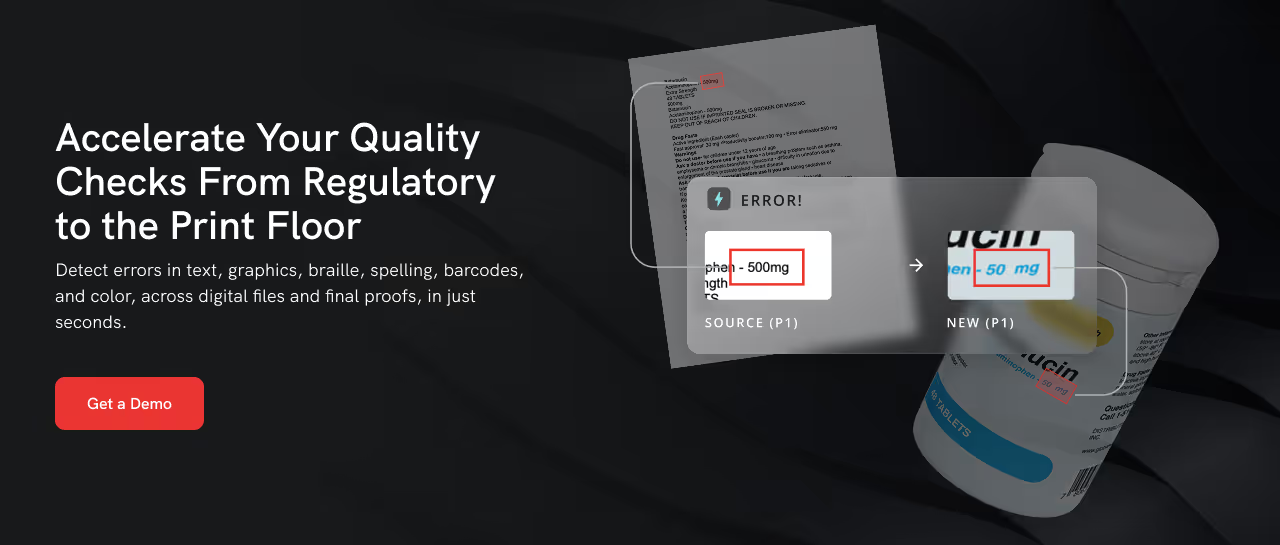
Digital proofing tools use advanced algorithms to automatically compare the finalized packaging artwork against the approved text document. The software instantly highlights any discrepancies, from missing commas to incorrect font sizes. This technology guarantees that the text approved by your regulatory team is exactly what gets printed on the final carton.
Streamlining Serialization and Data Syncing
Global compliance now requires dynamic data tracking. Different markets have varying requirements for serial numbers, expiration dates, and 2D barcodes.
Digital systems seamlessly integrate your artwork files with your enterprise resource planning (ERP) software. This integration ensures that the variable data printed on the packaging line matches the specific requirements of the destination country. By syncing this data digitally, you eliminate the risk of shipping a fully compliant physical carton that contains incorrect track-and-trace data.
Moving Forward with Confidence
Navigating global packaging compliance requires a mix of strategic foresight and modern technology. The regulatory landscape will only continue to grow more complex as different nations update their safety protocols.
To stay ahead, you must move away from reactive, manual processes. Start by auditing your current workflow to identify where regional adaptations cause the most delays. Implement a centralized master data strategy to maintain brand consistency. Most importantly, invest in digital tools and embrace automation to protect your artwork from costly human errors.
By simplifying the complexity of international markets, you empower your team to work faster and smarter. You also ensure that your life-saving products reach patients safely, no matter where they are in the world.