

Print manufacturing is changing faster than at any point in the last fifty years. The presses still hum, the substrates still roll, and the deadlines still loom, but underneath that familiar rhythm, a fundamental transformation is underway. Automation, AI-powered inspection, and connected packaging workflows are reshaping how packaging gets designed, produced, and delivered at scale.
For teams managing high SKU volumes, frequent label updates, and multi-market launches, this shift isn't abstract. It's showing up in faster approvals, fewer reprints, and compliance processes that no longer grind production to a halt. This guide covers what's driving the change, what modern print manufacturing actually looks like, and how leading teams are preparing for what comes next.
What is print manufacturing? Print manufacturing refers to the end-to-end industrial process of producing printed materials, including packaging, labels, cartons, and flexible films, from artwork creation through prepress, press production, and finishing.
How Print Manufacturing Is Changing: The Shift to Connected Ecosystems
The traditional print manufacturing workflow was a relay race. Design handed off to prepress. Prepress handed off to press. Press handed off to finishing. Each stage ran in isolation, with its own tools, its own data, and its own chances for something to go wrong.
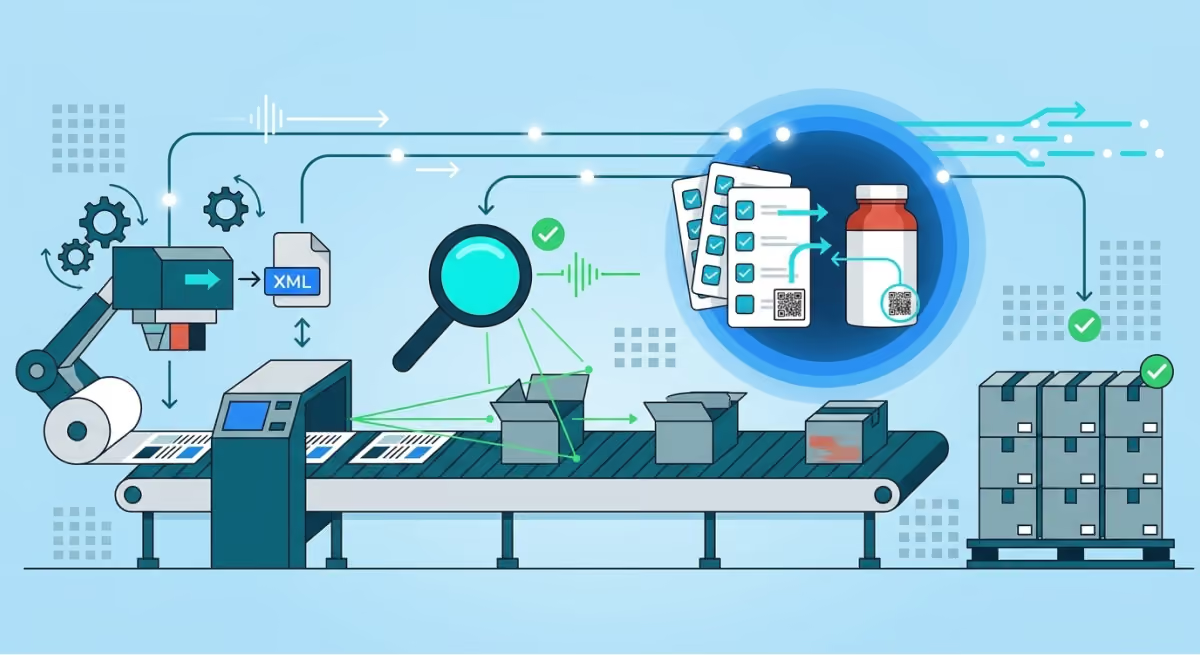
That model is dissolving. The defining trend reshaping modern print manufacturing isn't any single piece of technology, it's connection. Data now flows across the entire operation, linking every stage into one continuous, visible system. A change made at design ripples instantly through prepress, press setup, and quality control. Nothing gets lost in translation because nothing is handed off blind.
This is the shift from automation as a standalone feature to automation as a production ecosystem. And it's rewiring how the whole industry operates, with packaging manufacturing technology becoming the connective tissue holding it all together.
Smart Presses and Packaging Manufacturing Technology
Walk into a modern print facility and the press looks familiar. Watch it run, and you'll notice the difference.
Today's smart presses self-calibrate, monitor their own performance, and flag maintenance needs before a part fails.
Sensors track ink density, registration, and color consistency in real time, making micro-adjustments no human could execute at speed. The practical benefits of automation in print manufacturing show up fast:
- Less downtime thanks to predictive maintenance that catches wear before it becomes a breakdown
- Tighter consistency across long runs, with automatic correction holding color and registration steady
- Faster makereadies as presses configure themselves from job data instead of manual setup
- Lower waste because problems get caught in the first few sheets, not the first few thousand
For high-volume operations juggling constant SKU changes, that self-managing capability isn't a luxury. It's what makes speed and consistency coexist at production scale.
AI in Print Manufacturing: The End of "Good Enough" Quality Inspection
Quality inspection, long the domain of tired eyes and manual proofing, is one of the areas where AI in print manufacturing is delivering its clearest return.
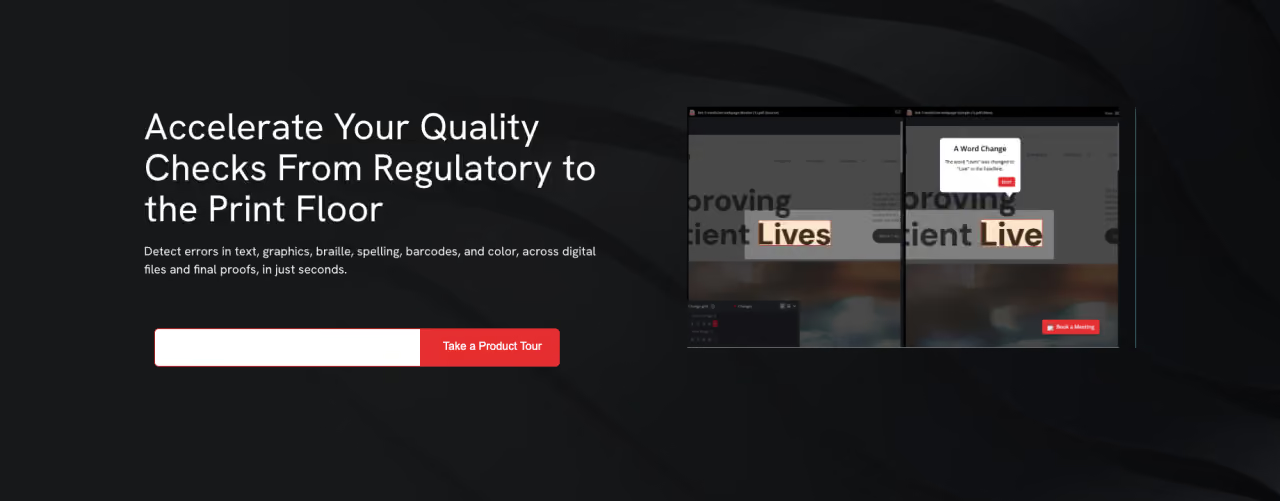
Automated inspection already compares files against approved masters with pixel- and character-level precision. AI pushes that further. It learns the patterns behind recurring errors, spots anomalies a rules-based check would miss, and gets sharper the more it inspects. Text, artwork, barcodes, braille, color, verified the same rigorous way on every file, whether it's the first of the morning or the ten-thousandth of the week.
What makes this a genuine turning point isn't just accuracy. It's scale without compromise. A human reviewer gets slower and less reliable as volume climbs. An AI-driven inspection engine doesn't flinch. Feed it more SKUs, more languages, more market variants, and it holds the line, catching the transposed digit, the missing allergen warning, the drifted brand color before any of them reach a plate.
The result: fewer reprints, faster approvals, and compliance that stays airtight even as complexity multiplies. That's the promise of packaging automation made real.
Print Workflow Automation and Connected Packaging Workflows
Print manufacturing has never operated in a vacuum, but it's about to become far more connected to every team that touches a product.
Connected packaging workflows extend beyond the plant walls. Brand teams, regulatory reviewers, suppliers, and printers increasingly share a single, live view of a project. Approved artwork lives in one system of record. Version history is transparent. Compliance checks travel with the file instead of living in someone's inbox.
The impact for fast-moving brands is concrete:
- Faster launches, because approvals and handoffs stop stalling in email threads
- Fewer version errors, since everyone works from one verified source of truth
- Smoother multi-market rollouts, with regional variants managed in a single connected flow
- Cleaner audit trails, as every action logs itself automatically
When print workflow automation connects your supply chain end to end, a label update that once took days of back-and-forth becomes a coordinated, traceable move. That's a competitive edge, not just an efficiency gain.
Digital Twins: Testing Print Manufacturing Decisions Before They Cost You
One of the most promising developments in packaging manufacturing technology borrows a concept from aerospace: the digital twin.
A digital twin is a precise virtual replica of a physical product or process. In print manufacturing, that means simulating how a design will actually behave on press, how a color reacts on a specific substrate, how a diecut folds into a finished carton, how ink lays down on a textured film, all before a single physical sheet runs.
The value is significant. Teams can catch production issues in the virtual world, where fixing them costs nothing but time. They can experiment with materials and finishes without burning through stock. And they can validate that a package will look and perform exactly as intended before committing to a full run. It's problem-solving moved upstream, to the cheapest possible moment to solve anything.
What Print Manufacturing Teams Should Do Now
None of this is science fiction reserved for enterprise giants. The building blocks are available today, and the gap between early adopters and everyone else is widening fast. Here's how to position your operation for what's coming.
Get your data house in order. Connected workflows and print workflow automation run on clean, structured data. Establish a single source of truth for approved artwork now, so you're ready to plug into smarter systems as they arrive.
Automate quality control first. Of every advance in modern print manufacturing, automated inspection delivers the fastest, clearest return. It slashes errors, accelerates approvals, and lays the foundation for AI-driven quality down the road. Start where the payoff is immediate.
Think in workflows, not tools. Stop evaluating point solutions in isolation. Ask how each new capability connects to the rest of your operation. The teams that win won't have the most tools, they'll have the most integrated ones.
Build a culture ready to adapt. Technology moves fast, but teams move at the speed of their willingness to change. Invest in people who see packaging automation as an amplifier of their expertise, not a threat to it.
The teams that act now won't just keep pace. They'll set the standard everyone else scrambles to match.
The Road Ahead for Print Manufacturing
Print manufacturing is entering its most consequential chapter yet. Smart presses that manage themselves. AI that inspects with tireless precision. Supply chains operating through connected packaging workflows. Digital twins that surface problems before they exist. Individually, each is impressive. Together, they amount to a fundamental reinvention of how packaging gets made.
The through-line is clear: in modern print manufacturing, accuracy, speed, and connection are becoming inseparable. The operations that thrive won't be defined by the size of their machines, they'll be defined by how intelligently those machines are connected, from the first design brief to the moment a product reaches the shelf.
The future of print manufacturing is automated, AI-driven, and built on workflows that don't just move faster, they move smarter. The only question is how quickly your team steps into it.
Frequently Asked Questions