The pharmaceutical industry is rapidly changing, and packaging systems must keep pace to ensure drug safety and efficiency. In 2026, packaging leaders face challenges tied to patient safety, stricter regulations, and pressure for greater operational efficiency. Outdated manual processes or old systems are no longer enough to meet modern demands.
This guide provides a clear overview of the pharma packaging landscape in 2026. It is organized to help packaging leaders distinguish must-have innovations from fleeting trends, navigate evolving global packaging compliance and serialization requirements, and understand the increasing importance of automation in pharma packaging. Each section is dedicated to one of these focal areas, making it easy to find insights most relevant to your team's goals.
Pharma Packaging Trends in 2026: Essential Innovations vs. Industry Hype
Innovation is important, but not every new technology will help your team achieve core goals. In 2026, packaging leaders must separate essential trends, features you need to operate successfully, from industry hype that can waste resources.
Essential Pharma Packaging Requirements in 2026: Table Stakes for Compliance and Efficiency
Today, some trends are essential for pharmaceutical companies to succeed. Using sustainable materials is now a requirement, not just a marketing choice. Governments and healthcare groups expect eco-friendly packaging that keeps medicine safe. If your team is not working to reduce packaging waste or use recyclable materials, you may not meet regulations or market expectations.
Smart packaging features, such as QR codes that link to electronic patient information leaflets (ePILs), are now essential. Patients want fast access to dosage instructions and side effect details, often using their smartphones. This digital approach improves patient compliance and allows direct communication between manufacturers and patients.
Pharma Packaging Trends to Approach with Caution: Industry Hype vs. Lasting Value
Some trends, like fully autonomous blockchain-driven supply chains, are mostly hype at this stage. While blockchain has potential for data security, it is often too complex and expensive for daily packaging operations. Likewise, augmented reality (AR) features, such as scanning a box to see a 3D doctor hologram, look impressive but do not offer enough practical value compared to digital leaflets. Instead, focus on proven technologies that clearly improve safety and efficiency.
Serialization, Track-and-Trace, and Evolving Packaging Compliance in Pharma
Regulatory agencies now require stronger safeguards for drug safety. Counterfeit medicines are a major public health risk, so robust track-and-trace systems have become essential.
In fact, the issue of counterfeit (or "substandard and falsified") medicines is a massive global health crisis. As of early 2026, the problem has shifted from "lifestyle" drugs (like performance enhancers) to life-saving treatments like antibiotics, insulin, and the recent surge in GLP-1 weight-loss medications.
Here is a breakdown of the current statistics and the scale of the problem.
- Market Value: The annual value of the global counterfeit medicine market is estimated at up to $432 billion.
- Prevalence: The World Health Organization (WHO) estimates that 1 in 10 medical products in low- and middle-income countries (LMICs) are either substandard or falsified.
- Regional Burden: Africa bears the heaviest burden, with a prevalence rate of approximately 18.7%, nearly double the global average for developing nations.
- The "East-to-West" Flow: Roughly 79% of dangerous counterfeit products seized at borders originate from China and Hong Kong, with the primary destinations being the U.S. and the EU.
This means that serialization has evolved beyond just printing a unique barcode on each carton. It now means creating a clear, complete data trail for every product unit from production to the end user.
Navigating Global Packaging Compliance Requirements in Pharma
Serialization has changed packaging compliance in pharma. In the past, compliance was mainly about correct labeling and using tamper-evident seals. Now, compliance means tracking each unit from manufacturing to the pharmacy shelf, creating a dynamic and continuous process.
This leads to a complicated landscape for global packaging compliance. Different countries and regions have their own serialization standards. For example, the European Union’s Falsified Medicines Directive (FMD) requires 2D barcodes and anti-tampering devices, while the U.S. Drug Supply Chain Security Act (DSCSA) calls for electronic, interoperable tracking at the package level. If your products move across borders, your packaging systems must be able to adjust, print, and verify different data sets based on where the medicine will be sold.
Track-and-Trace in Pharma Packaging: Turning Compliance Into Competitive Advantage
Smart packaging leaders see track-and-trace requirements as an advantage, not just a burden. With strong serialization technology, you gain clear visibility into your supply chain. This lets you quickly find bottlenecks, manage inventory better, and recall products accurately when needed. Meeting these regulatory rules also builds trust with health authorities and patients by showing your commitment to safety.
Digital Transformation and Automation in Pharma Packaging Workflows
Manual processes like routing physical artwork proofs in envelopes are now outdated and risky.
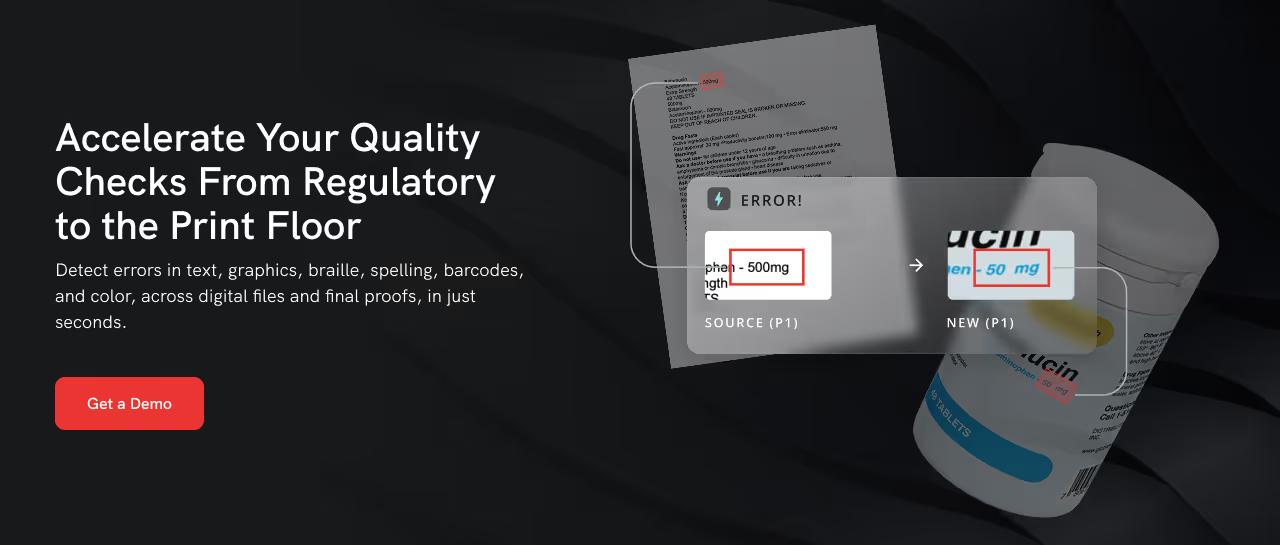
Human errors in pharmaceutical packaging, such as a typo or a wrong warning label, can cause expensive product recalls. To prevent these problems, packaging teams are adopting new digital workflows that reduce mistakes and improve efficiency.
The Impact of Automation in Pharma Packaging: Streamlining Compliance and Efficiency
Automation in pharma packaging greatly improves operational efficiency. Automated workflows take over repetitive manual tasks and use software to manage packaging processes. For example, when regulations change, automated systems can quickly identify and flag all affected packaging components across your products. This removes the need for manual checks and saves a lot of time.
Automation is also essential on the production floor. Machine learning-powered vision inspection systems now check labels, seals, and serialization codes quickly and accurately. These automated systems spot tiny defects that humans might miss, making sure only top-quality products leave the facility.
Artwork Compliance in Pharma Packaging: Overcoming Workflow Challenges
Managing artwork compliance is one of the biggest challenges for packaging teams. Teams must control text, graphics, and barcodes for hundreds of products in many languages. This process is complex and requires consistent accuracy.
Digital workflows keep all packaging assets in one easy-to-access system. When your regulatory team updates safety warnings, the digital system automatically updates the packaging artwork. Team members can review, comment, and approve designs together online. This process speeds up approvals and keeps everyone on the same page. Most importantly, it makes sure all packaging matches the latest regulatory requirements, greatly reducing the chance of artwork-related recalls.
Preparing Pharma Packaging Teams for 2026: Skills, Technology, and Compliance
Pharma packaging in 2026 requires precision, speed, and transparency. To succeed, packaging teams must choose the best technologies and processes for their needs.
Start by reviewing your current operations to spot any manual steps slowing you down, especially in approval processes. Look for software that brings all your data into one place. Make sure your team gets training on global packaging compliance and learns how to use new digital tools. Work closely with your IT and regulatory teams to fully connect your serialization and automation systems.
By replacing outdated methods with digital workflows, you improve patient safety, strengthen your supply chain, and help your company lead in the pharmaceutical industry.
Take the next step toward transforming your operations. Embrace digital workflows today and stay ahead in the pharmaceutical industry.