

Walk onto any packaging production floor running millions of units, and you'll likely find a flexo press at the heart of it. Flexographic printing dominates packaging production for one simple reason: it prints fast, runs cheap at scale, and handles materials no other method touches with the same ease.
If your team produces labels, films, corrugated, or flexible packaging, flexo is the engine behind your output.
This guide breaks down how flexographic printing actually works, why it owns high-volume packaging, where it wins against other methods, and how quality control keeps every run press-ready.
How Flexographic Printing Works
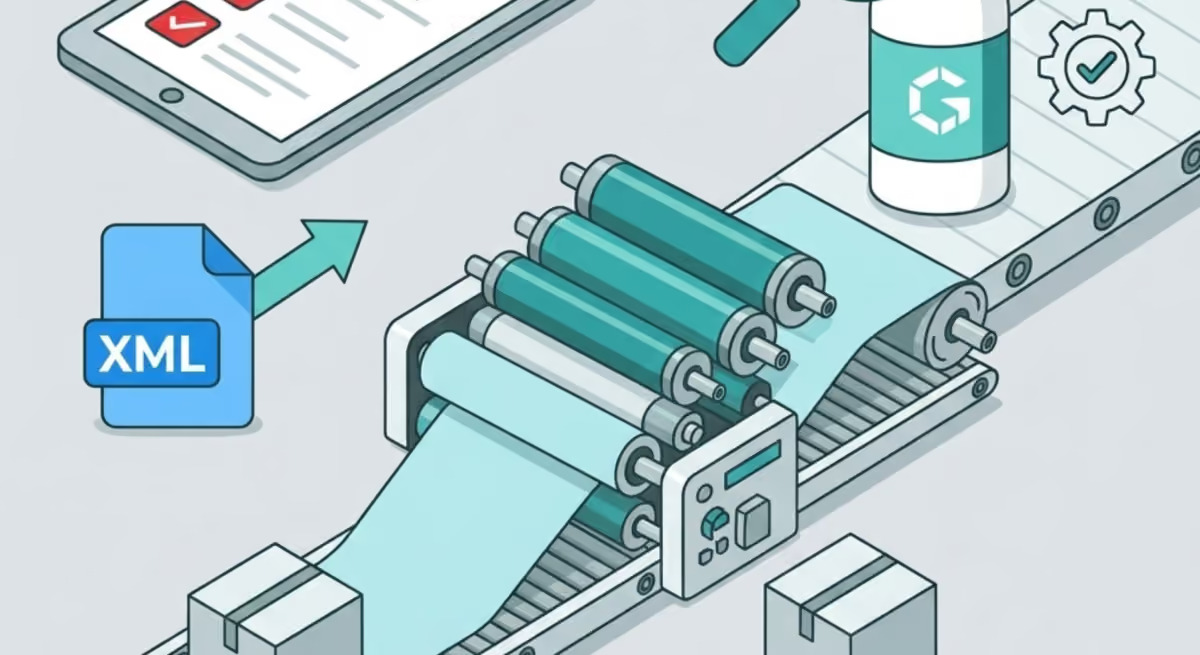
Flexographic printing is a relief printing method that uses flexible photopolymer plates to transfer ink onto a substrate. Picture a high-speed stamp wrapped around a rotating cylinder. The raised areas of the plate carry the image; the recessed areas stay clean. As the substrate feeds through at speed, each plate presses ink onto the material with remarkable consistency.
The process runs on a web press, meaning the substrate moves continuously from a large roll rather than as individual sheets. This roll-to-roll setup is what gives flexo its speed advantage.
Once the press is dialed in, it doesn't stop, it just keeps producing.
The Ink Transfer System
Flexo's precision comes from one critical component: the anilox roll. This engraved cylinder carries a precise, metered amount of ink to the plate. Each tiny cell in the anilox surface holds a fixed volume, so the ink film stays uniform across the entire run. Here's the typical flow:
- Ink fountain supplies the ink.
- Anilox roll meters it to an exact, repeatable volume.
- Photopolymer plate receives the inked image.
- Impression cylinder presses the substrate against the plate for transfer.
Each color gets its own plate, anilox, and print station. A four-color job runs through four stations in sequence, with the substrate moving fast enough to dry between each one, usually with UV, infrared, or hot-air drying built into the line.
Registration and Color Control
Because each color prints at a separate station, registration, aligning every color layer perfectly, is everything. Modern presses use camera systems and servo-driven controls to hold tight tolerances at full speed.
Get registration right, and your barcodes scan, your text stays crisp, and your brand colors land exactly where they should.
Why Flexo Dominates High-Volume Packaging
Flexographic printing earned its position at the top of packaging production through a combination of speed, cost, and versatility that's tough to beat at scale.
Flexo is so versatile, it could print on paper, on tissue, on plastic. You change the rules of the game, it will do it. That's why flexography is so popular and so resilient to the changes around us, and it's a safe investment.
Pascal Thomas, Flexo Business Unit, Esko
Unmatched speed at volume
Once a flexo press is set up, it runs continuously at high speeds. For long runs, millions of identical units, this is the most efficient option available. The setup cost spreads across a massive quantity, driving the per-unit price down to fractions of a cent.
Low cost per unit
The math is simple: high upfront setup, low marginal cost. The more you print, the cheaper each unit becomes. For established products with stable artwork and large order quantities, flexo delivers cost efficiency that digital can't match at scale.
Substrate versatility
This is flexo's real superpower. The flexible plates and adjustable pressure let it print on materials that would challenge other methods:
- Plastic films for flexible packaging and shrink sleeves
- Foils and laminates for premium and barrier applications
- Paper and paperboard for labels and folding cartons
- Corrugated board for shipping cases and retail-ready packaging
Few methods move so easily between a thin film and a thick corrugated sheet. That flexibility is exactly why flexo shows up across so much of the packaging world.
Common Flexo Use Cases
Flexographic printing turns up across nearly every packaging category. The most common applications include:
- Labels: Pressure-sensitive and shrink-sleeve labels for food, beverage, and household products.
- Flexible packaging: Pouches, bags, wraps, and films that demand both speed and durable, scuff-resistant ink.
- Corrugated: Shipping boxes and retail-ready packaging, where flexo prints directly onto board efficiently.
- Folding cartons: Cereal boxes, beverage carriers, and similar paperboard structures.
- Tags and tickets: High-volume printed components that need consistent quality and fast turnaround.
If a product faces moisture, friction, or freezer conditions, flexo's durable inks hold up where others fade or smear. That resilience makes it the default for packaging that has to survive the supply chain.
Plate-Making and Setup Considerations
Flexo's biggest trade-off is upfront preparation. Every design needs its own set of plates, and that process shapes your timeline and budget.
How plates are made
Photopolymer plates are produced through imaging and curing, traditionally with film and UV exposure, increasingly with digital (LAMS) plate-making that uses lasers to image the plate directly. Digital platemaking improves accuracy, reduces dot gain, and speeds the prepress process. The result is a flexible relief plate mounted to a cylinder for the press.
What drives setup time and cost
Keep these factors in mind when planning a flexo run:
- Number of colors: Each color needs its own plate and station, adding cost and setup.
- Artwork changes: New plates are required for every revision, frequent updates get expensive fast.
- Registration setup: Aligning colors and dialing in pressure takes time before the run stabilizes.
- Substrate matching: Ink, anilox, and plate choices must suit the material.
Because setup is the costly part, flexo rewards long, stable runs and penalizes frequent small changes. Plan artwork carefully, lock in approvals before platemaking, and you'll keep both cost and timeline under control.
Where Quality Control Fits in the Flexo Workflow
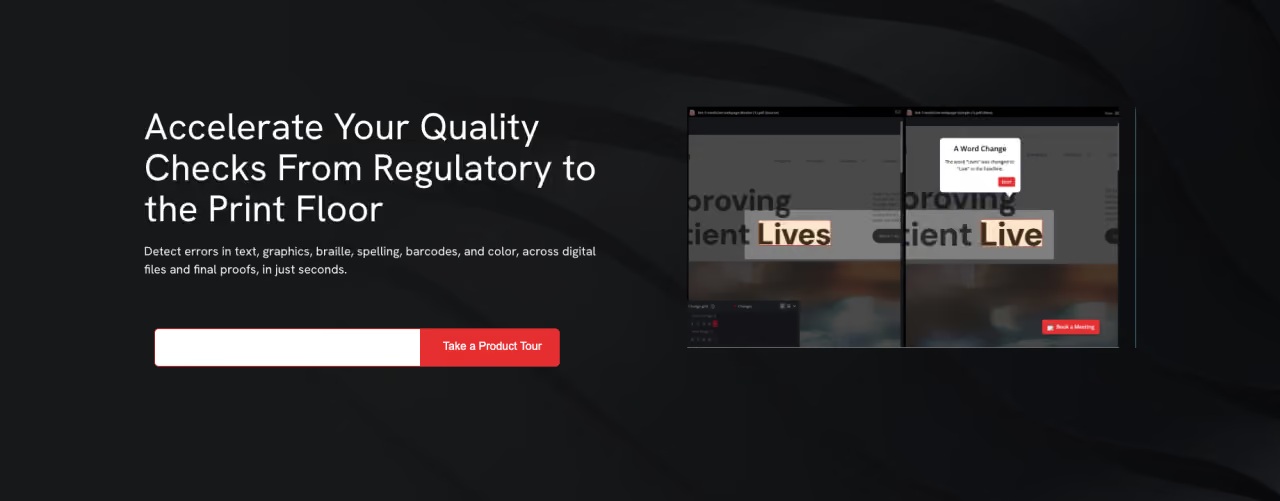
Here's the hard truth every production professional knows: a flexo press will faithfully reproduce whatever you give it, including the errors. A wrong barcode, a misplaced color, or a typo in regulatory text becomes thousands or millions of defective units the moment the web starts moving. And because flexo runs at volume, mistakes scale instantly.
That's why quality control belongs before the plates are made, not after the run.
Catch errors in prepress
The smartest teams build automated inspection into the prepress stage, verifying artwork against approved files before committing to platemaking. Automated proofreading catches what tired eyes miss:
- Text and spelling errors across every language version
- Barcode integrity to confirm every code scans correctly
- Color and registration accuracy against the approved standard
- Artwork deviations between revisions and master files
Inspect on press, too
Once the press runs, inline inspection systems monitor registration, color density, and print defects in real time, flagging issues before they fill a pallet. Pairing prepress proofing with on-press inspection closes the loop, you catch problems early and confirm consistency throughout the run.
The payoff is direct: fewer reprints, faster approvals, and confidence that every unit meets spec. In high-volume flexo, that's the difference between a profitable run and a costly recall.
Quick Recap
- How it works: Flexible plates and an anilox-fed web press transfer ink fast and consistently.
- Why it dominates: Unbeatable speed and low cost across long, high-volume runs.
- Where it shines: Labels, films, corrugated, flexible packaging, and folding cartons.
- What to plan for: Plate-making and setup reward stable artwork and long runs.
- Never skip: Automated quality control before and during the run to prevent costly errors.
Flexographic Printing for Packaging Production
Flexographic printing dominates packaging production because it delivers what high-volume operations demand most: speed, low cost, and the versatility to print on almost any substrate.
Master the plate-making and setup side, and you unlock its full efficiency. Build automated quality control into your prepress and press stages, and you protect every run from the errors that scale just as fast as your output.
Ready to keep building your knowledge? Continue with the next post in this series on label printing in regulated industries, where accuracy stops being a nice-to-have and becomes mission-critical.
Frequently Asked Questions