

Every job that moves through your shop starts with a single decision that ripples across your entire production schedule: how will it be printed?
Packaging printing shapes your press time, your per-unit cost, your color consistency, and your ability to hold registration and meet spec across substrates. Get it right, and you run clean with fewer reprints. Get it wrong, and you're stuck with rework, color mismatches, and costly make-readies.
The challenge is that there's no single "best" method. Flexographic, digital, offset, gravure, and screen printing each shine in different situations. The trick is matching the technology to the substrate, the run length, and the production goals on the floor.
In this guide, you'll learn how each method works, where it excels, and how to choose confidently, even when prepress is juggling dozens of files and a tight press deadline.
“Flexo is built for scale. If you're producing large volumes of packaging, it's often the most efficient option. Digital shines when flexibility matters. Short runs, quick changes, and faster setup make it incredibly versatile. Offset delivers outstanding print quality and consistency, which is why many brands still rely on it for certain applications.”
Hashem Ali, Instructional Designer, GlobalVision
What Packaging Printing Really Involves
Packaging printing is the process of applying graphics, text, barcodes, and regulatory information onto materials like labels, cartons, films, and flexible pouches.
It's far more than slapping ink on a surface. The method you choose determines how crisp your text resolves, how accurately your spot colors hold, and how easily prepress can update artwork when revisions land.
For print, packaging, and prepress teams, three factors dominate every printing decision:
- Run length: How many units are you producing per run?
- Throughput: How fast does the job need to clear the press and ship?
- Versioning: How often does artwork change across substrates, languages, or SKUs?
Keep these three in mind. They'll guide nearly every choice you make below.
Flexographic Printing: The Packaging Workhorse
Flexographic printing, or "flexo", dominates packaging for good reason. It uses flexible photopolymer plates that transfer ink onto a wide range of materials, including films, labels, corrugated boxes, and flexible packaging. The plates rotate at high speed, making flexo a champion for long, high-volume runs.
How Flexographic Printing Works
Each color gets its own raised printing plate. Ink rolls onto the plate, the plate presses against the substrate, and the image transfers. Because the process runs continuously on a web, it moves fast and handles enormous quantities without breaking stride.
Strengths and ideal use cases
- High-volume efficiency: Once the job is set up, flexo prints millions of units at low per-unit cost.
- Material flexibility: It works on plastics, films, foils, and paper.
- Durable output: Great for packaging that faces moisture, friction, or freezer conditions.
Flexo is your go-to for established jobs with stable artwork and large order quantities. Think snack bags, beverage labels, and corrugated shipping cases.
Worth knowing
Flexo requires plate creation for every design, which adds prepress effort, upfront cost, and make-ready time. For frequent artwork changes or short runs, that setup can slow the floor down. The next sub-post in this cluster digs deeper into why flexo still dominates the industry.
Digital Printing: Speed and Flexibility for Fast-Moving Shops
Digital printing skips plates entirely. It transfers artwork straight from a file to the substrate using inkjet or toner-based systems. For print and prepress teams managing constant revisions and high SKU counts, this is a game-changer.
How Digital Printing Works
Your file goes from prepress to press with no physical plates. That means you can swap artwork between jobs, run short runs economically, and produce regional variations without expensive retooling or new plate sets.
Strengths and ideal use cases
- Fast turnaround: No plate setup means jobs clear prepress and reach press sooner.
- Cost-effective short runs: Perfect for limited editions, regional variations, and proofs.
- Easy versioning: Update languages, claims, or promotions straight from the file.
- Variable data: Print unique codes, batches, or designs within a single run.
Digital shines for new SKU rollouts, seasonal jobs, multi-market versioning, and any scenario where speed and flexibility matter more than mass volume.
Worth knowing
Per-unit costs climb as run length rises, so digital isn't always the most economical choice for massive runs. But for shops handling frequent revisions or short-run work, the speed advantage is hard to beat.
Offset Printing: Premium Quality for Folding Cartons
Offset (or lithographic) printing delivers exceptional image quality and is a staple for folding cartons, paperboard packaging, and premium retail boxes. If the job demands sharp detail and rich, consistent color, offset earns its place.
How Offset Printing Works
Ink transfers from a plate to a rubber blanket, then onto the substrate. This indirect "offset" method produces clean, precise images with smooth gradients and crisp text, ideal for beauty, cosmetics, and premium food cartons where shelf appeal drives the spec.
Strengths and ideal use cases
- Superior detail: Excellent for fine text, intricate graphics, and gradients.
- Color consistency: Reliable, repeatable results across large runs.
- Cost-effective at scale: Great for medium-to-high volumes of cartons.
Reach for offset when premium presentation matters and you're producing folding cartons in solid quantities.
Worth knowing
Like flexo, offset requires plates, so prepress and make-ready add time and cost. It's also best suited to flat substrates like paperboard rather than flexible films.
Gravure and Screen Printing: Specialized but Powerful
Beyond the big three, two methods serve specific needs exceptionally well.
Gravure (rotogravure)
Gravure engraves the image into a metal cylinder, holding ink in tiny recessed cells. It delivers outstanding, consistent quality across extremely long runs, making it a favorite for high-volume flexible packaging, like large-scale snack and confectionery work.
- Best for: Very high volumes where image consistency is critical.
- Trade-off: High cylinder costs make it impractical for short runs or frequent changes.
Screen Printing
Screen printing pushes ink through a fine mesh onto the substrate. It's prized for vivid, durable colors and works on unusual shapes and materials, including glass bottles and rigid containers.
- Best for: Specialty packaging, heavy ink coverage, and durable decoration.
- Trade-off: Slower and less suited to fine detail or high volumes.
These methods aren't everyday choices for most shops, but they're invaluable when the job demands their specific strengths.
How Print and Prepress Teams Choose the Right Technology
Matching the method to the job comes down to balancing four priorities: throughput, cost, quality, and compliance.
Here's a quick comparison to guide your thinking.
- What's my run length? High volume favors flexo or gravure. Short runs favor digital.
- How often does artwork change? Frequent revisions point to digital.
- What quality does the job demand? Premium detail leans toward offset.
- How fast does it need to clear press? Tight schedules reward digital's plate-free speed.
The smartest shops don't lock into one method. They build a mix, using digital for short-run and versioned work and flexo or offset for stable, high-volume staples.
The Compliance Factor You Can't Ignore
Here's the truth that trips up busy shops: no printing technology protects you from errors in the file that lands on press.
A misspelled ingredient, a wrong allergen warning, or a barcode that won't scan becomes a costly reprint the moment it runs, at any volume, on any press.
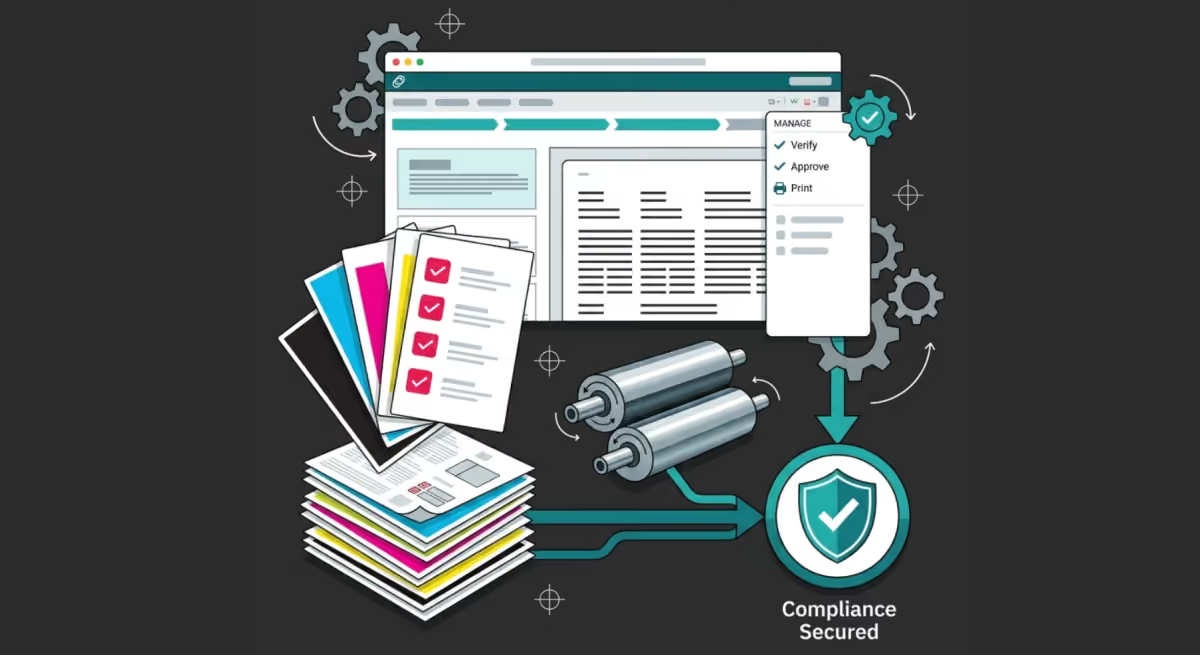
That's why your printing strategy needs a prepress quality control strategy to match. Before a file goes to plate or press, automated quality control catch text errors, color deviations, barcode issues, and regulatory mismatches that the human eye misses.
This matters most when prepress is managing high file volumes, multi-language artwork, and frequent revisions, exactly the conditions where mistakes slip through.
The payoff is real: fewer reprints, faster approvals, and confidence that every file meets spec before it hits the press. Pair the right printing technology with airtight prepress checks, and you run cleaner with far less risk.
How These Technologies Are Evolving
Packaging printing is moving toward connected, automated, and increasingly flexible workflows.
A few trends are reshaping the landscape:
- Hybrid presses: Combining digital and flexo on one line gives shops the best of both high-volume efficiency plus on-the-fly versioning.
- Smarter digital: Faster speeds and lower costs are expanding where digital makes sense, even at higher volumes.
- Sustainability gains: New inks, recyclable substrates, and reduced waste are becoming standard expectations.
- Automated quality integration: Proofing and inspection are moving directly into prepress and press workflows, catching errors earlier and standardizing quality across every job.
The direction is clear: faster, more connected, and more accurate. Teams that adopt automated quality control alongside modern printing methods will run quicker and scale cleaner.
Final Thoughts
Choosing the right packaging printing technology isn't about finding one perfect method, it's about matching the right tool to each job, run length, and schedule.
Flexo handles your high-volume staples. Digital powers your short-run and versioned work. Offset elevates your premium cartons. And specialized methods like gravure and screen fill the gaps.
But whatever you choose, remember that the press only prints what prepress hands it. Pairing smart technology decisions with automated quality control is how leading print, packaging, and prepress teams run faster, reduce reprints, and stay audit-ready across every job.
Ready to dig deeper? Explore the next post in this series on flexographic printing, or learn how automated proofreading keeps your files flawless before they ever hit the press.
Frequently Asked Questions