

Every product on a shelf went through a journey you rarely see. Behind that perfect label, crisp barcode, and on-brand color is a packaging production lifecycle with dozens of moving parts, and plenty of chances for things to go wrong.
If you manage high-volume SKUs across multiple markets, you already know the stakes. One misplaced ingredient list, one off-spec color, one missed regulatory update, and you're staring down a costly reprint or a recall. This guide walks you through every stage of packaging production, so you can spot risks early, move faster, and ship shelf-ready packaging with confidence.
Here's what you'll learn:
- The seven core stages of packaging production
- Where errors most often creep in and how to catch them
- Practical tips to speed up timelines without sacrificing quality
- How automation strengthens compliance at scale
Let's break it down stage by stage.
“When teams want to accelerate packaging launches, the biggest opportunities are often in review and approval workflows, not on the production floor.”
Naike Dombre, Senior Account Executive, GlobalVision
What Is Packaging Production?
Packaging production is the end-to-end process of turning a packaging concept into a finished, shelf-ready product. It spans design, prepress, printing, materials sourcing, quality control, compliance, and final delivery.
Think of it as a relay race. Each stage hands off to the next, and a stumble anywhere slows the whole team down. The goal is simple: deliver accurate, compliant, on-brand packaging, fast, and at scale.
Key takeaway: Strong packaging production isn't about one perfect step. It's about a connected workflow where every handoff is clean.
Stage 1: Concept and Design
Everything starts with an idea. At this stage, your design and marketing teams shape how the package looks, feels, and communicates with shoppers.
During concept and design, teams typically:
- Define brand elements like logos, colors, and typography
- Map out required content (ingredients, claims, nutritional panels)
- Consider structural format (box, pouch, bottle, label)
- Account for market-specific needs across regions
Here's the biggest mistake people make: treating design as purely creative. Smart teams build compliance and print feasibility into the design from day one. A gorgeous concept that can't print cleanly, or violates a regional regulation, just creates rework later.
Pro tip: Lock down mandatory regulatory content early. It's far cheaper to design around requirements than to retrofit them after approval.
This stage sets the foundation. Get it right, and prepress runs smoother.
Stage 2: Prepress and Artwork Preparation
Prepress is where creative artwork becomes print-ready files. It's also where many quality issues hide in plain sight.
In this stage, teams prepare and verify every element before it touches a printing press. That includes:
- Text accuracy: Checking spelling, claims, and regulatory copy
- Barcode verification: Confirming codes scan correctly and meet standards
- Color management: Setting up files for consistent reproduction
- Layout checks: Ensuring bleeds, margins, and die lines are correct
- Version control: Confirming you're working from the approved master
Manual proofreading at this stage is slow and risky. A single tired reviewer scanning fine print across dozens of SKUs is a recipe for missed errors. This is exactly where automated proofreading shines.
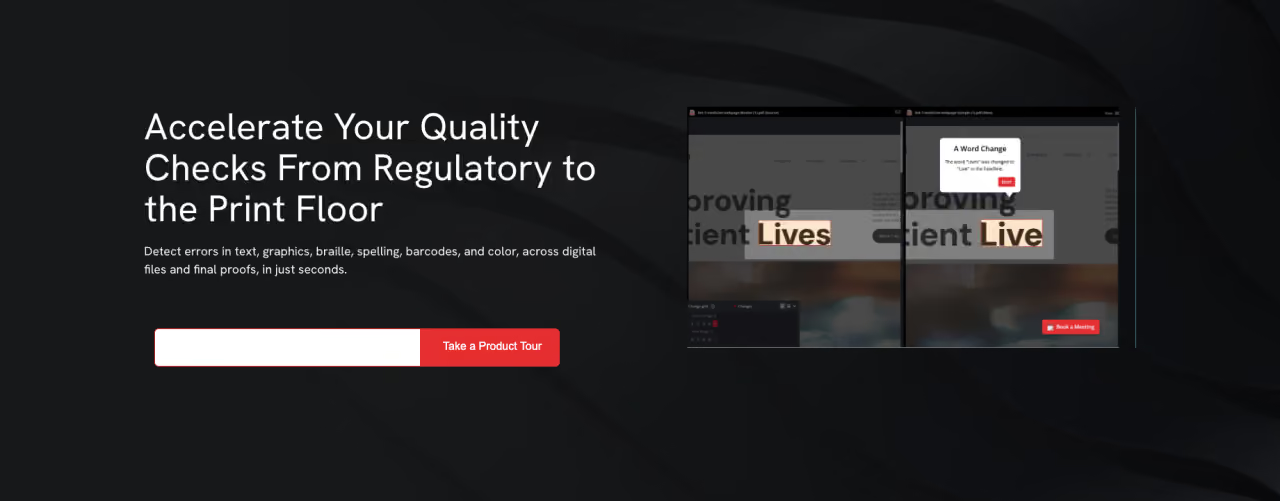
Automated tools compare artwork against approved files, flagging text differences, barcode issues, and graphic deviations in seconds. They reduce manual errors, speed up approvals, and standardize quality checks across every file.
Key takeaway: Prepress is your last clean chance to catch errors before they multiply across thousands of printed units. Treat it as a quality gate, not a formality.
Stage 3: Choosing the Right Printing Technology
Once artwork is approved, you choose how to print it. The method you pick affects cost, speed, quality, and run size.
The main packaging printing technologies include:
- Flexographic (flexo): A workhorse for high-volume labels and flexible packaging. Fast, cost-effective at scale, and widely used in CPG.
- Digital: Ideal for short runs, fast turnarounds, and frequent label updates. No printing plates needed.
- Offset (lithography): Delivers sharp detail and color, often used for folding cartons.
- Gravure: Excellent for very large runs with consistent, premium quality.
So how do you choose? Match the method to your run size, timeline, and budget.
- High-volume, repeat SKUs? Flexo usually wins.
- Frequent updates or regional variations? Digital offers flexibility.
- Premium cartons with fine detail? Offset is a strong fit.
Pro tip: If your SKUs change often, new claims, seasonal designs, market-specific copy, digital can dramatically cut your time to market.
Pick the right technology, and you balance cost with the quality your brand demands.
Stage 4: Materials Sourcing and Substrate Selection
Your packaging is only as good as the materials it's printed on. Substrate choice affects print quality, durability, sustainability, and compliance, especially in food and beauty.
When sourcing materials, consider:
- Substrate type: Paper, film, foil, plastic, or specialty materials
- Food-safe requirements: Compliance with contact-material regulations
- Sustainability goals: Recyclable, compostable, or reduced-material options
- Supply reliability: Lead times and availability across markets
Material decisions ripple through the whole lifecycle. A substrate that doesn't hold color well can throw off your brand consistency. A material with long lead times can blow your launch deadline.
You might be wondering how to balance cost and sustainability. Start by mapping which SKUs truly need premium materials versus where you can standardize. Consolidating substrates across product lines often reduces both cost and complexity.
Key takeaway: Treat materials as a strategic decision, not an afterthought. The right substrate protects both your product and your brand.
Stage 5: Quality Control During Production
Quality control is the heartbeat of packaging production. This is where you protect against errors that lead to reprints, delays, and recalls.
Effective QC checks happen at multiple points, not just at the end. Leading teams verify:
- Text and copy: Matching printed content to approved artwork
- Color accuracy: Confirming consistency batch to batch
- Barcodes: Ensuring every code scans and complies
- Graphics and registration: Checking alignment and image quality
- Print defects: Spotting streaks, smudges, or misprints early
Manual inspection alone can't keep pace with high-SKU, fast-moving environments. Human eyes get tired. Volume grows. Errors slip through.
Automated quality control changes the game. By comparing production samples against approved masters, automated inspection catches deviations a manual reviewer might miss, every time, at any scale. The payoff is real: fewer reprints, faster approvals, and consistent quality across every market.
Pro tip: Build QC into each stage rather than saving it for the end. Catching an error in prepress costs pennies. Catching it after printing 50,000 units costs a fortune.
Stage 6: Compliance and Regulatory Verification
For CPG operators, compliance isn't optional, it's survival. Mislabeled allergens, missing warnings, or incorrect regulatory copy can trigger recalls and violations.
Compliance verification confirms your packaging meets every requirement for every market you serve. That means checking:
- Mandatory regulatory text and claims
- Allergen and ingredient declarations
- Multi-language translations and accuracy
- Region-specific labeling rules
- Braille and accessibility requirements where mandated
Multi-market launches make this especially tricky. The same product may need different labels, languages, and disclaimers across regions. Managing that manually invites mistakes.
Automated verification supports compliance by checking translations, flagging missing elements, and validating content against your approved standards. It helps you stay audit-ready without slowing your team down.
Key takeaway: Compliance errors are among the most expensive mistakes in packaging production. Verify rigorously, and verify often.
Stage 7: Final Approval and Shelf-Ready Delivery
The finish line. At this stage, your packaging gets a final review before heading to fulfillment and store shelves.
Before sign-off, confirm:
- All QC and compliance checks are complete and documented
- Final samples match approved artwork exactly
- Packaging is structurally sound and protects the product
- Delivery timelines align with launch dates
A clean approval process protects everything you built in earlier stages. Skipping a final check to save time often backfires, right when visibility is highest.
Once approved, your packaging ships out, hits the shelf, and starts doing its job: catching eyes, building trust, and driving sales.
Pro tip: Keep a documented audit trail of every approval. It speeds future launches and keeps you ready for any regulatory review.
How to Speed Up Your Packaging Production Without Sacrificing Quality
Tight timelines and high SKU counts create constant pressure. Here's how leading teams move faster while keeping quality high:
- Automate proofreading and QC. Replace slow manual checks with automated inspection to catch errors instantly.
- Standardize workflows. Use consistent checks at every stage so nothing slips through.
- Build compliance in early. Address regulatory needs in design, not after printing.
- Centralize approved artwork. Eliminate version confusion with a single source of truth.
- Integrate your tools. Connect QC into existing systems to reduce handoffs and bottlenecks.
The result? Reduced errors, fewer reprints, faster product-to-market time, and consistent quality across every SKU and market.
Bringing Packaging Production All Together
The packaging production lifecycle moves from concept and design, through prepress, printing, materials, quality control, and compliance, all the way to shelf-ready delivery.
Each stage hands off to the next, and a single error can ripple across thousands of units. The teams that win treat quality and compliance as built-in priorities, not last-minute checks. With smart workflows and automated verification, you can move faster, cut costly errors, and ship flawless packaging at scale.
Ready to tighten your packaging production process? Start by auditing where manual checks slow you down, then build automated quality control into those exact stages. Your timelines, your budget, and your brand will thank you.
FAQs