
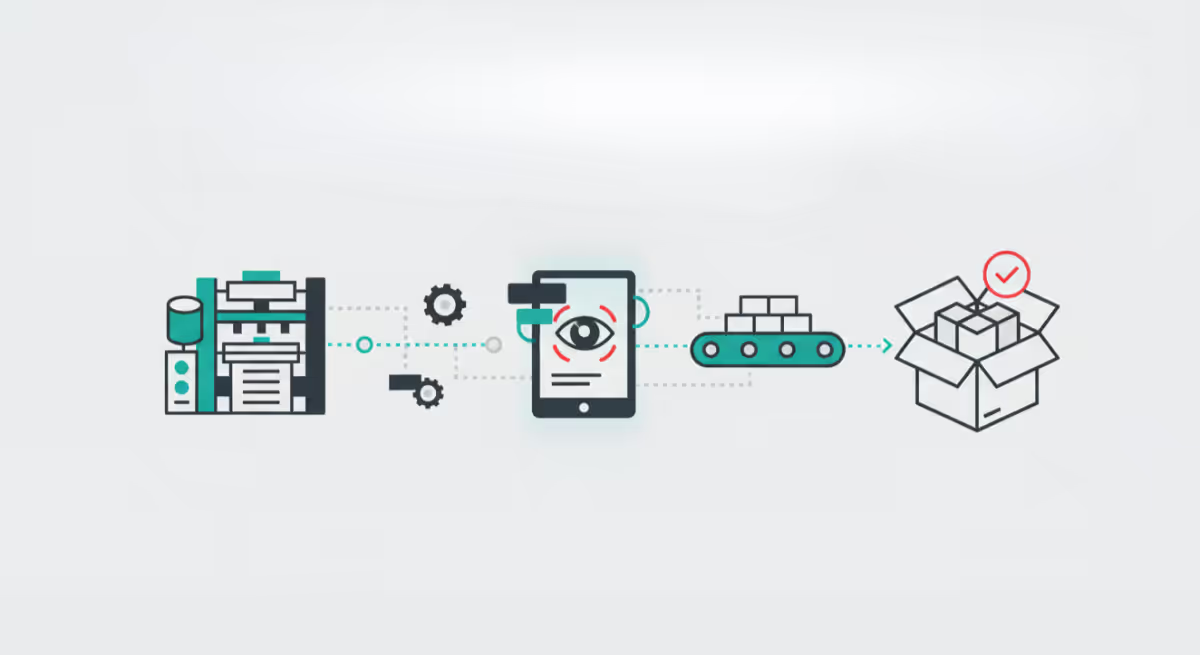


Imagine a production floor where errors are caught before a human eye ever scans a proof.
This isn't science fiction; it is the rapidly arriving reality of the print and packaging industry. As demand for shorter runs and faster turnaround times intensifies, the traditional methods of manual review are becoming bottlenecks. The solution lies in a concept that promises to revolutionize operations: zero-touch quality control.
This post explores how advanced technology is reshaping quality assurance, moving us away from manual intervention and toward a seamless, automated future. Let’s look at the pivotal roles of automation and API integration, the benefits of upgrading your prepress workflow, and the challenges that come with implementing these powerful new systems.
The Shift from Manual to Zero-Touch Quality Control
For decades, quality control in print and packaging relied heavily on human intervention. A skilled operator would manually inspect files, check for bleed issues, verify color separations, and ensure fonts were embedded. While effective to a degree, this method is prone to fatigue, oversight, and inevitable human error.
Zero-touch quality control changes the game. It refers to a system where files pass through rigorous checks and corrections without direct human manipulation. By leveraging sophisticated software, businesses can ensure that every file entering the production pipeline meets specific standards automatically.
This shift isn't just about speed; it's about consistency. A machine doesn't get tired after an eight-hour shift, and it doesn't overlook a low-resolution image because it was distracted.
Automation and APIs: Zero-Touch Quality Control
The engine driving this transformation is automation. However, modern automation goes beyond simple scripts. It involves intelligent systems capable of making decisions based on predefined rules.
Why the API is Critical
The real magic happens when you introduce an API (Application Programming Interface). An API allows different software platforms to talk to each other. In a print environment, this means your MIS (Management Information System), your web-to-print portal, and your prepress software can all communicate instantly.
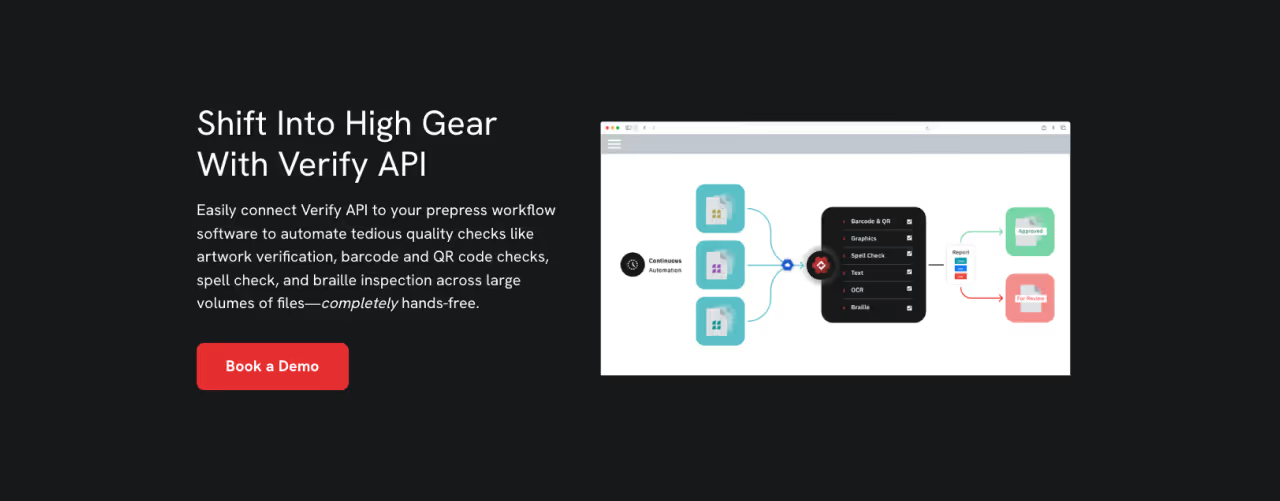
When a customer uploads a file, an API can trigger an immediate automated QA process. The file is analyzed, reported on, and potentially even fixed before a prepress operator even opens the job ticket. This level of connectivity creates a "lights-out" workflow where files move from order to press with minimal friction.
Elevating Prepress Quality and Prepress Workflow Automation
Prepress quality is often the biggest hurdle in production. Bad files result in wasted materials, press downtime, and angry customers. Prepress quality automation addresses these issues at the source.
Modern tools can automatically perform hundreds of quality checks in seconds. These checks include:
- Resolution Verification: Ensuring images meet the required DPI.
- Color Management: Converting RGB to CMYK or verifying spot colors.
- Structural Integrity: Checking dielines and bleed areas for packaging.
- Font Analysis: Identifying missing or corrupt fonts.
By automating these checks, you standardize the output. Prepress workflow becomes a predictable science rather than a variable art form. If a file fails a check, the system can automatically reject it and notify the customer with specific instructions on how to fix it, removing the prepress team from the role of "bad news bearer."
The Benefits of Automated QA and Quality Checks
Why should a print or packaging company invest in this technology? The return on investment for automated QA is multi-faceted.
1. Unmatched Efficiency
Manual quality control is slow. Automation is instant.
By removing the manual review step for standard jobs, you free up your skilled operators to focus on complex, high-value projects that actually require human expertise. This increases overall throughput without increasing headcount.
2. Cost Savings
Errors are expensive. Re-printing a job because of a missed typo or a color error costs money in substrate, ink, and press time. Quality control in print and packaging that relies on automation catches these errors digitally, long before ink hits paper. The savings on waste alone often justify the investment.
3. Scalability
As your business grows, manual processes struggle to keep up. Hiring more people to check files is not a sustainable scaling strategy. Automated workflows scale effortlessly. Whether you are processing 100 jobs a day or 10,000, the software executes the same rigorous checks with the same speed.
Ready to Switch to Zero Touch Quality Control?
The future of quality control in print and packaging is undeniably digital and increasingly autonomous. By embracing automation and robust API integrations, companies can achieve a level of prepress quality that was previously impossible.
The journey to zero-touch quality control doesn't happen overnight. It starts with auditing your current prepress workflow, identifying the repetitive tasks that bog down your team, and exploring how automated QA can take that weight off their shoulders.
The printers and converters who adopt these technologies today will be the market leaders of tomorrow, delivering higher quality faster and more profitably than ever before.
Frequently Asked Questions


