

Ask most packaging managers about compliance, and you'll hear a quiet sigh. Not because they don't care, they care deeply, but because compliance has a reputation for gumming up the works. It's the extra sign-off, the last-minute scramble, the binder someone has to assemble the week before an auditor walks in. For teams already racing against launch dates and juggling hundreds of SKUs, that reputation feels earned.
Here's the reframe worth sitting with: compliance for packaging teams isn't the thing that slows you down. Disorganized compliance is. When audit-readiness lives in scattered emails, tribal knowledge, and end-of-cycle heroics, of course it drags. But when you build it into the rhythm of everyday work, something surprising happens, it fades into the background, quietly doing its job while your team keeps moving at full speed.
This guide explains how packaging teams can stay genuinely audit-ready, maintain label compliance across high-volume SKU portfolios, and keep pace with regulated packaging workflows, without adding bureaucratic drag.
What Does Compliance for Packaging Teams Actually Mean?
Packaging compliance is the ongoing process of ensuring that every label, artwork file, and printed component meets the regulatory, brand, and market standards required before a product ships. For packaging teams managing frequent label updates, multi-language variants, and tight launch windows, compliance isn't a one-time checklist. It's a continuous workflow discipline.
Compliance for packaging teams spans:
- Label accuracy: text, dosage, ingredient statements, and legal copy matching the approved master
- Regulatory elements: allergen callouts, warnings, country-specific requirements, and multi-language content
- Artwork integrity: graphics, barcodes, and color verified against the approved file
- Audit trail completeness: a clear, timestamped record of every version, inspection, and approval
When all four are managed consistently, packaging audit readiness becomes less of a sprint and more of a steady state.
Reframing What "Audit-Ready" Actually Means
Most teams treat audit-readiness as a state you enter right before an inspection. You clean up the files, chase down approvals, reconstruct who changed what, and hope the timeline holds. It's stressful, it's reactive, and it pulls your best people off productive work for days.
Genuine audit-readiness works the other way around. It means that on any given Tuesday, no warning, no prep, you could hand an auditor a clean, traceable record of every packaging decision your team has made. Not because you scrambled to build it, but because the record assembled itself as a natural byproduct of how you work.
That distinction matters enormously:
- Reactive compliance is a tax you pay over and over.
- Embedded compliance is an asset that compounds.
The gap between the two isn't about working harder during audits. It's about designing your daily packaging approval workflow so the evidence is always there, waiting.
Why Adding More Process Often Backfires
There's a tempting but wrong solution to compliance pressure: add more process. More approval layers, more mandatory reviews, more sign-off steps. On paper, it looks rigorous. In practice, it creates the exact bottleneck everyone fears, and, ironically, it often makes packaging compliance worse.
When a process feels heavy and slow, people find shortcuts. They approve things they didn't fully review to keep the line moving. They batch sign-offs at the end of the week. They treat the compliance step as a formality to clear rather than a check that matters. Bureaucracy doesn't create diligence. It creates workarounds, and workarounds are precisely where compliance gaps hide.
The packaging teams that stay genuinely audit-ready take the opposite approach. They make the compliant path the easy path. When doing things correctly is faster than cutting corners, people naturally do things correctly, not because a policy forces them to, but because it's the smoothest way to get their work done.
3 Workflow Shifts That Embed Compliance Without Adding Drag
Here's how packaging teams can build audit-readiness into everyday operations without slowing down:
1. Shift the Checkpoint Upstream
The most effective move is catching issues early, when they're cheap and fast to fix. A packaging compliance problem discovered at prepress is a quick correction. The same problem discovered after platemaking is a costly reprint. Discovered on the shelf, it's a recall.
By verifying every file against its approved master the moment artwork arrives, and again after each revision, you stop non-compliant work from ever moving forward. The check becomes part of the handoff, not a separate gate bolted on afterward.
2. Let the System Carry the Memory
Human memory is a terrible compliance tool. Nobody can reliably recall which version shipped to which market, who approved it, or what changed between drafts three and four. When that history lives in a system rather than someone's head, packaging audit readiness stops depending on any one person being available or remembering correctly.
Every inspection, revision, and approval logs itself automatically, building a complete, retrievable record without anyone lifting a finger to document it.
3. Standardize What "Correct" Looks Like
Ambiguity kills speed. When two reviewers can reach two different conclusions about the same file, you get inconsistency, rework, and endless back-and-forth. Lock in one approved master per component and one clear standard for what gets checked: text, artwork, barcodes, color, allergen and warning statements, multi-language content.
When everyone measures against the same source of truth, decisions get faster and disputes nearly disappear.
How Automation Scales Packaging Compliance
For packaging teams managing high SKU volumes, manual review simply cannot deliver consistent compliance at scale. Automated proofreading tools change the equation entirely.
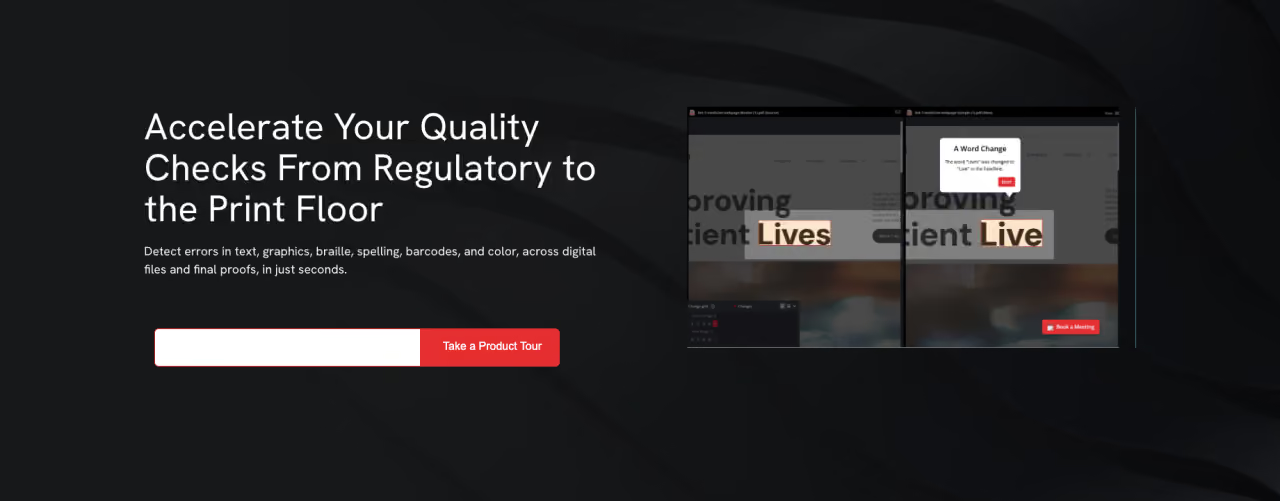
Instead of asking tired eyes to catch a transposed digit or a missing warning across thousands of files, automated inspection compares every file to its approved master with precision that never wavers. Text, graphics, barcodes, braille, color, checked the same rigorous way every time, whether it's the first file of the day or the ten-thousandth.
The compliance payoff is twofold:
- Accuracy stops being a variable. Every file clears the same standard, so the errors that trigger label compliance violations get caught before they escape.
- The audit trail builds itself. Every automated inspection logs what was checked, what passed, and when. When an auditor asks for proof, you're not reconstructing history, you're retrieving it.
A Practical Operating Model for Packaging Audit Readiness
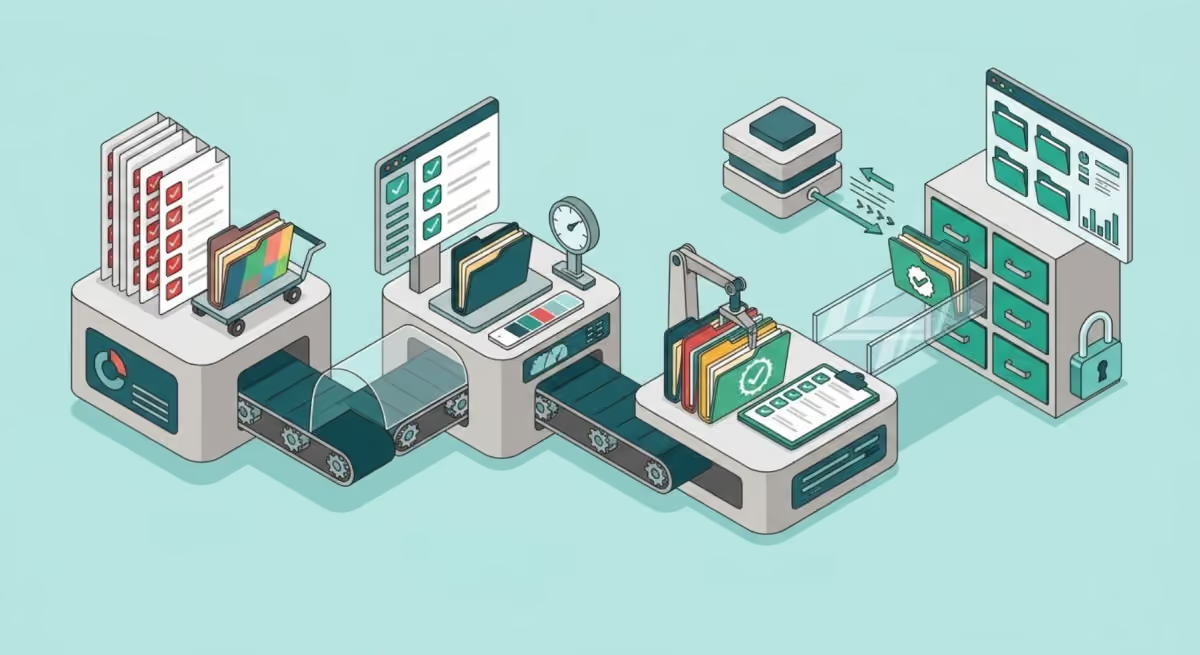
Think of audit-readiness as three continuous habits, not a project with a finish line.
Run these three habits consistently, and packaging audit readiness stops being a date on the calendar you dread. It becomes the steady state you live in, one that scales right alongside your SKU count and your expansion into new markets.
The Real Payoff: Speed and Compliance as One
The old assumption says you can move fast or stay compliant, but not both. That trade-off is a myth born from treating compliance as an afterthought.
When you engineer audit-readiness into your packaging approval workflow, checking early, letting systems carry the record, standardizing your source of truth, and leaning on automation to hold the line at scale, the trade-off dissolves.
You end up faster because you're compliant:
- Fewer reprints
- Fewer launch-delaying surprises
- No frantic pre-audit scrambles eating your team's best hours
The compliant path and the fast path become the same path, and your team gets to spend its energy on the work that actually moves products to shelf.
That's what modern compliance for packaging teams looks like—not a brake on your operation, but a quiet engine running underneath it.
Of course, the tools making this possible are evolving fast. The systems automating your quality checks today are the same ones reshaping how packaging gets designed, produced, and connected across the entire supply chain. That's exactly where we're headed next in The Future of Packaging & Print Manufacturing: Automation, AI, and the Shift to Connected Workflows.
Frequently Asked Questions