
Label Compliance

Label compliance is the process of making sure that a product’s label meets all legal, safety, and industry requirements before it is printed and released to the market. This includes checking that the label has the correct text, warnings, symbols, barcodes, ingredients, artwork, and formatting required by regulators and industry standards. In print and packaging, label compliance ensures that what gets printed is accurate, complete, and approved for sale.
Why it matters:
Incorrect or non-compliant labels can lead to recalls, fines, delays, or even safety risks for customers. Making sure labels follow all rules protects both the consumer and the brand. It also prevents waste, reprints, and expensive last-minute fixes in the production process.
The Label Compliance Process in Print and Packaging:
- Gather requirements: Collect all regulatory guidelines, brand rules, language requirements, and market-specific standards that apply to the label.
- Review artwork and content: Verify that all text, artwork, barcodes, symbols, claims, and required statements are present and correct.
- Check formatting and layout: Ensure that font sizes, contrast, placement, spacing, and color requirements meet regulatory and brand standards.
- Validate data accuracy: Confirm that batch numbers, ingredients, allergen statements, warnings, and other variable data are accurate and up-to-date.
- Run technical print checks: Make sure barcodes scan properly, color profiles are correct, dielines are followed, and no elements fall outside safe areas.
- Approval and sign-off: Regulatory, quality, legal, marketing, and packaging teams review and approve the label for production.
- Prepress verification: Compare the final print-ready file to approved artwork to catch last-minute errors before printing.
- Print inspection: Use manual or automated inspection systems to ensure each printed label matches the approved file and remains compliant.
Benefits:
- Avoids legal issues: Reduces the risk of fines, penalties, or recalls
- Protects consumers: Ensures warnings, instructions, and information are correct
- Improves brand trust: Shows reliability and responsibility
- Saves time and money: Prevents costly errors and reprints
- Ensures accuracy: Helps teams catch mistakes before printing
In short, label compliance makes sure every printed label is accurate, legal, and safe, protecting the brand and the customer.
Andere Leitfäden ansehen
So meistern Sie die FDA-Kennzeichnungsanforderungen: Ihr umfassender Leitfaden ist hier
Dieser umfassende Leitfaden bietet detaillierte Einblicke in die FDA-Kennzeichnungsanforderungen und stellt sicher, dass Ihr Unternehmen nicht nur die Kennzeichnungsrichtlinien gründlich versteht, sondern auch bewährte Verfahren festlegt [...]


So schützt das Korrekturlesen von Grafiketiketten Ihre Marke vom Design bis zur Lieferung
Erfahren Sie, wie das Korrekturlesen von Grafiketiketten Ihre Marke schützt, indem Fehler frühzeitig erkannt und Genauigkeit, Konformität und Konsistenz gewährleistet werden.
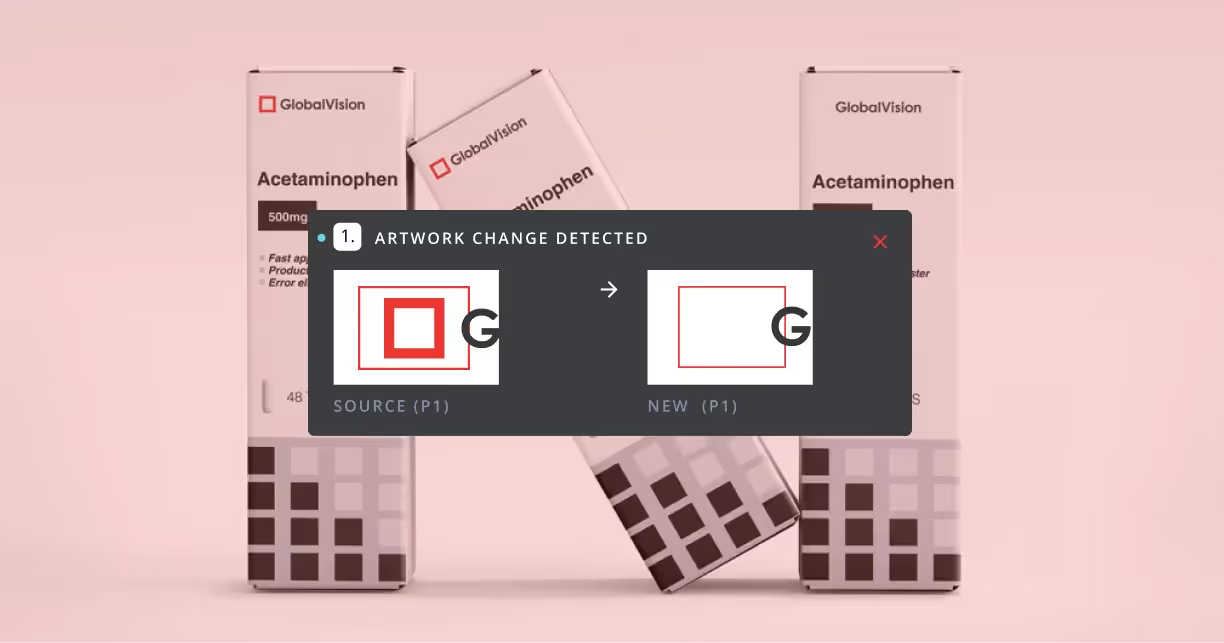
Wie der Vergleich von Kunstwerken führenden Etikettierungsteams hilft, kostspielige Fehler zu vermeiden
Der kleinste Grafikfehler kann zu massiven Rückrufen, behördlichen Bußgeldern oder einer Schädigung des Markenrufs führen, insbesondere wenn er auf behördlichen Verpackungen oder Etiketten erscheint.
Streamline Artwork Proofing From Prepress to Production
Elevate labeling and packaging accuracy with the market-leading artwork inspection software.