
Vector Graphics

Vector graphics are digital images made from lines, shapes, and curves that are defined by mathematical equations, not pixels. Because they’re math-based, vector graphics can be resized to any size without becoming blurry or pixelated. This makes them perfect for logos, icons, illustrations, and anything that needs to stay sharp at different sizes.
Why it Matters:
In print and packaging, vector graphics keep artwork crisp whether it’s printed on a small label or a giant box. They also make it easier for designers and printers to edit, scale, or adjust artwork without losing quality.
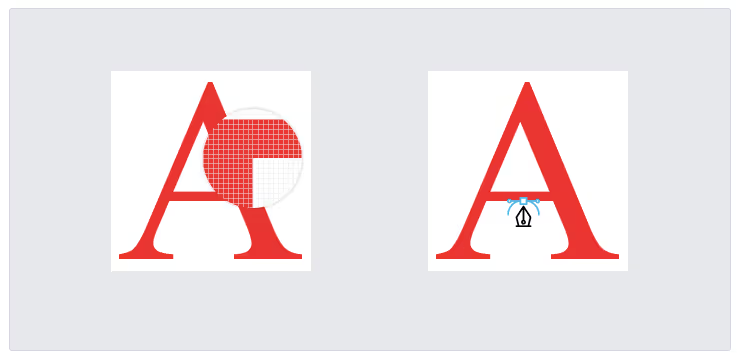
The Difference Between Raster and Vector Graphics Raster graphics are made of tiny pixels arranged in a grid. When you zoom in or stretch them, they can become blurry or pixelated. Photos, detailed textures, and complex images are usually raster.
Vector graphics, on the other hand, are made from mathematical paths. They can be scaled up or down without losing quality. Logos, icons, and illustrations are usually vector.
Simple breakdown:
- Raster = pixels (best for photos), can get blurry when enlarged
- Vector = shapes and math (best for logos and text), always stays sharp
Vector graphics use shapes and math, not pixels, so they stay sharp and clear at any size, making them ideal for high-quality print and packaging.
The Advantages of Vector Graphics:
- Scalable: Can be made larger or smaller with no loss of quality
- Lightweight files: Usually smaller than high-resolution images
- Easy to edit: Colors, shapes, and lines can be changed cleanly
- Perfect for print: Ensures logos, text, and illustrations stay sharp
Use Cases in Print and Packaging:
- Logos that must appear on multiple package sizes
- Icons and symbols like recycling signs or warnings
- Dielines created by packaging designers
- Illustrations used on labels or boxes
Voir d'autres guides
Le guide ultime du contrôle qualité prépresse : du contrôle préalable aux impressions parfaites
Un excellent contrôle qualité avant l'impression permet de transformer une bonne entreprise en une entreprise florissante. Détecter les erreurs tôt et maintenir des normes élevées garantit le bon déroulement de chaque projet.

Comment gérer efficacement les échantillons d'impression grâce à l'automatisation
Avec une telle concurrence entre les marques, le design des emballages est un moyen essentiel de distinguer votre entreprise des autres et de persuader ainsi les consommateurs d'acheter vos produits.

OCR : tout ce que vous devez savoir sur la reconnaissance optique de caractères
Le logiciel de relecture basé sur le cloud le plus récent et le plus innovant de GlobalVision, Verify, développe et teste actuellement les fonctionnalités d'OCR de la plateforme qui permettent aux utilisateurs [...]

Streamline Artwork Proofing From Prepress to Production
Elevate labeling and packaging accuracy with the market-leading artwork inspection software.