

Betreten Sie eine beliebige Produktionsstätte für Verpackungen, in der Millionen von Einheiten hergestellt werden, und Sie werden wahrscheinlich eine Flexodruckmaschine als Herzstück vorfinden. Der Flexodruck dominiert die Verpackungsproduktion aus einem einfachen Grund: Er druckt schnell, ist bei großen Mengen kostengünstig und verarbeitet Materialien, die kein anderes Verfahren mit der gleichen Leichtigkeit bewältigt.
Wenn Ihr Team Etiketten produziert, Folien, Wellpappe oder flexible Verpackungen herstellt, ist der Flexodruck der Motor Ihrer Produktion.
Dieser Leitfaden erklärt, wie der Flexodruck funktioniert, warum er im Bereich der Großserienverpackungen dominiert, wo er gegenüber anderen Verfahren punktet und wie die Qualitätskontrolle jeden Drucklauf bereit für die Presse hält.
So funktioniert der Flexodruck
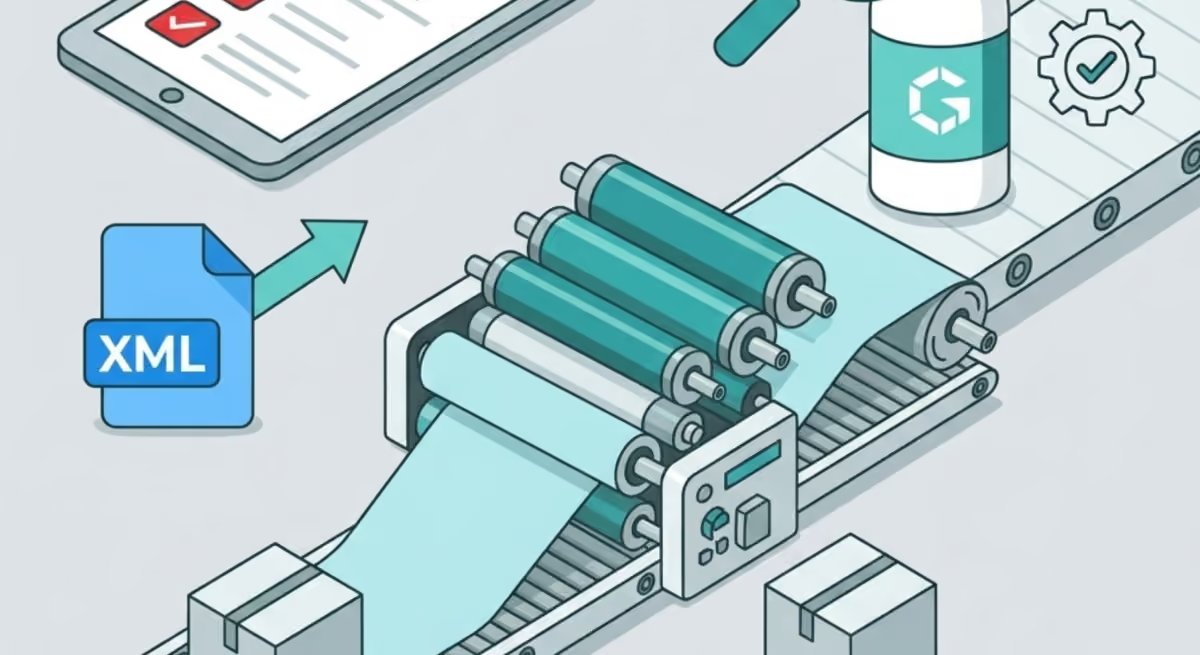
Der Flexodruck ist ein Hochdruckverfahren, das flexible Fotopolymerplatten verwendet, um Farbe auf ein Substrat zu übertragen. Stellen Sie sich einen Hochgeschwindigkeitsstempel vor, der um einen rotierenden Zylinder gewickelt ist. Die erhabenen Bereiche der Platte tragen das Bild; die vertieften Bereiche bleiben sauber. Während das Substrat mit hoher Geschwindigkeit durchläuft, presst jede Platte die Farbe mit bemerkenswerter Konsistenz auf das Material.
Der Prozess läuft auf einer Rollenpresse ab, was bedeutet, dass das Substrat kontinuierlich von einer großen Rolle statt als einzelne Blätter bewegt wird. Diese Rolle-zu-Rolle-Einrichtung verleiht dem Flexodruck seinen Geschwindigkeitsvorteil.
Sobald die Presse eingestellt ist, hört sie nicht auf, sondern produziert einfach weiter.
Das Farbübertragungssystem
Die Präzision des Flexodrucks beruht auf einer entscheidenden Komponente: der Rasterwalze. Dieser gravierte Zylinder überträgt eine präzise, dosierte Menge Farbe auf die Platte. Jede winzige Zelle in der Rasterwalzenoberfläche fasst ein festes Volumen, sodass der Farbfilm über den gesamten Drucklauf hinweg gleichmäßig bleibt. Hier ist der typische Ablauf:
- Farbkasten liefert die Farbe.
- Rasterwalze dosiert sie auf ein exaktes, wiederholbares Volumen.
- Photopolymerplatte nimmt das eingefärbte Bild auf.
- Gegendruckzylinder presst das Substrat zur Übertragung gegen die Platte.
Jede Farbe erhält eine eigene Platte, Rasterwalze und Druckstation. Ein Vierfarbjob durchläuft nacheinander vier Stationen, wobei das Substrat schnell genug bewegt wird, um zwischen den einzelnen Stationen zu trocknen, meist mit UV-, Infrarot- oder Heißlufttrocknung, die in die Linie integriert ist.
Registerhaltigkeit und Farbkontrolle
Da jede Farbe an einer separaten Station gedruckt wird, ist die Registerhaltigkeit– das perfekte Ausrichten jeder Farbschicht – entscheidend. Moderne Druckmaschinen verwenden Kamerasysteme und servogesteuerte Steuerungen, um bei voller Geschwindigkeit enge Toleranzen einzuhalten.
Stimmt die Registerhaltigkeit, dann lassen sich Ihre Barcodes scannen, Ihr Text bleibt scharf und Ihre Markenfarben genau dort landen, wo sie sollen.
Warum Flexodruck bei Verpackungen mit hohem Volumen dominiert
Der Flexodruck hat sich seine Spitzenposition in der Verpackungsproduktion durch eine Kombination aus Geschwindigkeit, Kosten und Vielseitigkeit erarbeitet, die in großem Maßstab kaum zu übertreffen ist.
Der Flexodruck ist so vielseitig, dass er auf Papier, Tissue und Kunststoff drucken kann. Was auch immer die Anforderungen sind – die Flexografie passt sich an. Deshalb ist der Flexodruck so verlässlich, reagiert flexibel auf Veränderungen und bleibt eine zukunftssichere Investition.
Pascal Thomas, Flexo Business Unit, Esko
Unübertroffene Geschwindigkeit bei hohem Volumen
Sobald eine Flexodruckmaschine eingerichtet ist, läuft sie kontinuierlich mit hoher Geschwindigkeit. Für lange Auflagen, Millionen identischer Einheiten, ist dies die effizienteste verfügbare Option. Die Einrichtungskosten verteilen sich auf eine riesige Menge, wodurch der Stückpreis auf Bruchteile eines Cents sinkt.
Geringe Kosten pro Einheit
Die Rechnung ist einfach: hohe anfängliche Einrichtungskosten, geringe Grenzkosten. Je mehr Sie drucken, desto günstiger wird jede Einheit. Für etablierte Produkte mit stabilem Artwork und großen Bestellmengen bietet Flexodruck eine Kosteneffizienz, die der Digitaldruck in diesem Umfang nicht erreichen kann.
Substratvielfalt
Das ist die wahre Superkraft des Flexodrucks. Die flexiblen Platten und der einstellbare Druck ermöglichen das Bedrucken von Materialien, die andere Verfahren vor Herausforderungen stellen würden:
- Kunststofffolien für flexible Verpackungen und Schrumpffolien
- Folien und Laminate für Premium- und Barriereanwendungen
- Papier und Karton für Etiketten und Faltschachteln
- Wellpappe für Versandkartons und verkaufsfertige Verpackungen
Nur wenige Methoden lassen sich so einfach zwischen einer dünnen Folie und einer dicken Wellpappe anwenden. Diese Flexibilität ist genau der Grund, warum Flexodruck in so vielen Bereichen der Verpackungswelt zum Einsatz kommt.
Häufige Anwendungsfälle für Flexodruck
Flexodruck findet sich in nahezu jeder Verpackungs- kategorie. Die häufigsten Anwendungen sind:
- Etiketten: Pressure-sensitive and shrink-sleeve labels for food, beverage, and household products.
- Flexible packaging: Pouches, bags, wraps, and films that demand both speed and durable, scuff-resistant ink.
- Corrugated: Shipping boxes and retail-ready packaging, where flexo prints directly onto board efficiently.
- Folding cartons: Cereal boxes, beverage carriers, and similar paperboard structures.
- Tags and tickets: High-volume printed components that need consistent quality and fast turnaround.
If a product faces moisture, friction, or freezer conditions, flexo's durable inks hold up where others fade or smear. That resilience makes it the default for packaging that has to survive the supply chain.
Plate-Making and Setup Considerations
Flexo's biggest trade-off is upfront preparation. Every design needs its own set of plates, and that process shapes your timeline and budget.
How plates are made
Photopolymer plates are produced through imaging and curing, traditionally with film and UV exposure, increasingly with digital (LAMS) plate-making that uses lasers to image the plate directly. Digital platemaking improves accuracy, reduces dot gain, and speeds the prepress process. The result is a flexible relief plate mounted to a cylinder for the press.
What drives setup time and cost
Keep these factors in mind when planning a flexo run:
- Number of colors: Each color needs its own plate and station, adding cost and setup.
- Artwork changes: New plates are required for every revision, frequent updates get expensive fast.
- Registration setup: Aligning colors and dialing in pressure takes time before the run stabilizes.
- Substrate matching: Ink, anilox, and plate choices must suit the material.
Because setup is the costly part, flexo rewards long, stable runs and penalizes frequent small changes. Plan artwork carefully, lock in approvals before platemaking, and you'll keep both cost and timeline under control.
Where Quality Control Fits in the Flexo Workflow
Here's the hard truth every production professional knows: a flexo press will faithfully reproduce whatever you give it, including the errors. A wrong barcode, a misplaced color, or a typo in regulatory text becomes thousands or millions of defective units the moment the web starts moving. And because flexo runs at volume, mistakes scale instantly.
That's why quality control belongs before the plates are made, not after the run.
Catch errors in prepress
The smartest teams build automated inspection into the prepress stage, verifying artwork against approved files before committing to platemaking. Automated proofreading catches what tired eyes miss:
- Text and spelling errors across every language version
- Barcode integrity to confirm every code scans correctly
- Color and registration accuracy against the approved standard
- Artwork deviations between revisions and master files
Inspect on press, too
Once the press runs, inline inspection systems monitor registration, color density, and print defects in real time, flagging issues before they fill a pallet. Pairing prepress proofing with on-press inspection closes the loop, you catch problems early and confirm consistency throughout the run.
The payoff is direct: fewer reprints, faster approvals, and confidence that every unit meets spec. In high-volume flexo, that's the difference between a profitable run and a costly recall.
Quick Recap
- How it works: Flexible plates and an anilox-fed web press transfer ink fast and consistently.
- Why it dominates: Unbeatable speed and low cost across long, high-volume runs.
- Where it shines: Labels, films, corrugated, flexible packaging, and folding cartons.
- What to plan for: Plate-making and setup reward stable artwork and long runs.
- Never skip: Automated quality control before and during the run to prevent costly errors.
Flexographic Printing for Packaging Production
Flexographic printing dominates packaging production because it delivers what high-volume operations demand most: speed, low cost, and the versatility to print on almost any substrate.
Master the plate-making and setup side, and you unlock its full efficiency. Build automated quality control into your prepress and press stages, and you protect every run from the errors that scale just as fast as your output.
Ready to keep building your knowledge? Continue with the next post in this series on label printing in regulated industries, where accuracy stops being a nice-to-have and becomes mission-critical.
Häufig gestellte Fragen