

In most print jobs, a small error means a reprint. In regulated industries, that same error can trigger a recall, a regulatory fine, or a genuine threat to patient and consumer safety. When you print labels for pharmaceuticals, medical devices, or food and beverage products, accuracy stops being a quality goal and becomes a legal and ethical obligation.
For print, packaging, and prepress teams, this raises the stakes on every file that moves through the workflow. A single misplaced character, a wrong dosage figure, or a missing warning can unravel weeks of work and put your organization at serious risk.
The good news? With the right processes and automated quality control in place, you can hit demanding accuracy standards without sacrificing speed.
Here's what you'll take away from this guide:
- Why label printing accuracy is mission-critical in regulated sectors
- What label errors actually cost when they slip through to press
- How quality control and automated proofreading protect your prepress workflow
- Which regulatory requirements shape label content
- Best practices for managing label accuracy at scale
Why Label Printing Accuracy Is Non-Negotiable
Label printing in regulated industries carries a weight that general commercial printing simply doesn't. The label isn't just packaging, it's a legally controlled document. It communicates dosage instructions, allergen warnings, expiration dates, batch codes, and safety information that people rely on to make decisions about their health and wellbeing.
Three industries face especially intense scrutiny:
- Pharmaceuticals: Labels must carry precise drug names, strengths, dosing instructions, warnings, and unique identifiers. A decimal-point error can be life-threatening.
- Medical devices: Labels require accurate instructions for use, symbols, lot numbers, and regulatory markings that vary by region.
- Food and beverage: Labels must declare ingredients, allergens, nutritional data, and origin claims accurately, with zero tolerance for missing allergen statements.
In each case, the label is the final checkpoint between your production line and the end user. When prepress and print teams treat that label with the seriousness it demands, they protect both the public and the brand. When they don't, the consequences arrive fast.
That's exactly why understanding the cost of failure matters before we talk about solutions.
The Real Cost of Label Errors
It's tempting to think of a labeling error as a minor hiccup. In regulated industries, the math tells a very different story. A label error that reaches the market sets off a chain reaction that touches compliance, finance, and reputation all at once.
Recalls and rework
When a faulty label hits the shelf, the only fix is often a full recall. That means pulling product, reprinting labels, reworking inventory, and absorbing the cost of lost production time. Mislabeling and incorrect packaging consistently rank among the leading causes of product recalls in both the pharmaceutical and food sectors, and label-related recalls are among the most preventable.
Regulatory penalties
Regulators don't treat label accuracy as optional. Agencies like the FDA, EMA, and equivalent bodies worldwide can issue warning letters, mandate corrective actions, halt distribution, or levy significant fines. Repeated failures invite deeper audits and lasting scrutiny that slows every future release.
Brand and trust damage
A recall headline lingers. Consumers and business partners remember when a brand mislabels a product, especially when safety is involved. Rebuilding that trust costs far more than the reprint ever would.
Here's a quick view of how the stakes scale across the most heavily regulated sectors:
The pattern is clear across every row: small label details carry outsized consequences. The smart move is to catch those details before the press ever runs.
Where Quality Control Fits in the Prepress Workflow
Here's a truth every seasoned prepress professional knows by heart: the press faithfully reproduces whatever you give it, including your mistakes. If an error survives prepress, it survives all the way to the shelf, multiplied by every unit in the run.
That's why quality control belongs upstream, embedded in prepress, long before plates are made or files hit the press.
Why manual proofreading falls short
Manual proofreading has carried the industry for decades, but it has real limits, especially under pressure:
- Fatigue and oversight: The human eye misses subtle character swaps, spacing shifts, and color deviations, particularly after hours of review.
- Volume strain: High label counts and frequent revisions overwhelm manual checks.
- Language barriers: Multi-market labels in unfamiliar languages are nearly impossible to verify by eye alone.
- Inconsistency: Two reviewers can reach two different conclusions on the same file.
These gaps aren't a knock on your team, they're a natural ceiling on what manual review can deliver at scale.
How automated proofreading closes the gap
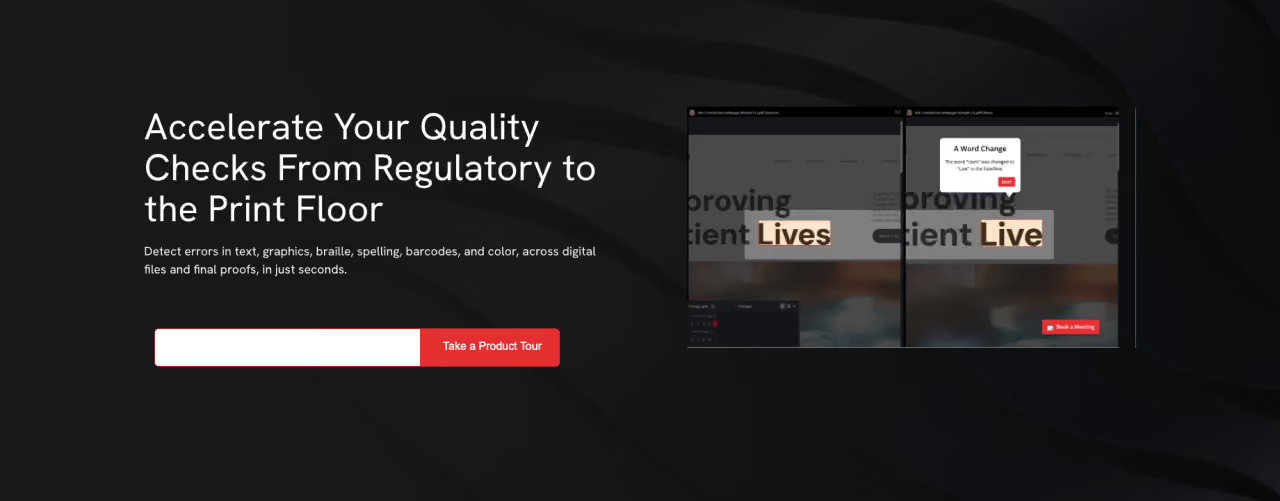
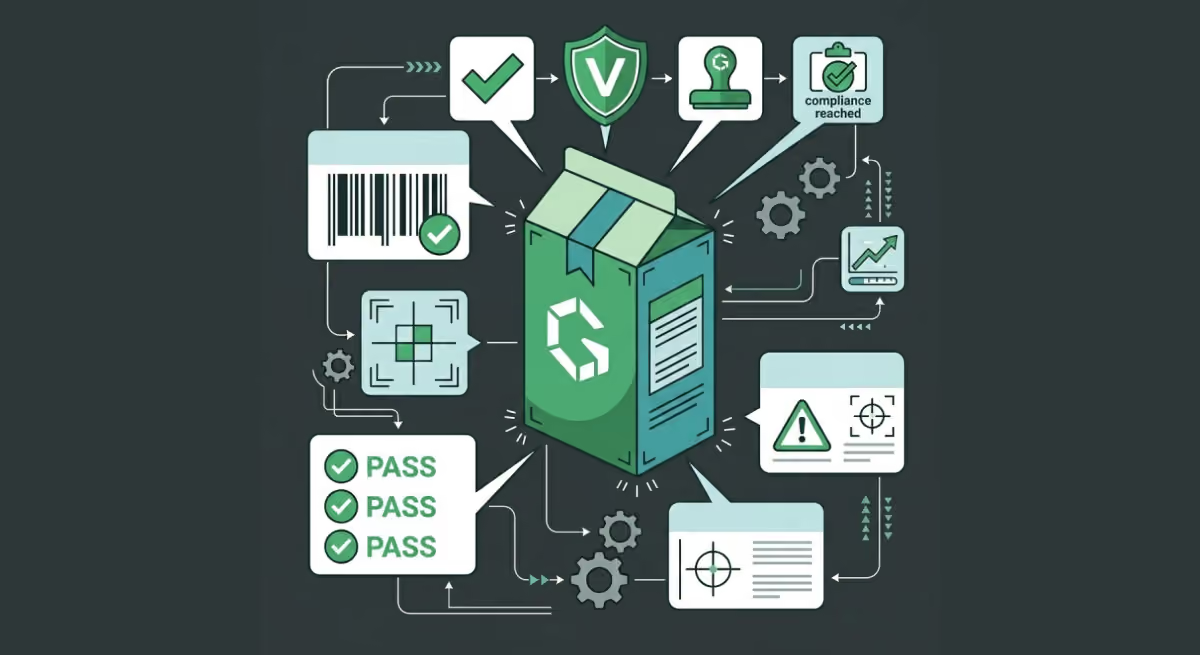
Automated proofreading tools inspect files against an approved master and flag deviations the eye misses. Built into your prepress stage, they verify accuracy before you commit to platemaking or print. The most valuable checks include:
- Text and spelling verification across every language version
- Graphics and artwork comparison against the approved master file
- Barcode and code integrity to confirm every code scans and decodes correctly
- Braille inspection for pharmaceutical compliance
- Color and registration checks against brand and regulatory standards
- Spelling review tuned to industry terminology
By standardizing inspection, automated proofreading gives every file the same rigorous, repeatable check, no fatigue, no guesswork, no bottleneck. That consistency is precisely what regulated label printing demands.
With that foundation in place, let's connect quality control to the regulations driving it.
Key Regulatory Requirements That Shape Label Content
To manage label accuracy, your team needs to understand what regulators actually require. While specifics vary by industry and region, several requirements consistently shape what must appear on a compliant label, and how precisely it must appear.
Mandatory content elements
Across regulated sectors, labels commonly must include:
- Product identification: Exact name, strength, or formulation
- Safety information: Warnings, contraindications, allergens, and handling instructions
- Traceability data: Lot numbers, batch codes, serialization, and unique identifiers (such as UDI for medical devices)
- Dates: Manufacturing, expiration, or best-before dates in approved formats
- Regulatory symbols and statements: Required icons, declarations, and legal text
Region-specific and language requirements
Labels distributed across multiple markets must meet each region's rules. That often means translated content, locally mandated symbols, and region-specific formatting. Every translated version is a fresh opportunity for error, and a fresh requirement for verification.
Version control and audit readiness
Regulators expect you to prove that what you printed matches what was approved. Strong version control, documented approvals, and an inspection trail aren't just good practice, they're what keeps you audit-ready. When automated proofreading logs every check, you build that evidence automatically.
Knowing the requirements is half the battle. Executing against them consistently, at volume, is where great teams separate themselves.
Best Practices for Managing Label Accuracy at Scale
Scaling label accuracy isn't about adding more reviewers, it's about building a workflow where accuracy is engineered in from the start. Here's how leading print and prepress teams do it.
1. Establish a single source of truth
Lock in one approved master file for every label. Every inspection compares against this master, eliminating ambiguity about what "correct" looks like. No more chasing the latest version across email threads.
2. Embed automated proofreading early
Catch errors in prepress, not on press. Run automated inspections the moment artwork arrives and again after every revision. The earlier you catch a deviation, the cheaper and faster the fix.
3. Standardize your inspection criteria
Define exactly what gets checked, text, graphics, barcodes, braille, color, and apply the same standard to every file. Standardization removes the inconsistency that creeps in with manual, reviewer-dependent checks.
4. Build inspection into approval gates
Make a passed automated inspection a required step before a file advances. This turns quality control into a non-negotiable gate rather than an optional courtesy, ensuring nothing reaches platemaking unverified.
5. Maintain a complete audit trail
Log every inspection, every revision, and every approval. When auditors come knocking, and in regulated industries, they will, you'll have documented proof that every label met spec before it was printed.
6. Verify every language version
Treat each translated label as its own file requiring full verification. Automated text comparison makes multi-language checks fast and reliable, even in languages your team doesn't read.
Put these practices together, and accuracy stops being a frantic final scramble. It becomes a built-in, repeatable strength. One that scales right alongside your SKU count and market reach.
Quick Recap
- Accuracy is mission-critical: In pharma, medical devices, and food and beverage, the label is a legally controlled document tied directly to safety.
- Errors are costly: A single mistake can spark recalls, regulatory penalties, and lasting brand damage.
- Quality control belongs in prepress: Catch errors before the press runs, because the press only reproduces what you give it.
- Automated proofreading closes the gap: It delivers consistent, fatigue-free verification of text, graphics, barcodes, braille, and color.
- Best practices scale accuracy: A single source of truth, early inspection, standardized criteria, approval gates, and complete audit trails keep you fast and compliant.
Final Thoughts
Label printing in regulated industries leaves no room for "good enough."
Every character, code, and color either meets the standard or it doesn't, and the consequences of getting it wrong are too severe to leave to chance. The teams that thrive are the ones that build accuracy into their prepress workflow, lean on automated proofreading to eliminate manual blind spots, and treat every inspection as a gate rather than a guess.
Do that, and you achieve the rare combination of regulated printing demands: flawless, audit-ready labels delivered at full speed.
Frequently Asked Questions