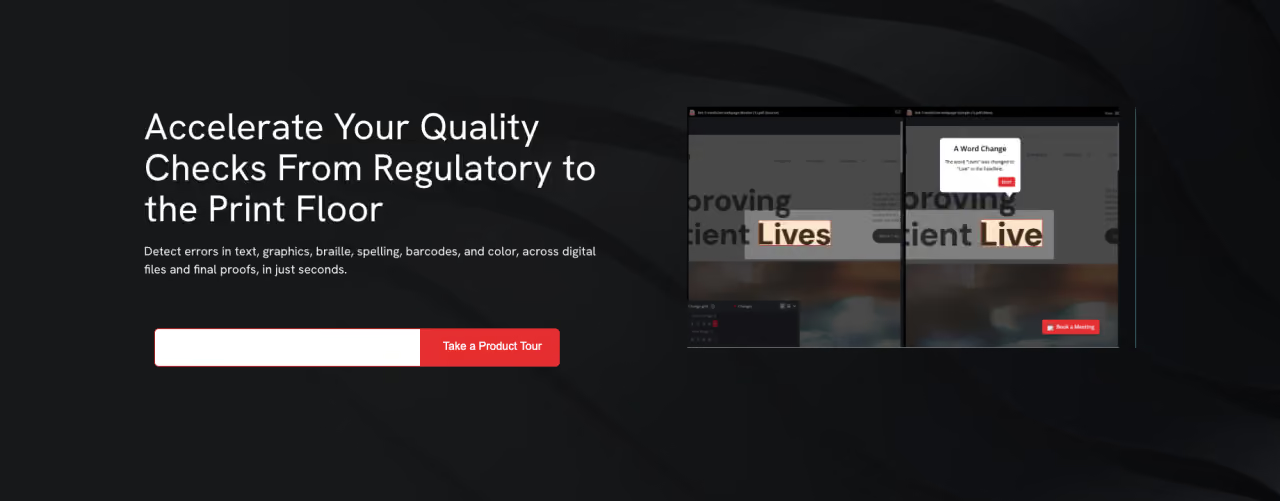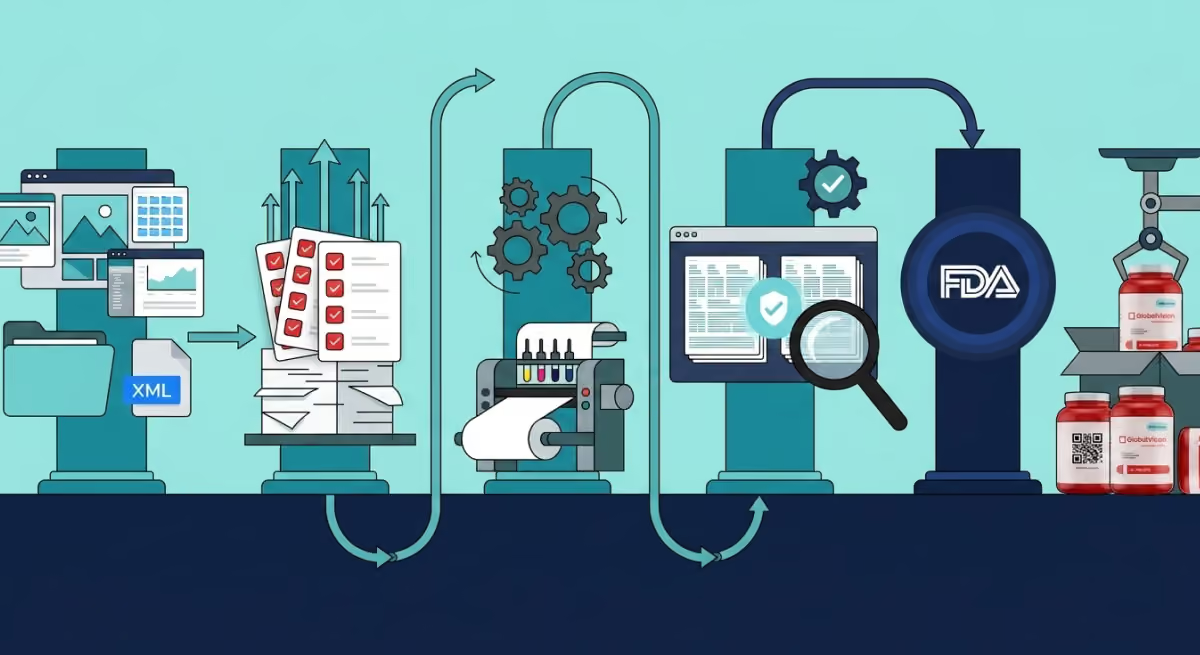


Packaging, printing, and production operations refer to the full, connected system that takes a product from concept to shelf, covering every stage from design and artwork development through printing, quality control, compliance verification, and final delivery. It is the operational backbone of every physical product in the consumer packaged goods (CPG), food, beverage, pharma, and household goods industries.
For teams managing high-volume SKUs across multiple markets, these operations determine how fast you launch, how consistently you maintain quality, and how confidently you meet compliance requirements. One misplaced digit, one missing allergen warning, one unapproved artwork revision, and you're looking at reprints, delays, or a recall. Getting packaging, printing, and production operations right is not optional. It is the difference between a smooth, profitable launch and an expensive, reputation-damaging scramble.
This guide covers the entire landscape in one place. Each section explains a core area of modern packaging operations, shows how it connects to the broader workflow, and links to a deeper dedicated post where you can learn more.
Lets get started!
1. The Packaging Production Lifecycle
What it is: The packaging production lifecycle is the end-to-end sequence of stages a packaging project moves through, from initial concept and design through artwork development, prepress, proofing, approval, printing, finishing, and delivery. It is the foundational framework for all other packaging, printing, and production operations.
Why it matters: Every handoff between stages is a moment where errors can enter and timelines can slip. A well-managed lifecycle treats each stage as a checkpoint, not just a step to clear. For high-SKU operations, mastering this flow is where speed and consistency start. When your team knows exactly where a project sits and what happens next, bottlenecks shrink and launches stay on track.
How it connects: The lifecycle is the container that holds everything else in this guide. Printing technology choices happen inside the lifecycle. Quality checks are embedded at lifecycle handoffs. Compliance verification runs parallel to every stage. Optimizing the lifecycle means optimizing all of them together.
Key takeaway: A well-run packaging production lifecycle catches problems early, keeps projects moving, and sets the conditions for every downstream stage to succeed.
Read more: The Complete Packaging Production Lifecycle: From Concept to Shelf
2. Packaging Printing Technologies
What it is: Packaging printing technologies are the methods used to transfer artwork onto packaging substrates, including flexographic, digital, offset lithography, gravure, and screen printing. Each method has a distinct cost profile, quality output, speed capability, and substrate compatibility.
Why it matters: Choosing the wrong printing method for a job wastes money and slows timelines. The decision is strategic, not just technical, because it shapes your cost per unit, your turnaround speed, and the final appearance of every package.
The major methods at a glance:
- Flexographic (flexo): High-speed, cost-effective printing for long runs on flexible materials, labels, films, foils, corrugated board.
- Digital: No plates required; ideal for short runs, regional versioning, and fast turnaround.
- Offset (litho): High-resolution, premium-quality output for folding cartons and paper-based formats.
- Gravure and screen: Specialized processes suited to specific substrates, finishes, and high-volume applications.
How it connects: Printing technology is chosen within the production lifecycle and directly shapes the quality control requirements that follow. A flexo run managed at speed demands different inspection priorities than a short-run digital job.
Key takeaway: Matching printing method to volume, substrate, and quality requirements is where you protect margins and control timelines.
Read more: Packaging Printing Technologies Explained: Flexo, Digital, Offset & Beyond
3. Understanding Flexographic Printing
What it is: Flexographic printing, commonly called flexo, is a high-speed rotary printing process that uses flexible relief plates to apply ink to a wide range of substrates, including plastic films, paper, foil, and corrugated materials. It is the dominant printing technology in packaging production.
Why it dominates: Flexo excels at long-run, high-volume jobs where consistent quality and low per-unit cost matter most. It handles the materials common to food, beverage, and household goods packaging with speed that other methods struggle to match at scale.
What demands attention: Plate setup, ink management, color consistency, and print registration all require precision. When managed well, flexo produces clean, repeatable results across massive runs. When managed poorly, it generates waste, inconsistency, and rework that eats into margins.
How it connects: Flexo sits at the center of the printing technology decision. When teams ask which press is right for their volume, flexo is often the answer. It is also where quality control becomes most critical at speed, since errors can replicate across thousands of units before detection.
Key takeaway: Flexo dominates packaging because it pairs speed, scale, and cost efficiency. It also delivers consistent quality when plate setup and color management are tightly controlled.
Read more: Flexographic Printing Explained: Why It Dominates Packaging Production
4. Label Printing in Regulated Industries
What it is: Label printing in regulated industries is the production of packaging labels that must meet legally defined accuracy standards, covering ingredient lists, dosage instructions, allergen warnings, barcode data, net weight, multi-language content, and more. In regulated industries, a label is a legal document, a safety tool, and a compliance record in one.
Why it matters: A single transposed character, missing statement, or incorrect barcode can mean a regulatory violation, a product recall, or a direct risk to consumer safety. For teams managing frequent label updates across multiple markets, every revision is another opportunity for error, unless the review process is built to catch it before print.
How it connects: Regulated label printing is the context in which pharma and food packaging requirements become concrete. Quality control must catch label errors at the file level, before any physical output is produced. Compliance and label accuracy are inseparable.
Key takeaway: In regulated industries, label accuracy is a non-negotiable requirement. Every detail must be verified against an approved master source before print.
Read more: Label Printing in Regulated Industries: Where Accuracy Becomes Critical
5. Pharmaceutical Packaging Requirements
What it is: Pharmaceutical packaging requirements are the regulatory standards governing what information must appear on drug packaging and labeling, and in what format. They include prescribing information, boxed warnings, dosage instructions, serialization, tamper-evidence features, braille, and submission standards such as Structured Product Labeling (SPL).
Why it matters: Pharmaceutical packaging is among the most tightly regulated in any industry. Every character must be accurate. Every claim must be approved. Every change must be traceable. Errors in pharma packaging don't just cost money, they put patients at risk and trigger regulatory action.
How it connects: Pharma packaging is the highest-stakes application of regulated label printing. The compliance requirements that apply here amplify the importance of standardized artwork management, automated quality control, and clean audit trails across the entire packaging lifecycle.
Key takeaway: In pharmaceutical packaging, compliance is not a process layer, it is the foundation that every other decision is built on.
Read more: Pharmaceutical Packaging Requirements: How Compliance Shapes Every Detail
6. Food Packaging Requirements
What it is: Food packaging requirements are the regulatory rules that govern what must appear on consumer food and beverage packaging, including nutrition facts panels, ingredient declarations, allergen warnings, net weight, country-of-origin statements, and market-specific claims.
Why it matters: Food labeling standards vary by country and change over time. A claim that is compliant in one market may be prohibited in another. For global brands managing frequent updates across many SKUs, staying current with regional requirements is an ongoing, high-stakes responsibility. A compliance issue caught in prepress is a quick correction. The same issue after print is a reprint, or a recall.
How it connects: Food labeling requirements make regulated label printing particularly demanding for consumer brands. They feed directly into the need for automated quality control that can check every label against the latest approved standards, consistently, across every market variant.
Key takeaway: Every food label must be verified against current regional regulatory requirements before it reaches the press. Accuracy at this stage prevents costly corrections at every stage that follows.
Read more: Food Packaging Requirements: What Brands Must Get Right Before Print
7. Commercial vs. Packaging Printing
What it is: Commercial printing and packaging printing are two distinct disciplines. Commercial printing produces marketing and communication materials, brochures, flyers, catalogs, direct mail, primarily on paper, with a focus on visual quality. Packaging printing produces structural packaging on diverse substrates, where regulatory compliance, material performance, and consumer safety are additional requirements alongside visual quality.
Why the distinction matters: Packaging work requires capabilities that commercial printing is not built for, specialized substrates, structural integrity, regulatory compliance depth, and quality control standards that account for the consequences of error. For CPG operators, selecting a printing partner or internal process framework without this distinction creates gaps in quality and compliance.
How it connects: Understanding this difference shapes how teams build their supplier relationships, internal workflows, and quality requirements. It also clarifies why packaging-specific quality control tools and compliance processes exist as a distinct category.
Key takeaway: Packaging printing demands substrate range, structural expertise, and regulatory rigor that set it apart from commercial printing. Treating them as interchangeable creates risk.
Read more: Commercial Printing vs Packaging Printing: Which One Is Better For Your Team
8. Quality Control in Packaging
What it is: Quality control in packaging is the systematic process of verifying that packaging files, artwork, and printed output meet defined accuracy standards before reaching the press or the market. It covers text accuracy, artwork fidelity, color consistency, barcode readability, braille correctness, and compliance against an approved master.
Why it matters: Manual proofreading cannot reliably scale with high-SKU, multi-market portfolios. Human reviewers miss transposed digits, subtle color drift, and small omissions, especially under deadline pressure. Automated inspection solves this by comparing every file to its approved master with consistent, repeatable precision, regardless of volume.
The measurable impact of getting it right:
- Fewer reprints and reduced material waste
- Faster artwork approvals and shorter time-to-press
- Consistent quality across all SKUs and markets
- Reduced compliance risk from errors that reach production
How it connects: Quality control is the mechanism that protects every other stage in the packaging lifecycle. It is where the accuracy demands of regulated label printing, pharma packaging, and food labeling requirements get verified in practice. Without it, compliance is a claim. With it, compliance is a result.
Key takeaway: Automated quality control is the most reliable way to catch errors at any volume, before they become reprints, recalls, or regulatory violations.
Read more: Quality Control in Packaging: How Leading Teams Prevent Costly Errors
9. Compliance for Packaging Teams
What it is: Compliance for packaging teams is the practice of building regulatory accuracy and audit-readiness into day-to-day packaging operations, rather than treating compliance as a separate, reactive function triggered by audits or incidents. It includes standardized artwork management, automated verification at every workflow stage, and complete, traceable records of every packaging decision.
Why it matters: Disorganized compliance is what slows teams down, not compliance itself. When checks are embedded into the workflow, teams move faster because errors are caught earlier, approvals are cleaner, and audits require no scramble. Genuine audit-readiness means a clean, traceable record of every packaging decision is available on demand, not assembled under pressure.
The compliance-speed relationship: Teams that embed compliance into their operations consistently see fewer surprises, fewer reprints, and more predictable timelines. Reactive compliance, the kind that piles up work before an audit, is a recurring cost. Embedded compliance is an operational advantage.
How it connects: Compliance is the thread that runs through every section of this guide. It shapes label printing requirements, pharmaceutical packaging standards, food packaging rules, and quality control priorities. It is not a stage in the workflow, it is a property of the entire workflow.
Key takeaway: When compliance is embedded into daily packaging operations, it becomes a speed advantage, not an obstacle.
Read more: Compliance in Packaging Teams: How to Stay Audit-Ready Without Slowing Down Work
10. The Future of Packaging & Print Manufacturing
What it is: The future of packaging and print manufacturing is defined by the integration of automation, artificial intelligence, connected workflows, and digital twin technology into every stage of production. These are not isolated upgrades, they represent a systemic shift from siloed, manual processes to a fully connected, intelligent production ecosystem.
What is changing:
- Smart presses self-calibrate, monitor performance in real time, and flag maintenance needs before failures occur, reducing downtime and improving run consistency.
- AI-powered inspection verifies text, artwork, barcodes, braille, and color against approved masters at a speed and consistency no manual process can match.
- Connected supply chains give brand teams, printers, and regulatory reviewers a shared, live view of every project, eliminating version confusion and speeding approvals.
- Digital twins simulate how designs will behave on press before any physical substrate runs, catching production problems in the virtual world where fixes cost nothing but time.
How it connects: These advances don't replace the packaging production lifecycle, they accelerate and reinforce it. Automated quality control scales without limits. Connected workflows remove the handoff errors that slow every lifecycle stage. AI inspection makes compliance a built-in result rather than a final check. The future of print manufacturing is not a separate chapter, it is the next version of everything in this guide.
Key takeaway: Accuracy, speed, and connection are converging. The teams that weave intelligence into every production stage now will set the standard for the next decade.
Read more: The Future of Packaging & Print Manufacturing: Automation, AI, and the Shift to Connected Workflows
How It All Connects: The Packaging Operations System
Packaging, printing, and production operations are not a collection of separate tasks. They are one continuous system. A decision made at design ripples through prepress, press setup, quality inspection, and compliance verification, all the way to the shelf.
Here is how the system flows:
- The packaging production lifecycle defines the stages and handoffs.
- Printing technology decisions determine how artwork reaches substrate.
- Flexographic printing is the dominant method at packaging scale.
- Label printing requirements become critical in regulated categories.
- Pharmaceutical and food packaging rules define what must be accurate and how.
- Commercial vs. packaging printing distinctions shape partner and process choices.
- Quality control is the verification mechanism embedded across all stages.
- Compliance is the property that every stage must demonstrate, not a single checkpoint.
- The future of print manufacturing is connecting all of the above into one intelligent, automated ecosystem.
When you manage these stages as a system rather than a sequence of handoffs, the trade-off between fast and accurate disappears. You get both, because precision is built in, not bolted on.
Frequently Asked Questions