

A compliance risk assessment is a structured review that identifies where an organization could break laws, regulations or internal rules, and ranks those risks by likelihood and impact. It matters because regulators expect compliance programs to be built on a current, documented risk assessment, and it lets teams fix weak points before they become findings. It affects compliance, quality, legal and operational leaders in every regulated business.
What is a Compliance Risk Assessment?
A compliance risk assessment is a structured process for identifying the laws, regulations and internal policies an organization could fail to meet, estimating how likely and how serious each failure would be, and deciding which risks need stronger controls first. It turns a long list of obligations into a ranked action plan.
Think of it as a map of weak points. Instead of treating every rule equally, it shows where a breach is most likely and where it would hurt most: patient safety, fines, recalls, lost market access or reputation.
The compliance risk assessment is the starting point of every effective compliance management program. Controls, training, monitoring, and audits should all follow from what it finds.
Why Does a Compliance Risk assessment Matter?
Regulators now expect programs to be risk-based, and they check. The US Department of Justice's Evaluation of Corporate Compliance Programs tells prosecutors to consider how effective a company's risk assessment is, whether the program is tailored to it, and whether it is periodically updated.
The September 2024 update raised the bar further. Prosecutors now ask whether companies assess risks from new technology such as AI, use data to inform their assessments, and build in lessons learned from their own issues and from peers in the same industry.
Standards point the same way:
- ISO 37301 requires organizations to identify compliance obligations and assess compliance risks as part of a compliance management system.
- ISO 31000 sets out general risk management principles many teams use as their method.
- In pharma, ICH Q9(R1), revised in 2023, calls for reducing subjectivity in quality risk assessments and matching formality to the level of risk.
Compliance teams are also modernizing how they do it. The 2026 KPMG Global CCO Survey of 725 chief ethics and compliance officers found that compliance risk assessment and management is the most common use of AI in compliance, at 50%.
What Types of Compliance Risk Should Teams Assess?
Most regulated organizations face risk in several categories at once. Use this table as a starting checklist.
For each category, the question is the same: what could go wrong, how likely is it, and how bad would it be?
How Do You Conduct a Compliance Risk Assessment? 7 Steps
This process works for a whole organization, one site or one product line.
- Define the scope. Decide which business units, sites, products and markets are covered, and who owns the assessment.
- Build an obligations inventory. List every law, regulation, standard and contract requirement in scope. Mapping each one to the processes it affects is the core of a regulatory risk assessment.
- Identify risk scenarios. For each obligation, ask what could go wrong. Use interviews, process walkthroughs, past deviations, audit findings, complaints and regulator warning letters to peers.
- Score inherent risk. Rate each scenario for likelihood and impact before controls, using fixed definitions (see the scoring table below).
- Evaluate existing controls. Check whether current controls are designed well and working. Use control testing and audit evidence, not assumptions.
- Calculate residual risk and prioritize. Rescore each risk after controls. Anything above your risk appetite gets an owner, an action and a deadline.
- Report, act and review. Share results with leadership and the board, track actions to closure and feed findings into your compliance risk management plan.
How Do You Score Compliance Risk?
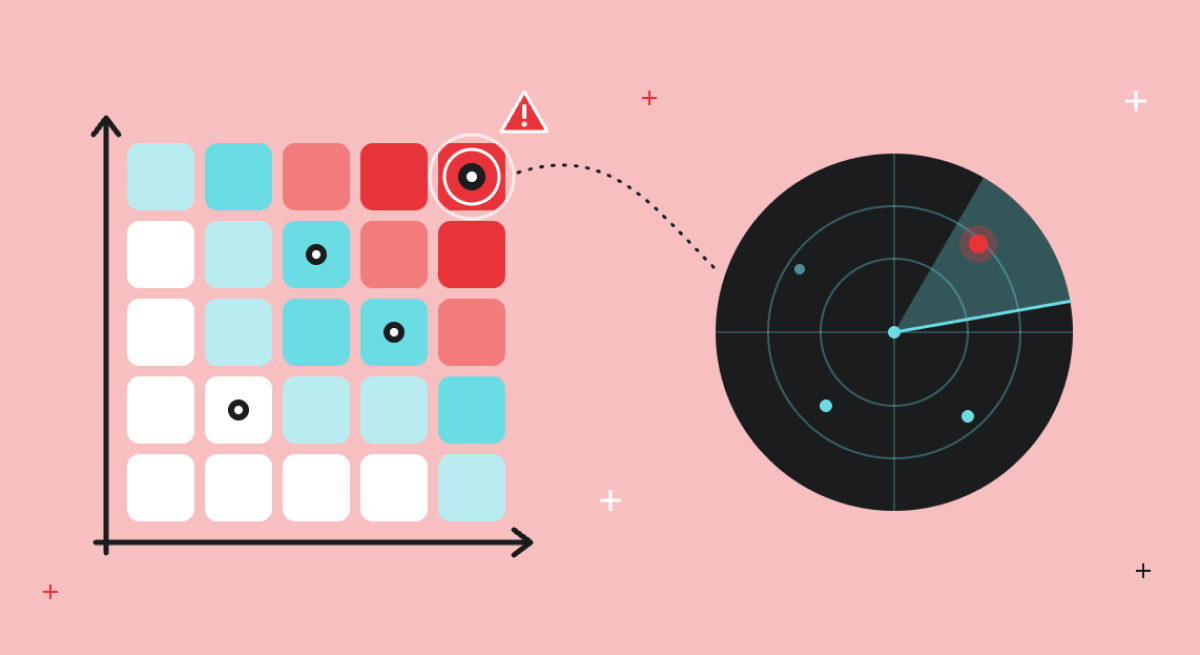
Most teams score each risk on two 1 to 5 scales, then multiply them. Clear definitions keep different assessors from scoring the same risk differently.
Risk score = likelihood × impact, giving a range of 1 to 25.
Adjust the definitions to your industry, but keep them written down and use them every time.
Qualitative vs. Quantitative Compliance Risk Assessment
Both approaches are valid. Many teams start qualitative and add data over time.
The strongest programs combine both: expert judgment to find the risks, data to score and track them.
Compliance Risk Assessment vs. Regulatory Risk Assessment vs. Compliance Audit
These three activities work together but answer different questions.
The three feed each other: the regulatory assessment lists obligations, the risk assessment ranks them, and the compliance audit tests the highest-ranked risks first.
What Are the Most Common Compliance Risk Assessment Mistakes?
Even experienced teams fall into these traps.
- Treating it as a one-off. An assessment filed and forgotten is out of date within months.
- Assessing on paper only. Scoring controls as effective without testing them hides real gaps.
- Inconsistent scoring. Without written definitions, two assessors can rate the same risk 6 and 20.
- Working in a silo. Compliance alone cannot see operational risks. Involve quality, regulatory, IT, labeling and supply chain.
- Ignoring lessons learned. Past deviations, complaints and peer warning letters are the best predictors of future findings.
- Missing emerging risks. New technology, AI tools, new markets and new suppliers need to be in scope.
- No follow-through. Risks without owners, actions and deadlines do not shrink.
How often should you do a compliance risk assessment?
Run a full assessment at least once a year, and update it whenever something material changes: a new regulation, product, market, supplier, system or a significant incident.
Between full assessments, use continuous compliance monitoring to track key risk indicators, so rising risks show up in weeks rather than at the next annual review.
Conclusion: Find the Weak Points Before Inspectors Do
A compliance risk assessment is the most practical way to spend limited compliance resources where they matter. Score risks consistently, test your controls, assign owners and keep the assessment live, and regulatory weak points get fixed long before they become findings.
To see how risk assessment connects with audits, document control and monitoring, read our complete guide to regulatory compliance management.
Compliance Risk Assessment FAQs