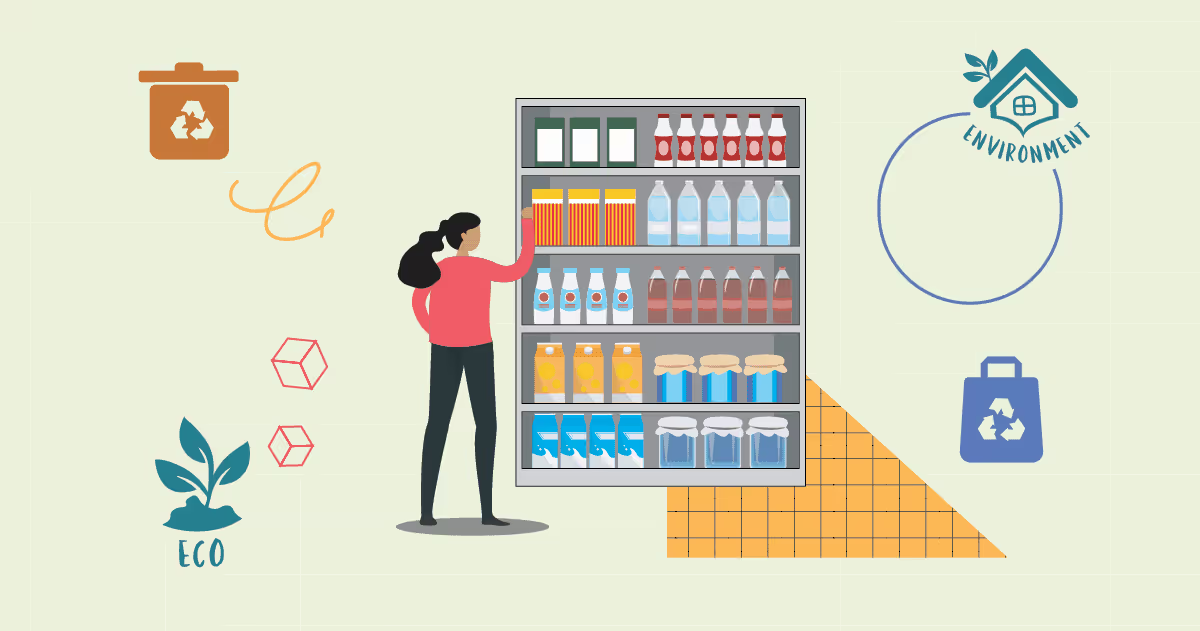


Durante años, el cambio hacia la sostenibilidad ha sido una prioridad en la industria del embalaje.
Para mantenerse al día, las empresas han tenido que adaptarse a un ritmo increíble para satisfacer a un consumidor más informado y exigente.
Mantenerse al tanto de las tendencias y los cambios puede ser una tarea difícil por sí sola, por lo que pedimos a expertos del mundo del embalaje que pronosticaran hacia dónde se dirige la industria.
Pedimos a 26 expertos de todos los rincones de la industria que opinaran sobre:
- ¿Qué tendencias de embalaje cree que cobrarán más protagonismo en 2018, ya sea en innovación, diseño o la perspectiva del consumidor?
- El embalaje sostenible seguirá siendo una de las mayores tendencias en 2018. ¿Cómo cree que las empresas y las marcas abordarán esto?
Así que, rellene su café, póngase cómodo y empiece a desplazarse por las tendencias de embalaje para 2018. También puede ir directamente a su experto favorito usando estos enlaces:
1. Sarah Shumpert | 2. Konrad Kwiatkowski | 3. Andreas Kioroglou | 4. Diana Fryc | 5. Maud Paulin-Harris | 6. Jackie Irvine | 7. Narash Khanna | 8. Mark Velarga | 9. Rajesh Bhatia | 10. Brett Goldhawk | 11. Marissa Puttagio | 12 Nigel Ritchie | 13. Helen Barlow | 14. Drew Davies | 15. Mat Bogust | 16. Vicki O’Toole | 17 James Thomas | 18. Ian Segail | 19. Suzanne Ballard | 20. Stephanie Kiens | 21. Fred Hart | 22. Danielle Townsend | 23. Yael Miller | 24. Jessie Vickery | 25. Alycia Moffatt | 26. Jonathan Hou


Sara Shumpert
Director General en The Packaging School
El embalaje sostenible ya no es una tendencia
A medida que pasamos del estante a la puerta —comercio electrónico o venta directa al consumidor—, se requiere un replanteamiento tanto del diseño del producto como del embalaje. Mientras que el embalaje para el comercio minorista debe causar una primera impresión que invite a la compra, el embalaje para el comercio electrónico debe estar preparado para el entorno de distribución, lo que significa que debe ser ligero y duradero.
El embalaje sostenible ya no es una tendencia, sino una expectativa de los consumidores. Vemos a las empresas abordar la sostenibilidad de formas más innovadoras que simplemente con materiales ligeros. Las innovaciones en embalaje que aumentan la frescura de los alimentos y conservan la fortificación de los ingredientes mejorarán en 2018.
LinkedIn | Twitter | Facebook | Sitio web de la empresa


Konrad Kwiatkowski
Gerente de Marketing en Packhelp
Una tendencia ecológica que fomenta la creatividad
Para empezar, la industria del embalaje está cambiando rápidamente. Hace unos años, fuimos testigos de un auge de las bolsas de plástico, y ahora se están convirtiendo en un recuerdo que se desvanece.
Probablemente, la tendencia más importante en 2018 estará relacionada con el mayor énfasis en la sostenibilidad. Podemos esperar que más proveedores de embalajes recurran a productos ecológicos, pero lo más importante es que esos cambios serán impulsados por los clientes. Las empresas más grandes —como McDonald's o, más recientemente, Iceland— podrían sentir la necesidad de implementar nuevas estrategias más respetuosas con el medio ambiente para satisfacer a sus clientes. Por otro lado, se podría esperar que los proveedores de embalajes gestionen la devolución de cajas usadas como parte de su oferta. Esto significaría un cambio considerable para la industria.
Además de eso, en Packhelp creemos que el suprarreciclaje (upcycling) se hará más popular este año. También es una tendencia ecológica que favorece la creatividad de los clientes. A raíz de esto, más empresas deberían aprender que el embalaje es una especie de tarjeta de presentación que dejan en manos de sus clientes. Por lo tanto, el embalaje también se volverá más "compartible" a nivel social. Las cajas se están convirtiendo en objetos de uso cotidiano; deberíamos esperar esto a una escala mucho mayor en 2018.
Dado que hay tanto aprecio por el contenido de vídeo, ¿quizás el embalaje tendrá que adaptarse? Es posible que el embalaje dé los primeros pasos para volverse más interactivo, con el fin de enriquecer la experiencia con el producto. Para reforzar esa experiencia, las empresas probablemente también harán un mayor uso de la personalización en el embalaje. Combinarlo con la creatividad es lo que los clientes deberían (y probablemente lo harán) esperar.
Como se señaló en la primera pregunta, la sostenibilidad será la tendencia más destacada en la industria del embalaje en 2018. Y las empresas abordarán esto de muchas maneras.
Zara —la marca de ropa de Inditex— ha convertido su cambio a cajas reciclables en un eslogan de marketing: "Nuestras cajas están hechas de cajas con un pasado". Sus cajas son de cartón, fabricadas con materiales reciclados. Iceland —la cadena británica de supermercados— ha dado un paso para convertirse en pionero y retirar el uso de plástico en cualquiera de sus productos de marca propia. McDonald's también ha anunciado cambios en su política de embalaje, mientras que cada vez más pequeñas empresas cambian a soluciones de cartón. En general, vemos este cambio hacia la sostenibilidad en este mismo momento.
Además, se hará más hincapié en la creación de cajas que puedan reutilizarse o devolverse para su reciclaje. Esto se convertirá en "un imperativo" en la industria del embalaje o permitirá la creación de nuevas empresas que se encargarían de la recogida de envases. Otra solución a esto podrían ser los descuentos ofrecidos a los clientes que devuelvan las cajas a las tiendas.
LinkedIn | Twitter | Facebook | Company website


Andreas Kioroglou
CEO/Creative Director at Matador Design
We are facing the results of climate change
Smart packaging, personalized packaging, packaging design for online shopping, and first and foremost, the design of more sustainable packaging [are trends we see].
We are facing the results of climate change that affects everyone around the world. Packaging is a polluting factor that contributes to this change. In 2018, the central stage will take the creative design that will take into account besides the use of more sustainable materials, factors like the reduction of the carbon footprint of packaged goods throughout the supply chain, and designs that will extend the packaging life cycle. A good example that takes all the above into account is Viupax which is cost-efficient and more sustainable than traditional shoe boxes as it uses less cardboard and requires significantly less volume during transportation.
Twitter | Facebook | Company website

Diana Fryc
Director of Operations at Retail Voodoo
An eco-friendly trend, that favors the creativity of the customers
While Retail Voodoo sees lots of trends, the one request we get with great consistency, (outside of using less material) is related to compostable packaging. We work with a lot of brands that are concerned with reducing their footprint. Right now, the issue with compostable packaging is the CPU and the quality consistency between manufacturers. We anticipate the CPU decreasing as demand and efficiencies continue to increase (just like the use of recycled materials in the early 2000s). Whichever manufacturer gets this right is going to win in a big way.
Aside from compostable packaging, there is still a strong desire to reduce the size of packages, a continued desire to use fewer adhesives, and the continued use of post-consumer recycled material. Lighter materials to save on shipping costs, and form factors that maximize shelf space and square-ish bottles, will also continue. I feel the form factor push is being driven by retailers like Costco that are encouraging manufacturers to maximize space. More product in a box, less warehouse storage space (as an aggregate). Additionally, consumers don’t like getting packages half full and are now considered wasteful. This may be a more significant conversation around modernizing packaging machines for in-line product filling, as much as a package form design.
On the design side, we continue to see the simplicity and the use of fold floods of color and are intrigued by the increase in the use of illustration on product packaging targeting adults (more traditional for children-oriented products).
Lastly – we have noticed traditionally male-centric brands acknowledging women in their brands and packaging. Examples would include outdoor retailers like REI, to beer brands like “Budweiser.”
LinkedIn | Twitter | Facebook | Company website


Maud Paulin-Harris
Emotive Studio Hong Kong
Overall wrapping is now reflecting the consumer trend
Definitely, environmental concerns have become a key factor alongside budget for packaging design, but we see two very different trends in fact.
One is driven by the ‘unboxing’ experience of the e-commerce channel. Clients are requesting a “wow” factor. This means a minimalist design on the outside but more textured papers, protective wrapping, pull-out tabs, and personalized cards on the inside.
Contrast, designing for on-shelf is all about communicating as much as possible as quickly as possible on the outside. But the overall wrapping is now reflecting the consumer trend towards eco-friendly reduction.


Jackie Irvine
Inside Sales Coordinator at PlexPack
Modified atmospheres within bags to increase shelf-life
While this isn’t a trend particularly unique to 2018, we see an increase in machinery automation, especially in the USA where labor can be expensive and difficult to source. Plexpack responded to this packaging pain point by creating a machine that can open, fill and seal bags automatically—our ABS machine. Another popular trend is creating modified atmospheres within bags to increase shelf-life—our vacuum packaging machines are probably our most popular right now, and I expect they will continue to be. A growing number of soup and sauce producers are turning to bags as opposed to jars or tin cans because bags are ultimately cheaper to the source. They can be nitrogen flushed and/or vacuumed to maintain shelf stability.
Plexpack has seen an increase in bag suppliers who carry compostable bags, and we expect to see this type of bag become popular for most suppliers of CPGs (consumer packaged goods). However, this would be consumed well before the package begins disintegrating. The Coffee and Cannabis industries may be primary markets for compostable packaging considering both their consumption cycle and their target markets. Although, compostable packaging is not limited to bags; compostable packaging is now used in many retail stores and restaurants such as Freshii–if you navigate to their website and click on “Mission Green” the first item they list is “Packaging”- as it turns out, the majority of their packaging is made of potato and corn resin. It’s also 100% biodegradable.
LinkedIn | Facebook | Company website

Naresh Khanna
Editor at IPP Star
The evolution of the packaging industry requires a better understanding
In the past year, I have visited packaging plants in India and also in Europe. By my observations and what I have heard from various converters and industry leaders, allow me to share my thoughts on trends. More immediately, I have been instigated to trend forecast by an email from GlobalVision which asked the above questions which I will try and answer in my way and in my own time.
I am an unabashed optimist, and for this reason, I believe that although there were setbacks in many spheres of industry and business in the past year, I continue to expect growth and improvement. A significant trend in the Indian economy and the Indian packaging industry will be growth and a better understanding and use of technology.
The most important trend in the Indian economy and the Indian packaging industry is hardly a trend – it is more or less a fact of life – uncertain and gradual but positive expansion of the industry and the continued evolution in its use of technology and best practices.
Growth because we still use relatively little packaging and the structured economy of consumer products and organized retail is still new. Urbanization and the growth of Indians entering the
packaging economy are parallel trends. Whether they are buying essential products such as soap, food, clothing or white goods or frills like gadgets, eating out in restaurants, ordering in, or going on holidays, Indians are increasingly buying these goods and services with labels, tags, pouches, cartons and other kinds of packaging. In some cases, they are looking for biodegradable and reusable packaging or no packaging at all.
The evolution of the packaging industry requires a better understanding and use of technology to create packaging that enriches consumers regarding simplicity of communication and use. It also implies simplicity in sorting at the source and disposal of the packaging materials for recycling or composting. In India, landfills are unviable because of the lack of space and because they are a source of polluting and poisonous fires. Both industry and consumers are also aware and sensitive to the fact that those who live near the landfills face severe health issues that can no longer be either hidden or swept under the carpet or indeed the problem of the indigent people who happen to live near them.
Evolution also implies gradual change and where eventually, only the fittest and most adaptable survive and thrive. This process is especially slow in our industry because various legal and financial constraints limit rapid consolidation by mergers and acquisitions. Innovation and invention are also slow because of the lack of investment in basic science, research and development in our industry. The industry has little or no interface with basic science research, and most of its energy and cash is devoted to immediate application issues.
Cosmetics and personal care to thrive
The packaging itself is associated with well-being and luxury in India. Excellent and high-value packaging is associated with authenticity, the reliability of the product, and value. All the price points in the cosmetics and personal segments will see improved packaging and marketing and the trend of more expensive packaging will continue for cosmetics and personal care. New local herbal recipes, flavors, and brands will be launched in a buoyant market in this segment.
Hygienic food packaging
Another important trend that I see taking better hold in 2018 is cleanliness, hygiene, and health compliances in food packaging supplier plants. I expect that some packaging suppliers may even dedicate their plants to only food packaging – just as there are specialized packaging plants for pharmaceuticals. In the past, a completely binary level of hygiene has been considered a nearly impossible task by Indian packaging converters but I can see that brand owners together with government agencies will get more serious on this front and major packaging converters will tackle the issues and also dare to raise their prices accordingly.
Separation of waste at the source
Sustainable packaging will perhaps be the most significant trend in the packaging industry in India in the coming year. For one, some important compliance legislation or government orders such as the use of single polymer-based plastic packaging are expected to take effect, and although there are solutions, there will also be considerable resistance to this. Secondly, it has become clear that in India neither land-fill nor turning waste-to-energy is practical or at all healthy in the case of burning plastics. So far consumer product companies, packaging suppliers, consumers, and the municipal governments have merely played football with solid waste collection and processing.
I expect that in 2018 the movement to separate waste at source and then process it for various cascading uses and even recycling will take root. This is not a new trend, and it has been championed by the Centre for Science and Environment for the past two years who recently signed up more than 20 cities who are cleaning up their act to share their experiences in this massive exercise. This trend is also in alignment with the government’s Swachh Bharat campaign to clean up the country.
Separation of waste at source may not sound like a big deal in many countries where it is common practice for decades, but in India, it is a major personal, cultural, and political battle. It will require a significant rethinking of ourselves as citizens and actors rather than only as delegators and employers. Similarly, it will force us to talk to our local government officials and hold them and ourselves accountable to radically change the way that municipal waste is collected and processed. Expect more honest scrutiny of industrial waste as well.


Mark Velarga
Head of Marketing at PakFactory
Part of a movement to reduce packaging waste
E-commerce packaging and package messaging are continuing to be a primary focus for 2018. We’ve seen a significant increase in e-commerce in the past few years with the convenience of both online shopping and online business ventures. Therefore, brand loyalty and trust will be the target for many of these businesses. With this competition, companies are beginning to put a lot of importance on how to effectively communicate the value of their product of each customer’s experience.
Many brands will use this to not only cut costs in their packaging but also to become part of a movement to reduce packaging waste. This is why many brands have shifted to cardboard packaging and just-in-time production.
In addition, many brands have also become more conscious of the manufacturers they partner with especially the way raw materials are being extracted, making certifications such as the FSC (Forest Stewardship Council) an important indicator of how sustainable the production activities are.
LinkedIn | Facebook | Company website

Rajesh Bhatia
Global CFO at Uflex Limited
Uflex always stays ahead of the curve
We have ushered into 2018 and it’s time for flexible packaging specialists to project trends that will shape the contours of the industry through the year. Let’s run through the top 5 trends that will rule the roost.
Light Weighted Packaging:
Amid ever-growing concern for environmental sustainability, flexible packaging which both by default and design happens to be far more energy-efficient throughout the three stages of its life-cycle; manufacturing, transportation, and disposal. Its rigid counterpart, lightweight, will be the top R&D priority for packaging engineers globally. The race to develop thinner laminate structures without compromising the overall barrier, functional properties and the strength of the packaging is going to get much tighter. This is attributable to the Pull of Conscientious Consumers, hence the Brands much as it is to the Push by Convertors catering to them. In 2018 one can hope for even higher product-to-package ratios.
Re-Configuring the Packaging for Zero Moment of Truth (ZMOT):
Today’s consumer is well-traveled, well-read, well-connected, and never too far from the smartphone. The First Moment of Truth (FMOT) which has been an important guiding factor for FMCG brands selling through the Brick and Mortar set-up till date is fast being replaced by the Zero Moment of Truth (ZMOT). During the ZMOT a consumer researches about the product online and tries to gather as much information as required for making an informed decision at the Point-of-Sale (POS). In fact, ZMOT is now being acknowledged as the very enabler for FMOT. While ZMOT is much about the quality of the products, the line between it and FMOT is getting blurred by consumers expecting real-time information about the product while shopping in the supermarket. Given the burgeoning demand, Flexible Packaging in 2018 will have to be re-configured for ZMOT, and to be able to do so, the Internet of Things (IoT) will come in handy. Intelligent features like NFC, QR, and Scan Codes on the packaging should be able to cull out all the information about the products the moment a smartphone is held up to it. Packaging engineers and researchers will not leave any stone unturned in integrating intelligent features compatible with the latest handheld devices. IoT will, in fact, be very useful for smooth logistical interventions throughout the supply chain. This will trigger disruptive innovation in the field of flexible packaging optimizing the overall value proposition for all stakeholders across the value chain.
No-Occult Packaging:
Since the inception of flexible packaging, Aluminium Foils have been used in laminate structures for providing foolproof barriers to oxygen and water vapor, saving the product packed inside from spoilage. Although, the biggest disadvantage is an opaque pack where consumers are unable to see the product packed inside. There is a growing demand for transparent barrier films that can replace aluminum foils thereby offering a sneak peek into the products at the POS for taking an informed purchase decision. Foil-replacement polymeric films are likely to be a trendsetter in 2018.
Packaging as a crusader against food waste:
Amid the growing realization that one-third of the food produced for human consumption goes to waste every year, Active Modified Atmospheric Packaging helps extend the shelf life of perishable fresh produce such as fruits, vegetables, and flowers). Also, anti-microbial packaging modifies the environment inside the food package which alters the state of the packaged food system and its headspace to enhance its quality by extension of shelf-life, enhancement of sensory qualities, and maintenance of microbial safety will see an encouraging uptrend.
Packaging that Engages and Connects:
The more the packaging engages consumers at the POS, the higher the probability the transaction will sail through! Tactile Effects on flexible packaging with the help of special printing technologies, will be a real shot in the arm for high impulse buying FMCG items. Such packaging is likely to be a buzz and happening all through 2018. Personalization and customization know no bounds. Flexible Packaging is bracing up to a whole new level where bespoke profile shapes and this is one trend that will get cracking in 2018. Picture this: Protein-shake formula packed in a sleeve splitting biceps shaped flexi-pouch makes a high-decibel pitch to fitness freak shoppers. Doesn’t it? A detergent pack profiled as a T-Shirt is potent enough to create interest among shoppers.
Being India’s largest multinational flexible packaging materials and Solution Company Uflex always stays ahead of the curve to offer the most advanced, innovative, and efficient packaging to its clients globally!”
LinkedIn | Twitter | Facebook | Company website


Brett Goldhawk
Managing Director at Ziggurat
We need innovators, inventors, and packaging technologists
I’ve seen a lot of conflicting Packaging Trend Reports already this year. Some say, minimalist, others say bold, or maybe it’s all about patterns in 2018. I prefer brands to find their path, a packaging identity that is true to their purpose, a piece of packaging that communicates the brand most succinctly to their audience, and most certainly doesn’t look to design trends to find relevance. I want the design industry to work harder in communicating our role as business consultants and not graphic designers.
I still think 2018 is too early to see any monumental change in packaging design when it comes to sustainability. You only have to visit a supermarket to see the scale of the challenge. We need innovators, inventors, and packaging technologists to find solutions that are cost-neutral to a business. If we can make it easy for C-suites to balance ethics with a profitable business, we can make a lasting change.


Marissa Puttagio
Creative Director at Eventige Media Group
Targeted differences will gain a competitive advantage
In addition to communicating brand identity and mentally stimulating consumers with color, surface textures, and sounds of the package opening, organizations will increase focus on the packaging experience of online vs. physical touch-points. Consumers examine the outer and inner packaging of products on a store shelf differently than they would examine the same product in a 3D virtual environment online. Organizations that center on the targeted differences will gain a competitive advantage with their online sales, which make a substantial financial impact on any organization expecting to exist in the next decade.


Nigel Ritchie
Creative Director at Echo
Packaging in the future will have new roles
We will see more attempts at designing out wasteful packaging altogether in ways that still allow brands to shine. We will also see packaging design embrace modularity, offering multiple uses and functions which means people can invest in less or more to adapt to changing needs. Branded packaging and reusable product design will merge even more as people require reusable packaging for their everyday needs.
With increasing targets to eliminate plastic packaging, as designers, we are going to have to design acceptance in an entirely new way. It is exciting because our knowledge of science, nature, and technology means that we are surrounded by the possibility to create fantastic results for sustainable futures. Imagine a future where people can create everything they need in their own homes, from food to cleaning products? Packaging in the future will have new roles around preserving and storing goods, being reusable, and having multiple uses.
LinkedIn | Twitter | Facebook | Company website


Helen Barlow
Creative Director at One Line, Design for a Difference
Packaging shouldn’t be about one use
We’re pretty excited about the augmented reality featured in the packaging! We discovered this via our print friends at GPS Colour on their Twitter feed.
Using digital elements in packaging is a great innovation that will lead to less physical waste which connects with our ethical values on sustainability.
How ‘Brand Tone of Voice’ is presented is sure to become more prominent, as businesses reap the benefits of using packaging design to connect with their customers emotionally. Packaging is a great way to add value as we discuss in more depth here.
I expect we’ll see more digital developments and perhaps the QR code will eventually have its day. Digital elements can offer consumers as much information as possible about products without the overuse of materials and resources that impact on the environment.
Of course, I’ve no doubt we will continue to see some fascinating eco developments. I’ve heard that there are plans to make it possible for black plastic food packaging to become recyclable soon and supermarkets like Waitrose have pledged to use less black plastic packaging.
Functionality is where I see things heading. Creating packaging that can transform to have a secondary function or is a beautiful keepsake empowers businesses with a key differentiator. Packaging shouldn’t be about one use: throwaway. The most exciting packaging we come across has a life of its own and is tangible in its own right. For example, our own-brand compostable fair trade packaging containing seeds that can be planted to grow wildflowers, packaging that could be framed as a work of art like this from Bonza, or this beautiful fragrance packaging that transforms into a display container.

Drew Davies
Owner / Designer at Oxide Design Co.
We no longer have to sacrifice design for sustainability
We’re continuing to see a trend towards packaging being more tactile, and creating more of an experience. There’s a growing recognition that physical packaging can do certain things that can’t be replicated in the digital realm. People are taking advantage of that unique nature, and designing packaging that doesn’t just look great but also feels great — utilizing combinations of unusual forms, die-cutting, embossing, textures, and the like. Likewise, companies are more keenly recognizing the brand value of the “unboxing” experience — giving consumers something more than just a utilitarian box that contains their purchase.
I think in 2018 manufacturing advances have brought us to a point where we no longer have to sacrifice design for sustainability, so it opens up a lot of possibilities. We recently partnered with a holistic loose-leaf tea company to design their retail packaging, and environmental responsibility was a must. Without breaking the bank, we were able to source traditional gusseted bags but made out of a fully-compostable laminate. It allowed for shelf stability, bright full-color packaging, and eco-friendly sustainability.
Twitter | Facebook | Company website


Mat Bogust
Cardboard Engineer at Think Packaging
Thoughtful considerations to form, artwork & materials
Fortunately, the packaging does evolve and changes to suit both customer & client needs, which should always be considered in the initial design process. I think that pure simplicity & tangibility will be a strong trend in 2018. A key focus would be the unboxing experience. I mean, who doesn’t like perfect-fit inserts, a tear-strip, or a multi-open process to get the goods? Thoughtful considerations to form, artwork & materials are what the top brands will be focusing on this year. If they’re not, they should be.
[Sustainable Packaging] will play a vital part, especially for large volume, or fast-moving products. Customers are far more up-to-speed and knowledgeable when it comes to poorly produced, over-packaged, or non-eco substrates that package their goods. You should continually seek new materials and keeps up to speed with new innovative processes that are going on. Getting this right and mixing it with a beautiful design will not only be bang on trend but bang on point.
LinkedIn | Twitter | Facebook | Company website


Vicki O’Toole
Managing Director at JJ O Toole Ltd.
A Guide to Perfect Packaging:
Be Unique
– It can be tempting to base your packaging around that of other companies. While it is fine to take inspiration from others, it takes additional creative flair to establish your own identity and uniqueness. Stunning packaging can capture an audience and trigger emotional engagement with your brand.
Consider Your Product and Your Planet
– It is essential to think of the practicality of your packaging. But don’t forget to consider our planet when choosing your packaging and appraise the many eco-friendly solutions available. These can range from juco, & bamboo materials, to soya inks and aqueous varnishes. Using packaging originating from sustainable resources, and favoring recycled and recyclable materials, is not just helping our planet but helping the next generation of who we are custodians. Printing a recyclable logo on your packaging also ensures the end user is aware of the best way to dispose of your packaging.
Consider Your Customer
– There is a huge difference between a designer item from the
world’s leading department store and a humble pencil from a local stationery shop. Your packaging should reflect this and can be determined largely by the selling prices and nature of your products. We guide our customers through the decision-making process, offering beautiful and economical solutions, irrespective of the product to be packaged.
Stand Out From the Crowd
– A business with a strong brand will mirror it consistently in
their packaging to gain maximum brand recognition. The high streets are flooded with customers buzzing from store to store. When they make a purchase, they often carry their goods for several hours. You need to consider – are people taking notice of your packaging on the high street and do they stand out from the crowd?
The Online Experience
– Sending an online package to the other side of the world should arrive with your logo highlighted on the packaging, not that of a global courier company, so that the recipients experience your brand, not another. Online shoppers share their experiences through social media, and if your goods are delivered in beautiful packaging, your brand awareness is growing, which in turn will generate more business.
With the constant increase in online shopping comes the need for more online packaging. Choosing your packaging wisely to suit your product and brand is important. Also, the recyclability of the material you are using needs to be considered carefully.
Keep It Simple
– JJ O’Toole Ltd are expert in packaging design, creativity, and innovation. Surely this means we create lots of elaborate packaging designs for our clients, using rare and expensive materials? Wrong. We appreciate simplicity when it comes to branded packaging. The least fussy designs, when executed well, are often the most eye-catching and look the most luxurious. We only have to look at the Chanel packaging to understand how a simple, tasteful design can stand out from the crowd.
Keep-ability over Disposability
– Packaging is not just a vessel to carry a product home from the store to then be discarded and recycled. It should be so beautiful and practical that the customer doesn’t want to part with it. It could be a luxury box that is used again to store jewelry and trinkets, a bag for life that is used for gardening, or a velvet ribbon that is saved for wrapping gifts. Always consider the shelf life of your packaging and its keep-ability merits.
LinkedIn | Twitter | Facebook | Company website
Design


James Thomas
Business Development & Marketing Manager at Focus Label Machinery LTD.
Newer technology in print production
Small businesses are appearing on supermarket shelves more and more – take the Micro-Brewery and Spirit industry as one example. This has led to the brand, our customer, and the consumer having a more personal relationship with the end product. Shorter run lengths and more dedicated personalized offerings alongside digital inkjet integration into the businesses.
Also, companies are looking to purchase a Label Printer or install a Label Press in the Packaging arena within the current business. This would be either Flexo or digital production and also is used as a proofing press, especially in digital production for quick turnaround short-run production.
[Sustainable Packaging] is a very hot topic and one all in the Packaging/Label industry need to work on together. The trends from our customer base are for bespoke offerings, which include personalization, more ethical production, and biodegradable packaging materials alongside inks that offer low migration.
Newer technology in print production allows for the more varied use of materials, and enhanced products will become driven by consumers in relation to the waste they generate.
We as a supplier see this trend grow and the product to be produced more sustainably – this includes the waste packaging, the recyclability, and also the labels and labels waste that goes with the product.
LinkedIn | Twitter | Facebook | Company website


Ian Segail
General Manager of Operations at Jam&Co
Simple and minimalist design plays an important role
There is a saying amongst brand marketers, “Don’t design for brands. Design for people interacting with brands.” This essentially means designing an emotional connection between the target audience for your product and the packaging housing your product.
So what will this emotional connection look like in 2018?
There are what we call the 3 WOWs that help packaging designers to design with an emotional connection (EC).
2018 packaging designs will focus on building three key elements of WOW into your packaging design. It is the three elements of SURPRISE!; PERSONALISE and SHAREABILITY that will define engaging packaging design in 2018 and beyond.
The First WOW, “SURPRISE & Delight!”
2018 Designs will need to tap into the element of “surprise and delight!”. This means creating packaging that triggers each of our target audiences’ five senses, engaging them and grabbing their attention. The goal is to interrupt the consumer’s habitual, auto-pilot buying patterns by bringing the pack to life. Effective designers do this by using visually striking creative graphics and structural design. Both of these design’s key elements differentiate how the product stands out on the shelf (or online). The objective of surprise is to generate a, “WOW! Check this out!” response.
WOW means telling your target consumer exactly what they want to hear. It means your message can be portrayed in an array of creative ways, using photos or drawings, with typography or color, and engage either rationally or emotionally. The various ways of creating a distinction on shelves follow design trends that vary from year to year.
Creating SURPRISE & Delight with Shelf Disruption
Here are nine shelf design disruption trends that will generate SURPRISE & Delight in 2018 (See 99Designs – 2018 design trends ) will include:
Less is more. Simple and minimalist design plays an important role in helping us access our intuitive side. Simplicity is all about creating symbols and signs that your target audience will relate to. The symbol, in essence, becomes the message. Less is more means your busy, time-consumed audience will hardly need to slow down to grasp what the product inside the package is all about.
The rise of femininity. Calming pastel colors have become a natural antidote to the hyper-stimulating and explosive color world your target consumer lives in. These soft, pale pastel shades generate an aaaah relief response, tapping into our softer side.
Doodling. Doodles appearing on the packaging are a fun and happy-go-lucky way of describing what’s inside the box. Doodles take us back to our childhood making your consumer smile inside before they even touch and engage with the product.
Bold Typography – In 2018 eloquent fonts made from bright colors will drive consumer attention. A product’s name might be everything needed to send a clear and loud message about the product and all it contains. Typography is an effective method of communicating the product message.
Unique Form – Innovative and stand-out textures, shapes, eco-friendly and re-usable materials convey “surprise,” and imaginative die cuts not only reveal the “what’s inside” but also deliver strong marketing messages. For example, “Me too” products can be made distinctive by the efficient use of custom structures.
Bygone age throwback – Heritage or classic designs tap into our memories and nostalgia, a longing for simpler times when things were cared for, made by hand, and detail-oriented. Throwback calls out authenticity. Vintage conveys the story of tradition and dedication to creating long-lasting quality. Throwback design evokes memories of an older generation while piquing the interest of the NOW generation, eager to understand their history.
Power Photography – Pictures tell a story. A picture is always worth a thousand words. This explains why photography has always held a strong position when it comes to packaging design. Photography emphasizes the high quality, freshness, and authenticity of the product enabling it to sell itself. Funky photography can also be used to reach “every man” creating the feel of spontaneity, movement, and raw emotion capturing and personalizing the story of the product in unique ways. The key for 2018 is to use photography in a blend of other engaging design elements.
Vibrant Patterns and Eye-Catching Gradients. When designed effectively patterns and pattern repetition can not only encapsulate the essence of a brand but can also be used to surprise and delight on the shelf. Certain visual motifs, gradients, polka dots, stripes, triangles not only leave lots of space for creativity but at the same time they can help a brand transmit strong, clear and messages whilst breaking free from a “me too” shelf.
Masstige- Lux – In the past luxury brands have been seen to only be available to an exclusive and narrow range of high-value customers willing to invest in unique, well-crafted products with a premium price tag. Masstige is the opposite of “luxury for less.” Brands are giving a luxe twist to everyday products and charging higher than normal prices, albeit still affordable by “luxury” standards. Today’s consumers are trading up their consumption of everyday goods and developing an appetite for little luxuries they can afford. As a result, there is a growing “masstige” market where brands are positioning their products to capitalize on and appeal to a broader mass market. Packaging using special coatings and exotic substrates, holographic foil stamping, and other high-visibility enhancements like metallic inks on product packaging help to attract consumer attention. Creating a surprise on the shelf by turning the ordinary into the extraordinary -Speciality packaging can come in the form of uniquely shaped packages, experimenting with elegantly functional designs, and mixing it up.
El segundo WOW, “Personalización”
El segundo elemento WOW es la “personalización”, que consiste en adaptar el diseño del envase del producto al mercado objetivo individual o al nombre, características o preferencias de la persona. A la hora de diseñar un envase que diga: “personal”, hay que tener en cuenta tres elementos clave:
-Comprender a tu público objetivo y diseñar específicamente para él.
-Dirigirse directamente a ellos desde el lineal (o en línea). Haz que se sientan especiales y únicos.
-Las tecnologías de impresión digital ofrecen a las marcas la oportunidad de personalizar envases dirigidos a públicos específicos.
La tecnología de impresión digital actual permite a las marcas captar la atención de los individuos mediante el uso de envases personalizados que pueden incluir el nombre del consumidor, diseños individualizados e incluso fotografías.
El tercer WOW, “COMPARTIBILIDAD”
Finalmente, el tercer WOW es el de crear COMPARTIBILIDAD. Las marcas y los diseñadores de hoy deben pensar más allá de la cesta de la compra. Deben considerar cómo se posicionará el envase cuando el consumidor lleve el producto a casa. ¿Compartirán su nueva compra en las redes sociales? ¿Qué aspecto tendrá el envase en las plataformas sociales y... hay alguna forma de que el consumidor quiera compartir su compra simplemente por el diseño único del envase?
Uso de los 3 WOWs
Existe una oportunidad considerable para que las marcas implementen los 3 WOWs para impactar en el lineal, ya sea para hacer crecer la categoría de supermercados o de ferretería. Los tres WOWs requieren planificación y estrategia para asegurar una campaña WOW exitosa que sea dirigida, única y atractiva, y en última instancia, un envase de producto exitoso.


Suzanne Ballard
Coordinadora de Alianzas en Australian Packaging Covenant Organisation Ltd.
Transición hacia un modelo de ciclo cerrado para envases
El diseño para la recuperación se perfila como una de las tendencias dominantes para el sector del embalaje en Australia en 2018. Con los importantes cambios en la política de residuos procedentes de China, es más importante que nunca animar a la industria a diseñar embalajes que sean recuperables localmente al final de su vida útil. Desarrollar un producto pensando en la recuperación es un paso fundamental en la creación de economías circulares. Por el contrario, es igual de esencial animar al sector del embalaje a recomprar el resultado del proceso de reciclaje, promoviendo el contenido reciclado de origen local. Estimular los mercados finales locales para los productos reciclados a través de estrategias de adquisición innovadoras es la otra faceta clave de la transición a un modelo de circuito cerrado para el embalaje.
APCO ha sido testigo de una increíble resiliencia e innovación por parte de sus miembros al abordar los problemas de sostenibilidad del embalaje. Trabajando con casi 900 miembros, vemos que la colaboración y las asociaciones son esenciales para obtener resultados tangibles y escalables en el ámbito de la sostenibilidad. Nuestro papel es abrir las líneas de comunicación entre todos los miembros de la cadena de valor del embalaje para asegurar que todos trabajamos hacia los mismos objetivos. Para crear economías circulares sostenibles, necesitamos asegurar el compromiso y la participación activa de todos, desde diseñadores y propietarios de marcas, hasta recolectores de residuos y recicladores.
Twitter | Facebook | Sitio web de la empresa


Stephanie Kiens
Gerente de Desarrollo de Marca en BrandMe
Las marcas necesitan asumir más riesgos para destacar
Etiquetado limpio – la desconfianza en las grandes marcas de productos de consumo masivo ha impulsado la demanda de simplificación y transparencia en el etiquetado, así como una reducción en los ingredientes del producto. Larabar ha construido su marca en torno a la simplicidad con la que diseñan sus envases y producen sus barritas.
Diseño y tipografía atrevidos – Las marcas necesitan asumir más riesgos para destacar de la vasta colección de marcas gráficas que existen. BrandMe rediseñó la limonada rosa Lucozade Zero teniendo precisamente este desafío en mente. Nuestro objetivo era cambiar la semiótica típica de la categoría de bebidas bajas en calorías, para asegurar que Zero destaque en el concurrido lineal. En un mar de los tradicionalmente usados plata y azul, creamos un diseño que haría que Lucozade Zero se hiciera notar con fuerza y orgullo.
Soluciones sostenibles (Head & Shoulders de P&G fabricado con plásticos reciclados de residuos oceánicos) para satisfacer la creciente demanda de los consumidores, quienes son cada vez más conscientes de su huella ambiental. Además, la marca de barritas de fruta Snact está trabajando para combatir el desperdicio de alimentos, al mismo tiempo que se envasa en un embalaje totalmente reciclable.
El efecto de los envases sostenibles en el diseño de embalajes
Hoy en día, las marcas están bajo una presión creciente para reducir los residuos y ser más sostenibles, mientras operan con presupuestos cada vez más ajustados. Un área de desarrollo fascinante es el uso de la impresión 3D, que da a las marcas acceso a la eficiencia financiera a través de moldes significativamente más baratos. Esto significa que los formatos de envases a medida o personalizados tendrán la posibilidad de producción en pequeños lotes, además de permitir una ruta más rápida al mercado.
La impresión 3D reduce la contaminación por residuos plásticos, ya que las técnicas permiten reutilizar los materiales. Y dado que el treinta y tres por ciento de los consumidores compra un producto que hace un bien social o ambiental, esta es una excelente oportunidad para las marcas.
LinkedIn | Twitter | Facebook | Sitio web de la empresa


Fred Hart
Director Creativo y Socio en Interact
Lo que cambiará es la narrativa de una marca
En los últimos años, hemos visto un cambio continuo hacia un diseño minimalista y "transparente", que refleja la simplificación de ingredientes de toda la industria alimentaria. El diseño de RX Bar, centrado en los ingredientes (y su venta por 600 millones de dólares a Kellogg's), lo ilustra a la perfección. En 2018 y en adelante, veremos el péndulo del diseño inclinarse hacia la autoexpresión, a medida que los consumidores busquen conectar emocionalmente con sus marcas. LIFEWTR de PepsiCo, LaCroix (que pasó de ser vintage a ser cool) y el popular helado Halo Top, todos utilizan un diseño expresionista para inspirar a la gente, impulsar personalidades atractivas y contar historias únicas más allá del "qué" del producto. El color, los patrones y la tipografía evocadora cobrarán más protagonismo que nunca.
Los líderes del embalaje sostenible están haciendo un trabajo fenomenal al crear sustratos y materiales compostables, reciclables o biodegradables, manteniendo siempre en mente la viabilidad comercial y la aplicación. Asimismo, las tintas a base de agua y de origen vegetal siguen mejorando en profundidad. Todo esto quiere decir que, en el ámbito del diseño, los cambios serán mínimos. Lo que sí cambiará es la narrativa de una marca en torno a sus elecciones consideradas y conscientes de envases sostenibles. Cada vez más marcas comenzarán a integrar esas narrativas en la parte trasera, e incluso delantera, de las comunicaciones del envase, para atribuirse el mérito de sus esfuerzos y captar los sentimientos de los consumidores en torno al medio ambiente.
Interact es una firma de diseño de branding y envases, ubicada estratégicamente en Boulder, CO, posicionada en el epicentro del movimiento de alimentos naturales. Trabajamos exclusivamente con marcas de alimentos y bebidas y ayudamos a dar forma a empresas progresistas, innovadoras y con visión de futuro, con un liderazgo impulsado por millennials y con mentalidad emprendedora.

Danielle Townsend
Directora Creativa en Danielle Townsend Design
Buen diseño en relación con la sostenibilidad
En cuanto al diseño de envases, hay avances emocionantes en el uso de la realidad aumentada junto con experiencias de marca personalizadas. La interactividad y el compromiso del consumidor es un ámbito que parece que será el titular de 2018.
Los diseñadores tienen un papel cada vez más importante en la promoción de un diseño sólido en materia de sostenibilidad. Los diseñadores están ahí para asesorar a clientes y marcas sobre cuáles son las prácticas más sostenibles a adoptar en relación con el embalaje. Esto significa que los diseñadores deben convertirse en una parte más significativa de la conversación, especialmente donde los consumidores buscan un desperdicio mínimo en los productos que compran.
LinkedIn | Twitter | Sitio web de la empresa

Yael Miller
Socio en Miller
La reducción del empaque no tiene por qué significar un menor valor percibido
Las tendencias de diseño que estamos viendo están reduciendo el empaque a lo esencial, tanto en materiales, formato como en el enfoque de diseño. Por ejemplo, los empaques tipo bolsa se están extendiendo a todas las categorías, incluidos los juguetes (que tradicionalmente han estado dominados por cajas excesivamente empaquetadas con insertos de plástico). Esto no es una tendencia generalizada, pero donde vemos un "empaque reducido", se considera una mejora en lugar de un retroceso. En cuanto al diseño, un tono más "discreto" se está convirtiendo en un enfoque más preferido. Un ejemplo claro es el empaque recientemente actualizado de Chobani, con una huella más pequeña para el logotipo, tipografía serif estable y un uso de color menos exagerado con acabados mate.
La sostenibilidad pasará de centrarse en el material utilizado (reciclados, fibras alternativas, etc.) a un empaque más reducido (menos material, mejores opciones de material). Por ejemplo, algo que antes se habría empaquetado en una caja con una bandeja insertada, ahora podría empaquetarse en una sencilla bolsa con cierre de cremallera resellable. Aunque sea de plástico, tiene flujos de reciclaje de residuos establecidos en la mayoría de las comunidades y ocupa menos espacio en los vertederos donde algunas unidades pueden terminar. El beneficio neto es más sostenible, al tiempo que ahorra dinero en todos los ámbitos. La reducción del empaque no tiene por qué significar un menor valor percibido para los consumidores. Con selecciones de materiales, acabados y un diseño cuidadoso y bien pensado, un paquete de marca podría elevarse sin estar densamente empaquetado.
Twitter | Facebook | Sitio web de la empresa

Jessie Vickery
Fundadora y Directora Creativa en Pattern People
Ayudando a que tu producto destaque en el mercado
Jardín Botánico
“Con el entusiasmo colectivo por las plantas alcanzando su punto álgido, no es de extrañar ver esta tendencia trasladarse al mundo del empaque. Hojas exuberantes y flores en plena floración crean imágenes impresionantes que merecen permanecer en tu estante mucho más tiempo que la vida útil del producto.
Brillo
Las láminas holográficas y los acabados metálicos iridiscentes elevan el empaque a otro nivel y crean una sensación de lujo. Como una urraca, el consumidor se sentirá atraído por la dimensionalidad y el brillo, ayudando a que tu producto destaque en el mercado.
Estilo Collage
Las formas coloridas, ya sean cortadas o rasgadas, transmiten una sensación de juego y optimismo. De forma caprichosa, estos elementos aportan un vigor juvenil al empaque que adornan.
Explosión de color
Exprésalo con fuerza y orgullo con bloques de color llamativos. Un branding minimalista permite que la paleta sea la protagonista. Mezcla y combina tonos en diferentes empaques para crear una mayor presencia visual en el mercado.
Twitter | Facebook | Sitio web de la empresa


Alycia Moffatt
Diseñadora gráfica en Uniful Design
Analizando su proceso de empaque en su totalidad
Los efectos holográficos parecen ser una tendencia emergente inspirada en la moda de los 90, que ha comenzado a extenderse al diseño de empaques. Las marcas también están explorando formas de conectar directamente con sus clientes a través de asociaciones y personalización. Esto significa que veremos más empaques de marca compartida y productos de nicho personalizados para individuos. Por ejemplo, algunas empresas de belleza están ofreciendo productos personalizados basados en las preocupaciones específicas de cada cliente, completos con etiquetas de producto personalizadas.
Los consumidores de hoy están interesados en la historia detrás de los productos que utilizan. Esto significa que más marcas están analizando el ciclo de vida completo de sus productos y la sostenibilidad de sus materiales y procesos de empaque. En años anteriores, las marcas podrían haberse centrado en un solo aspecto del empaque sostenible, como reducir la cantidad total de empaque o utilizar materiales fácilmente reciclables. En 2018, las empresas considerarán sus procesos de empaque en su conjunto, como las técnicas de impresión sostenibles, las recargas y las opciones de compra a granel, así como las asociaciones con proveedores e iniciativas ecológicas.


Jonathan Hou
Director de Tecnología en GlobalVision
Tener asistentes inteligentes que te ayuden en tu día a día
Para 2018, las tendencias que estamos viendo en las tecnologías de consumo deberían empezar a integrarse en el software de empaque. Los términos tecnológicos de moda del último año han sido "IA" y "Big Data" gracias a productos como Google Assistant, Amazon Alexa y Microsoft Cortana. Tener asistentes inteligentes que te ayuden en tu día a día también puede trasladarse a los procesos de diseño y ejecución de empaques.
El software de empaque que utilizas en tu proceso de diseño y arte final debería ser inteligente. Así es como la IA puede beneficiar el diseño y desarrollo de empaques:
Permitir la inserción automática de contenido desde los archivos fuente hasta el arte final
Capacidad para buscar imágenes en tus sistemas de gestión de activos digitales basándose en el contexto de la imagen (no en los metadatos) y otros tipos de datos como colores y objetos en la imagen, y proporcionar una clasificación automática para ahorrar tiempo al encontrar las fotos adecuadas para tu arte final de empaque
Realizar automáticamente tareas como la creación de archivos de repetición o controles de calidad en formato digital y en prensa.
Sugerir cómo corregir errores basándose en el aprendizaje automático
Al mismo tiempo, el Big Data es otra tendencia en la que la captura de datos sobre el empaque que produces puede ayudar a optimizar los procesos y asegurar que no estás generando residuos adicionales y reduciendo posibles reimpresiones. Aquí tienes algunas ideas sobre cómo el Big Data puede aplicarse al empaque:
Recopilar automáticamente toda la información relevante que te interesa para un empaque específico, como si fuera un feed de Facebook. Imagina poder reunir todo el contenido relacionado con un diseño de empaque específico en el que estás trabajando, incluyendo contenido relevante, imágenes, regulaciones, dimensiones y marcas.
Captura de datos y análisis, y proporcionando recomendaciones. Por ejemplo, se podría registrar la criticidad y el número de errores de los proveedores de empaques e impresión para ayudar a identificar áreas de mejora o seleccionar a los de mejor rendimiento en su cadena de suministro. Ayudar a encontrar el origen de los errores contribuirá a reducir las reimpresiones.
Las etiquetas y empaques inteligentes permiten a los consumidores conectarse con las marcas y obtener todos los datos relacionados con un producto que desean comprar para encontrar información sobre nutrición, cómo se fabrica el producto en términos de sostenibilidad e ingredientes, todo sin papel.
LinkedIn | Sitio web de la empresa | Contáctenos para una demostración
Estos expertos han mostrado exactamente dónde creen que se desarrollarán las tendencias de empaques sostenibles en 2018 y cómo sus empresas crecerán para prosperar en este mercado ecológico. En esta era impulsada por el consumidor, debemos preguntarnos cómo afectarán estas tendencias a nuestro negocio y qué pasos daremos en 2018 para promover y mantener nuestras afirmaciones de sostenibilidad. ¿Hacia dónde irá esto a partir de ahora?
Obtenga su guía completa para cumplir con los requisitos de etiquetado de la FDA aquí!
Descubra cómo algunas de las principales empresas farmacéuticas del mundo han descifrado el código de la eficiencia con la automatización.